The practical answer
- Short answer
- Stuck in a bad vendor contract? Don't pay the termination fee. Use this 4-step leverage audit to negotiate an exit, save 30% of wasted spend, and reclaim your budget.
- Best fit
- Industry: Enterprise Tech. Function: IT & Operations
- Operating path
- Financial Infrastructure → Commercial Performance → Valuations
- Key metric
- $21M Annual wasted SaaS spend for average enterprise (Zylo, 2025)
The 3-Year Lock-In
You are six months into a three-year enterprise software agreement. The implementation is stalled, the dedicated support team has rotated three times, and your team is effectively running the old system while paying for the new one. In the boardroom, the CFO is asking why the digital transformation budget is over plan, and the vendor’s account executive has stopped returning calls until renewal time.
This is a contract-governance problem. For CIOs and VPs of Engineering managing complex portfolios, it is not just an annoyance; it is an operating risk. The standard legal recourse, Termination for Convenience, is rarely convenient. It usually triggers a payout clause requiring you to pay a meaningful share of the remaining contract value. You are caught between a poor implementation and a penalty.
The market reality is difficult. Organizations waste material budget on unused SaaS licenses, and vendors under retention pressure often resist mid-term reductions. If you think you can simply wait it out, you are usually wrong. You need a structured exit path that relies on contract review, utilization evidence, escalation discipline, and legal counsel.
A contract is a meeting of minds. If the minds no longer meet, the paper is just a liability. Don't let legal fear paralyze your operational duty.
The Leverage Audit: Building the Record
To negotiate out of a contract, stop asking for a favor and start building a factual record. Most vendor contracts are written around legal obligations, service levels, cure periods, and change procedures. Your goal is to document performance gaps clearly enough that the business conversation becomes concrete.
1. The SLA Audit
Service Level Agreements are often ignored after signing. Pull the contract and statement of work. Look for response times, uptime commitments, support obligations, implementation milestones, and cure procedures. Aggregate missed support tickets, downtime minutes, unresolved defects, and promised features that were never delivered. You are building a performance record. When you present a clean log of failures, the conversation shifts from a generic early-termination request to a specific contract-resolution discussion.
2. The License Utilization Review
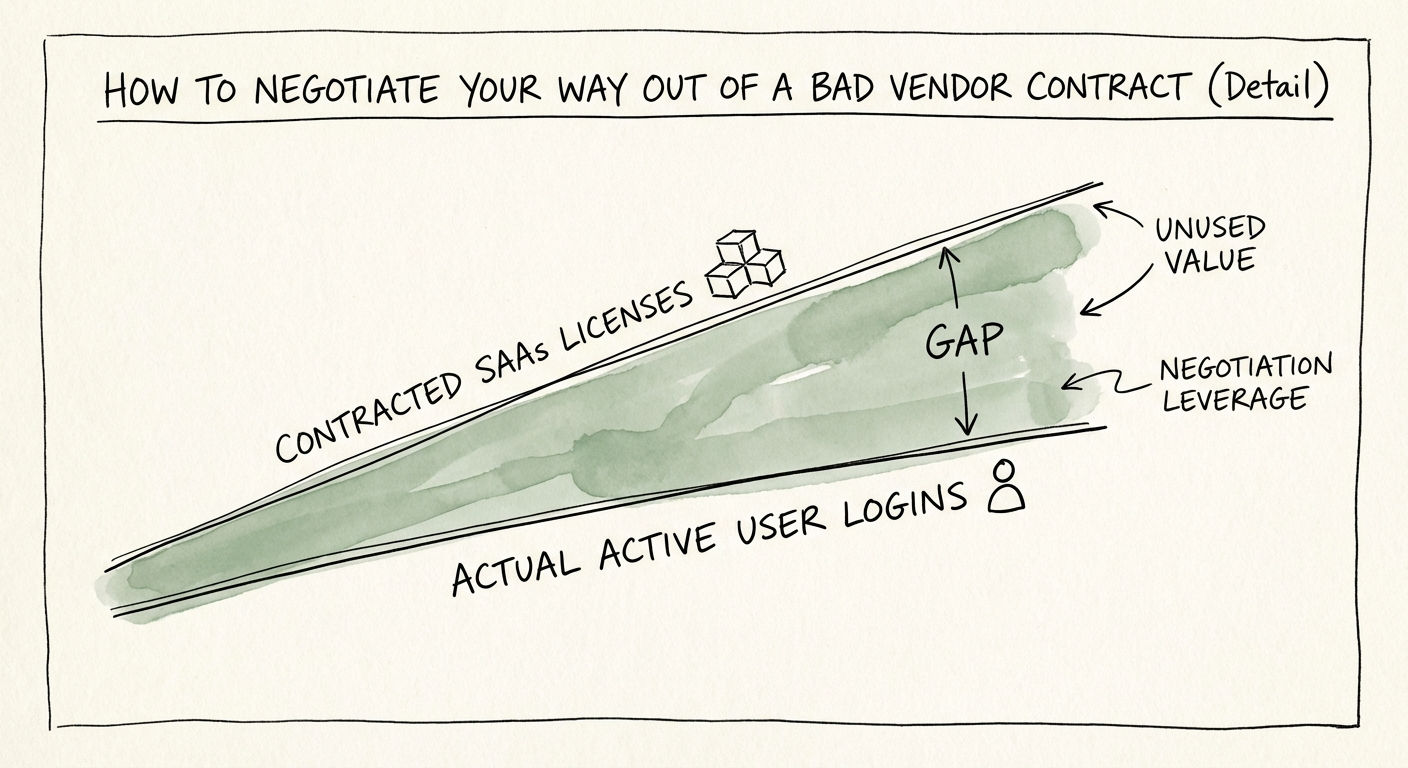
Run a utilization report immediately. If you bought 5,000 seats but only 2,500 have logged in within the last 90 days, you have a rightsizing case. Propose a blend-and-extend amendment only if it improves cash flow and reduces unused capacity: extend term or scope in exchange for lower seats, better support, implementation credits, or migration assistance.
3. The Security and Compliance Review
In the age of SOC 2 and strict compliance frameworks, security is a legitimate escalation path. If the vendor has failed an audit, delayed a security patch, or stored data outside agreed regions, involve security, procurement, legal, and the business owner. Do not overstate the issue. Document it, map it to the contract, and use the required notice process.
The Resolution Protocol
Once you have the record, execute the resolution path. Do not rely only on an email to the account manager. With counsel, send the required notice to the contractually designated recipients and copy the executive sponsor. List the SLA failures, implementation gaps, utilization evidence, and compliance risks. State the requested remedy, cure timeline, and proposed commercial alternatives.
Most vendors prefer a negotiated resolution to a formal dispute. Options can include a mutual release, implementation credits, reduced license count, revised support obligations, migration assistance, or a structured wind-down. The right answer depends on the contract, the vendor relationship, and the business-criticality of the system.
The Consolidation Play
If you cannot terminate, consolidate. If you are spending meaningfully with a large platform and also paying a failing point-solution vendor, check whether the platform has a competing module. Vendor rationalization post-merger is a primary driver of EBITDA. Often, a strategic vendor will offer credits or migration support to win the workload. You trade a poor vendor relationship for a more governed platform relationship.
The Bottom Line: Do not let legal uncertainty freeze operational responsibility. Audit the failures, calculate the waste, involve counsel, and negotiate a resolution that protects the business.