
The practical answer
- Short answer
- Seven in ten first VP of Sales hires don't reach month 12. The 10 specific things Series B founders get wrong — and the readiness audit that fixes them.
- Best fit
- Industry: B2B Tech. Function: Sales Leadership
- Operating path
- Team & Hiring → Operational Excellence → Transaction Execution Services
- Key metric
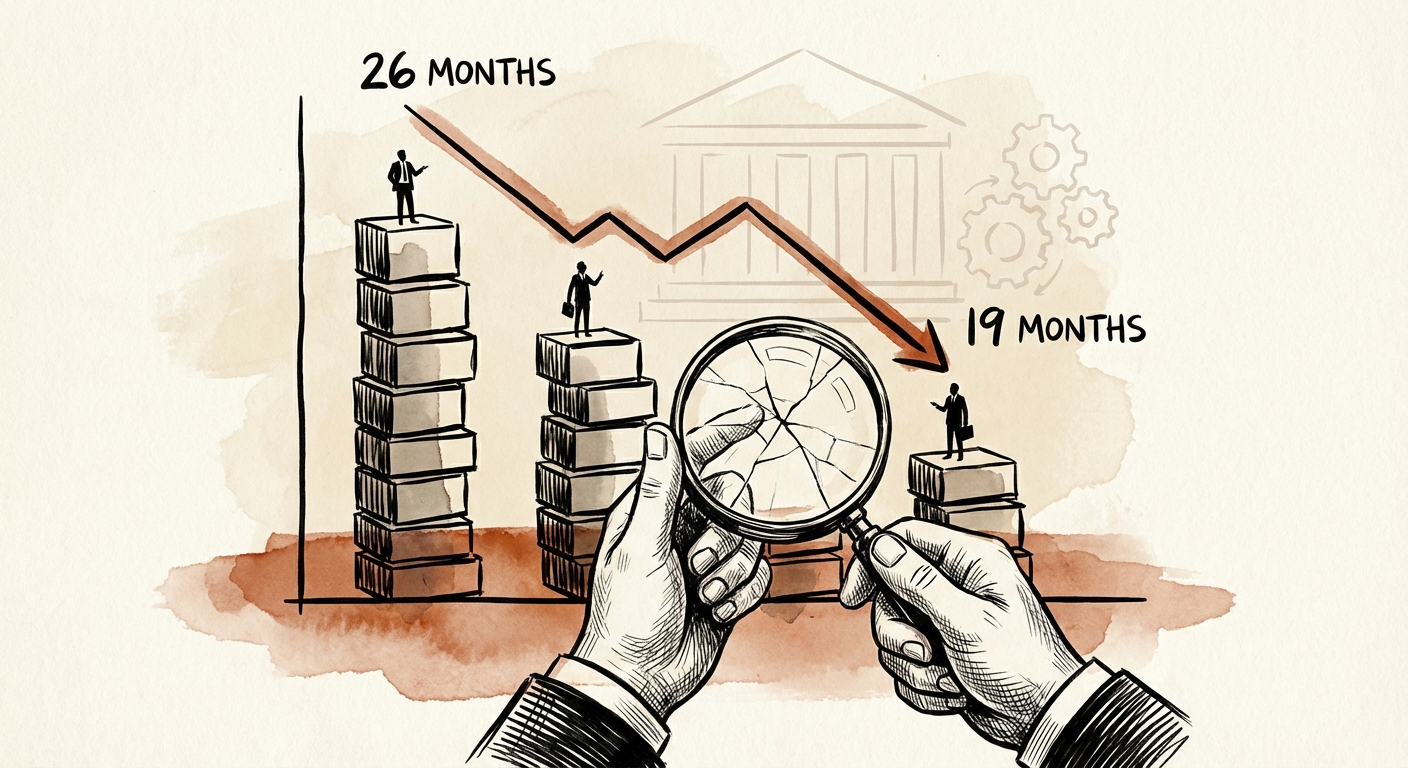
- 19 Months Average tenure of a VP of Sales in Tech, down from 26 months in 2015.
The hire you make when you're too tired to make it well
It usually goes like this. You're a Series B founder. You personally dragged revenue from zero to ten million. You closed the first fifty logos with a deck you redesigned at 11pm and a pricing page you were making up in real time. You are done carrying the bag. So you open a req for a VP of Sales, get excited about a resume with a Salesforce or Oracle logo on it, and tell yourself the cavalry is coming.
Then the math finds you. Roughly 70% of first-time SaaS VP of Sales hires don't reach their 12-month anniversary, and the average tenure of a sales leader in tech has compressed to about 19 months — down from 26 a decade ago, per Gong's tenure analysis. Stack on the fully-loaded cost of a leadership mis-hire — base, severance, the deals that didn't close, the reps who quit because the new boss was a tourist — and Topgrading puts a senior bad hire well into seven figures once you count the lost cycles.
Here's the part nobody says out loud at the offsite: the failure almost never traces back to talent. The candidates who blow up at Series B were genuinely good at a $400M company. The problem is that you hired for relief and they showed up to do a job that doesn't exist yet. There is no playbook for them to run because you are the playbook, and it's all in your head. Abdication feels like delegation right up until the forecast call where your new VP confidently presents a number built on a pipeline definition nobody ever wrote down.
The diagnosis below is specific to one moment: a founder making their first sales-leadership hire at the post-product-market-fit, pre-repeatable-machine stage. Everything that wrecks this hire is a context gap, not a competence gap. So let's name the gaps.
You're not hiring a closer. You're hiring the person who decides whether your $0-to-$10M motion was a repeatable system or just you being unusually good at selling your own product.
The ten ways the first VP hire goes sideways
Read these as a checklist against your own draft job description and your own gut. If three or more land, you are not ready to interview yet.
1. The logo trap: hiring a $1B operator into a 12-person room
The candidate from Oracle or Salesforce ran a function with a recruiting team, a brand that opened doors, an enablement org, and a playbook handed to them on day one. At Series B you have none of that. You need someone who has built a sales motion from a spreadsheet and a Slack channel, not someone who has optimized one that already prints money. As SaaStr's Jason Lemkin puts it bluntly: hire the person who has done the thing you're about to ask them to do, at roughly the stage you're at.
2. Buying a rolodex with a shelf life
"I have relationships with every CIO in fintech." Maybe. But buyer relationships don't transfer cleanly to a product they've never sold, for a use case they can't yet articulate, and the average buyer changes seats every 18-ish months anyway. You're paying for a repeatable process. A contact list is not a process.
3. Expecting a hire to fix product-market fit
If you can't reliably close the deal yourself, a VP can't either — they'll just burn more cash discovering that. A VP of Sales scales a motion that already works. They don't conjure demand out of a flat funnel. If your last ten deals each closed for a different reason, that's a PMF signal, not a hiring signal.
4. The "comfort comp" that recruits the wrong person
You offer a $280K base with a thin variable because you want them to feel safe. You just filtered for the wrong human. The Series B norm sits near a 50/50 base-to-variable split. A leader who wants a $300K base with only $50K at risk is telling you they want to administer, not hunt — and they'll manage your dashboard while the number slips.
5. Promoting your best closer into a job they'll hate
The traits that make someone close a hard deal — ego, tunnel vision, the need to personally win — are often the exact traits that wreck them as a manager, where the job is coaching, systems, and getting credit through other people. Do this and you lose your top rep and gain a frustrated one.
6. Hiring a forecaster who won't get on the plane
Some VPs live in pipeline reviews and QBR decks and quietly avoid actual selling. At your stage that's fatal. Your first VP has to be a player-coach who will personally close the next ten deals to learn the product, the objections, and the buyer. If they're allergic to the demo, they can't lead the room.
7. Can't run the demo without a sales engineer
Your buyer is technical. If your VP can't carry a credible fifteen-minute product walkthrough solo, the engineering team will write them off in the first week, and so will sophisticated prospects. This is the one place fluency in your own product is non-negotiable.
8. Becoming the union rep instead of the executive
A first-time VP who aligns with the reps against the company — escalating every product gap and pricing objection as proof the rest of the org is failing — has chosen the wrong team. Their first team is the executive team. The reps come second. Get that backwards and every cross-functional meeting becomes a grievance session.
9. The "I'd grab a beer with them" interview
Salespeople interview for a living; charisma is their literal skill. If your process is a few conversations and a vibe, you will get sold. Use a structured hiring accuracy framework with role-plays, a live objection, and a data exercise. Make them perform the job, not describe it.
10. No definition of a qualified lead before the headcount lands
You never wrote down what "sales qualified" actually means. So the new VP hires five reps, they chew through marketing's leads, close nothing, and the org splits into a sales-versus-marketing cold war by quarter two. Define the handoff — the exact criteria a lead must meet to move to a rep — before you add a single expensive body. Mistakes 8 and 10 together are the slow-motion version of the founder-led sales breakdown described in our transition from founder-led to scalable sales.
Treat it like installing a system, not hiring a savior
The 70% failure rate is not a talent shortage. It's a sequencing error. Founders who beat the odds do four unglamorous things before and during the hire.
Run a readiness audit before you write the req
Open your own numbers first. Is LTV:CAC stable enough to scale, or are you about to pour fuel on a leaky funnel? Is there a written sales motion a stranger could read on Monday and execute on Tuesday? If the motion lives only in your head, you don't need a VP yet — you need a hands-on Head of Sales or senior Director to help you document the playbook, then promote or replace as the machine proves out. Hiring a strategist to build something you haven't proven is how the cash disappears.
Make them show their work
Never hire a VP of Sales sight-unseen on strategy. Hand them anonymized numbers from your last quarter and ask for three things back: a forecast with stated assumptions, a 30-60-90 hiring plan, and a territory or segment cut. The candidates who balk at "free work" are the ones who'd rather talk than build. The ones worth hiring will treat it as a chance to show off — and the gap between the two answers will be enormous.
Onboard for a 30-day win, not a 12-month quota
Quotas on day one are how you guarantee a panicked, headcount-first reaction. Instead: month one is learn the product, audit the CRM, and personally close one small deal. If they can't carry the product conversation inside 30 days, they never will — and a mis-hire's true cost compounds every month you tell yourself it'll click eventually.
Phase your own exit from the sales seat
You can't go cold turkey without tanking conversion. Run a deliberate handover over a quarter: month one, you lead deals and they shadow; month two, they lead and you backstop; month three, they run it and you stay out of the room. That protects your win rate while they ramp, and it gives you a clean read on whether the system holds without you in it.
Monday-morning version: pull up your numbers, write the one-page sales motion, and define "sales qualified" in a single sentence. If you can't do all three this week, your next hire isn't a VP of Sales — it's the person who helps you build what the VP will eventually run. The market doesn't grade on effort or exhaustion. It grades on whether the machine works when you walk out of the room.