You have just spent three months wooing a VP of Sales. The interviews were stellar. The slide deck they presented on their 90-day plan was flawless. You are exhausted, and you desperately want this problem solved so you can stop playing interim sales manager.
So you hand the reference check list to your HR lead—or worse, you do it yourself with a mental checklist of "just making sure they aren't crazy." You call the three people they carefully selected. You hear glowing reviews. You hire them.
Six months later, you are firing them.
This is the "Polite Lie" trap. According to the Center for Executive Succession, 40% of executive hires fail within 18 months. For a Founder-CEO at the Series B/C stage, this is not just a line item expense; it is a momentum killer. The Center for American Progress data shows the cost of replacing a senior executive is up to 213% of their annual salary. But the real cost is the lost year of growth while you clean up the mess.
Most reference checks are performative theater. You ask polite questions; they give polite answers. The predictive validity of unstructured reference checks is abysmal—around 0.26 (on a scale of 0 to 1), according to the seminal meta-analysis by Schmidt and Hunter. That is barely better than a coin flip. To fix this, you must stop looking for "red flags" and start hunting for "usage instructions."
You are not looking for reasons to say no (you are likely too far down the funnel for that). You are looking for the predictive data that tells you how this person actually operates under pressure.
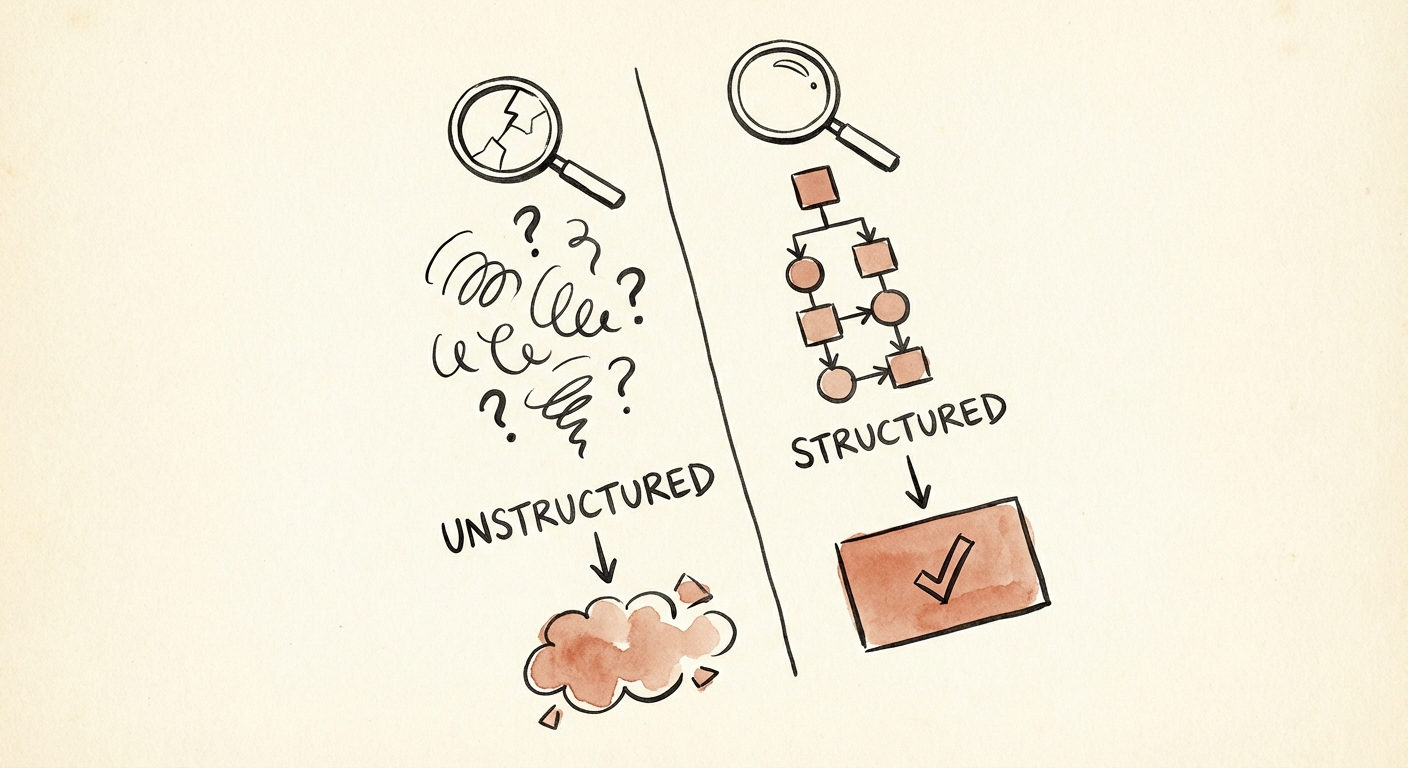
To move from polite lies to predictive truth, you need a structured methodology. We call this the 360 Reference Protocol. It changes the dynamic from a "verification" call to a "consultation" call.
Should you backchannel? Yes, but with strict rules. "Backchanneling" means calling people the candidate didn't list. This is where the truth lives, but it carries risk. If you call a current employer, you could get the candidate fired. The rule is: Never backchannel a current employer. Always backchannel a past employer.
However, the most effective move is to force the candidate to open the backchannel for you. Instead of accepting their curated list of three best friends, say this:
"I'd like to speak to your direct supervisor from your time at [Company X] and the VP of Product you collaborated with at [Company Y]. Can you introduce me?"
If they hesitate or make excuses, you have your first data point.
Throw away questions like "What are their strengths and weaknesses?" That invites generic fluff. Use these three high-validity probes instead:
These questions bypass the "polite lie" filter because they frame the conversation as helping the candidate succeed, not policing them.
In reference checks, what is not said is often louder than what is said. A pause before answering "Would you hire them again?" is a "No." A glowing review that lacks specific examples is a "No." You must listen for the hesitation.
You've done the calls. You have the notes. Now, you must make a decision based on data, not hope. This is where the hiring accuracy framework comes into play.
Rate every reference call on a scale of 1-5, not on how much you liked the person, but on the specificity of the examples provided.
Your final output from a reference check should not be "Passed." It should be a conditional statement: "This candidate will succeed IF we provide strong operational support, BUT will fail IF we expect them to self-manage administrative tasks."
If you cannot write that sentence, you haven't done a real reference check. You've just had a nice chat.
For a Scaling Sarah, the risk of a bad VP hire isn't just the salary—it's the 18 months of stalled growth while you realize the mistake, fire them, and search again. That is a $2M+ problem. A 60-minute investment in a structured, rigorous reference check protocol is the highest ROI activity on your calendar this week.
Don't delegate this. As the CEO, you are the Chief Talent Officer. Make the call. Ask the hard questions. Listen to the silence.