
The practical answer
- Short answer
- 47% of key employees leave within a year of acquisition. Learn how to evaluate technical retention risk and prevent the 'brain drain' that kills deal value.
- Best fit
- Industry: Private Equity. Function: Operations
- Operating path
- Exit Readiness → Operational Excellence → Transaction Advisory Services
- Key metric
- 150% The minimum cost to replace a senior software engineer, factoring in recruitment, onboarding, and lost productivity.
The Asset That Walks Out the Door Every Evening
In software acquisitions, the balance sheet tells a convenient lie. It lists intellectual property as a fixed asset—code repositories, patents, and proprietary algorithms. But unlike a factory or a fleet of trucks, software assets are dynamic, fragile, and wholly dependent on the minds that maintain them. When you acquire a software company, you are not buying the code; you are buying the capability to evolve that code.
The market statistics are sobering. According to recent M&A benchmarks, 33% of acquired employees leave within the first year post-close. For key technical talent—the architects and lead engineers who actually understand the system—that number spikes to 47%. This is not just an HR headache; it is a valuation collapse. When the lead architect leaves, the "technical debt" of the platform doesn't just sit there; it compounds, often rendering the roadmap obsolete within 18 months.
For Private Equity sponsors, this "Brain Drain" represents a silent discount on the deal. If you pay a 12x multiple for a platform but lose the three engineers who understand its core legacy dependencies, your effective multiple might be closer to 20x once you factor in the 150% to 200% replacement cost and the inevitable 6-9 month product stall. The risk is not that the software stops working on Day 1; it’s that it becomes unmodifiable by Day 100.
If you buy a software company and lose the top three engineers in the first year, you didn't buy a product. You bought a static snapshot of code that is already rotting.
The Diagnostic: Auditing the "Key Person Dependency"
Most technical due diligence focuses on code quality and security. While necessary, these audits miss the human dependency risk. To evaluate retention risk, you must audit the "Key Person Dependency"—the number of key developers who would incapacitate the project if they were left unexpectedly (or poached by Google).
1. The Commit History Audit
Don't ask the CTO who the key contributors are; ask the git repository. Run an analysis on the codebase to identify the top 3 contributors by volume and complexity over the last 24 months. Often, you will find that 80% of the core logic is maintained by two individuals, neither of whom are in the management presentation. If those two individuals are not locked in, you are buying a black box.
2. The "Tribal Knowledge" Ratio
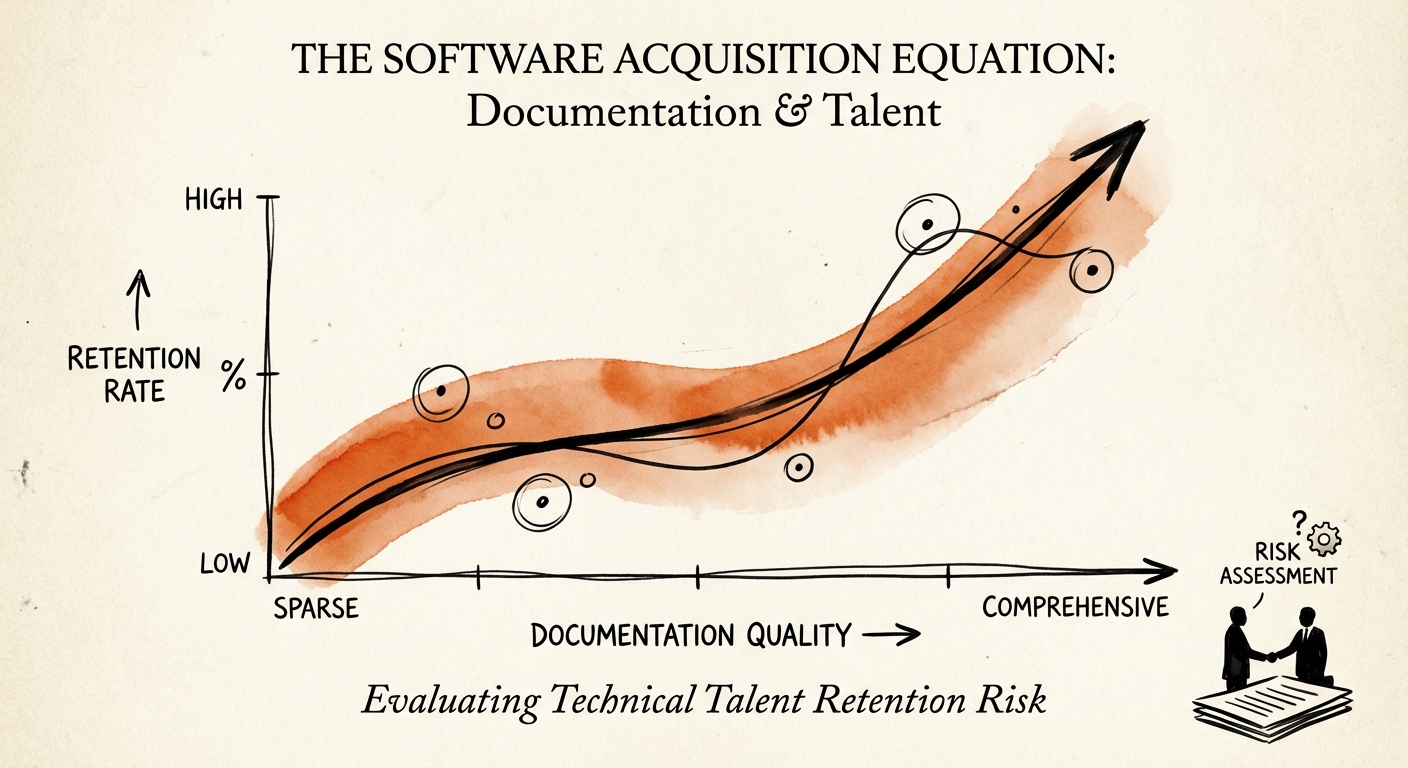
Review the documentation. Is the system architecture documented in Confluence, or does it exist solely in the head of a Senior Staff Engineer? High levels of undocumented complexity are a leading indicator of retention risk. Engineers who hold exclusive knowledge often feel undervalued or overburdened, making them prime flight risks post-acquisition. A low documentation score correlates directly with high replacement costs.
3. The Compensation Delta
Compare the target’s engineering compensation against top-tier market benchmarks, not just local averages. Many founder-led companies underpay early engineers who stay for equity or loyalty. When a PE firm steps in, that "loyalty discount" evaporates. If you aren't prepared to mark their salaries to market immediately, you are handing a recruitment list to competitors.
Structuring Retention: Beyond the retention packages
The standard private equity playbook—a cash retention bonus paid out over two years—is increasingly ineffective for top-tier engineering talent. High-performing engineers are motivated by autonomy, technical challenge, and equity upside, not just a paycheck.
The "Technical Earnout"
Instead of purely time-based retention bonuses, consider milestone-based technical earnouts. Tie meaningful payouts to the delivery of critical roadmap items (e.g., "Launch v2.0 API," "Complete Cloud Migration"). This aligns the engineer's incentives with the asset's value creation plan. It gives them a purpose beyond just "waiting out the clock."
Equity Participation
For the top 1-5% of technical talent, cash is insufficient. They need to see a path to a "second bite of the apple." rolling a portion of their proceeds into the new HoldCo or offering meaningful phantom stock plans can align their long-term interests with your exit timeline. You want them thinking like owners, not like employees serving a sentence.
Preserving the "Builder" Culture
The fastest way to lose engineers is to bury them in bureaucracy. Post-acquisition integration plans often impose heavy reporting requirements, time-tracking, and procurement hurdles that suffocate "builder" cultures. Protect your technical team’s autonomy. Create a "cordon sanitaire" around the engineering organization for the first 12 months, allowing them to focus on shipping code rather than filling out integration spreadsheets.