
The practical answer
- Short answer
- Shopify Magic and Sidekick change partner work from theme-only delivery toward data readiness, workflow automation, human review, and recurring commerce intelligence services.
- Best fit
- Industry: Ecommerce Technology. Function: Strategy & Corporate Development
- Operating path
- GTM Execution → Commercial Performance → Performance Improvement
- Key metric
- AI-ready Premium partner work depends on clean data, workflow design, and human review.
From Theme Work to Commerce Intelligence
For years, the Shopify Partner ecosystem rewarded agencies that could design strong storefronts, customize themes, manage migrations, and support performance marketing. That work still matters, but AI-enabled commerce tools are changing where premium partner value sits.
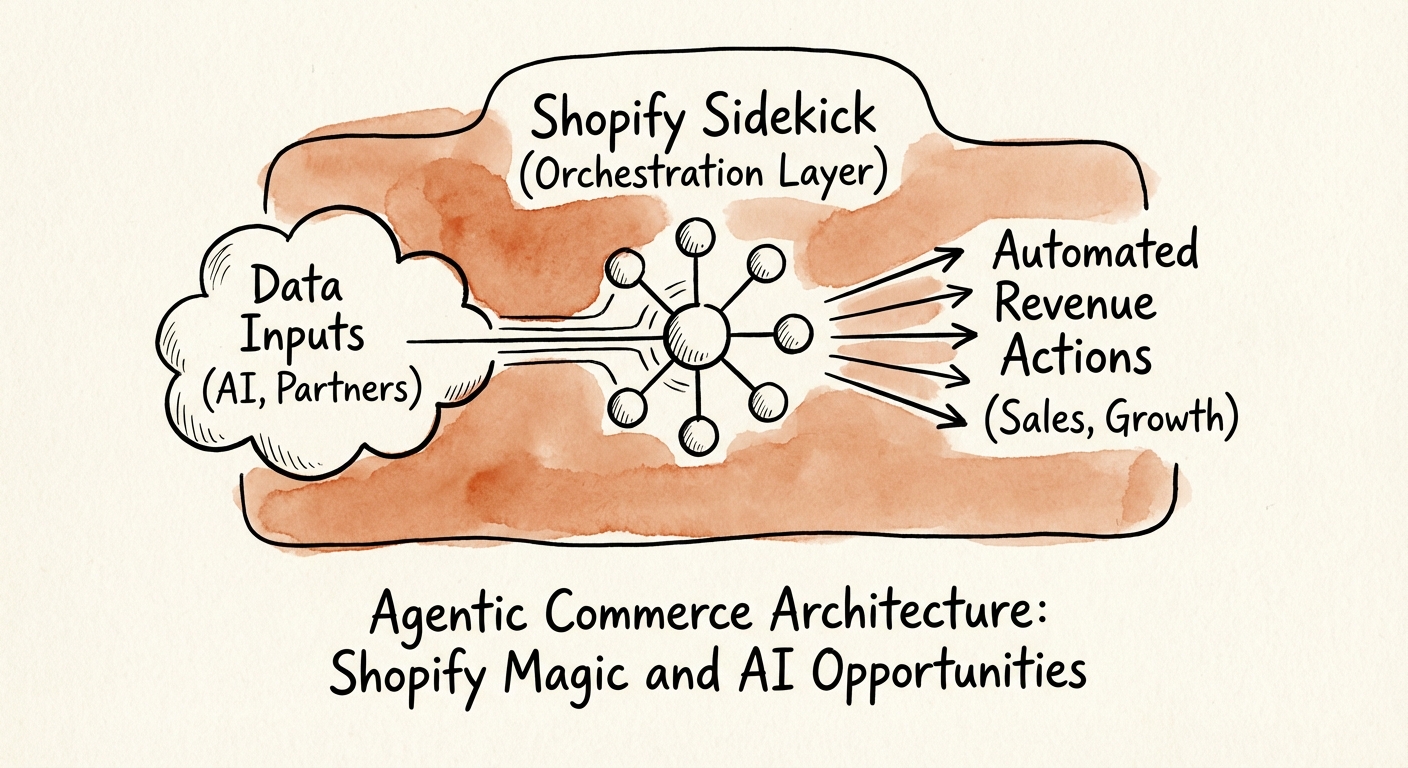
Shopify Magic and Sidekick give merchants AI assistance inside the Shopify admin, including content generation, guidance, analysis, and task support. That does not eliminate partner work. It changes the work. Merchants still need clean product data, disciplined customer segmentation, reliable integrations, sound workflow design, and human judgment around what AI-generated recommendations should actually become operating process.
The partner opportunity is therefore not "AI will build the store." The opportunity is to help merchants make their data, workflows, app stack, and operating rhythm ready for AI-supported commerce. That is a more strategic engagement than a theme build alone.
Shopify AI does not remove the need for partners. It raises the value of partners who can clean the data, design the workflows, and keep humans accountable for the decisions.
The Economics of Intelligence: From Project to Retainer
A traditional theme shop often has lumpy revenue: migration projects, redesigns, and support tickets. A commerce intelligence partner can create more durable revenue by owning analytics quality, experimentation cadence, catalog hygiene, customer data, and workflow automation.
Mid-market merchants pay for this work when it connects to measurable operating outcomes: better merchandising decisions, cleaner personalization inputs, faster campaign production, fewer manual admin tasks, and stronger conversion diagnostics. The retainer is not a maintenance fee for a website. It is support for the commercial operating system.
Valuation Implication
Buyers will not pay a premium just because an agency says "AI" in its deck. They will look for repeatable service packaging, recurring revenue, proprietary playbooks, measurable client outcomes, and low key-person dependency. A Shopify partner that owns those capabilities can tell a stronger exit story than a generalist design-and-build agency.
The Playbook: How to Build the AI-Ready Commerce Offer
Transitioning from a service shop to an intelligence partner requires three operational pivots.
1. The Data Audit as the Wedge
Stop selling redesigns as the only entry point. Start with data integrity. Are product tags consistent? Are customer segments useful? Are metafields structured? Are inventory rules reliable? AI assistance is only as useful as the data and operating context behind it.
2. Productize Your Logic
Build reusable Shopify Functions, Flow automations, Admin UI extensions, and implementation playbooks that reduce one-off delivery. The goal is not to hide custom scripts in client accounts. The goal is to create repeatable logic that improves margin and transferability.
3. Add Human Review to AI Workflows
Merchants need a human operating loop around AI-supported work. Partners can tune workflows, review outputs, monitor edge cases, and translate recommendations into merchandising, operations, and lifecycle-marketing decisions. That is where the durable advisory relationship lives.