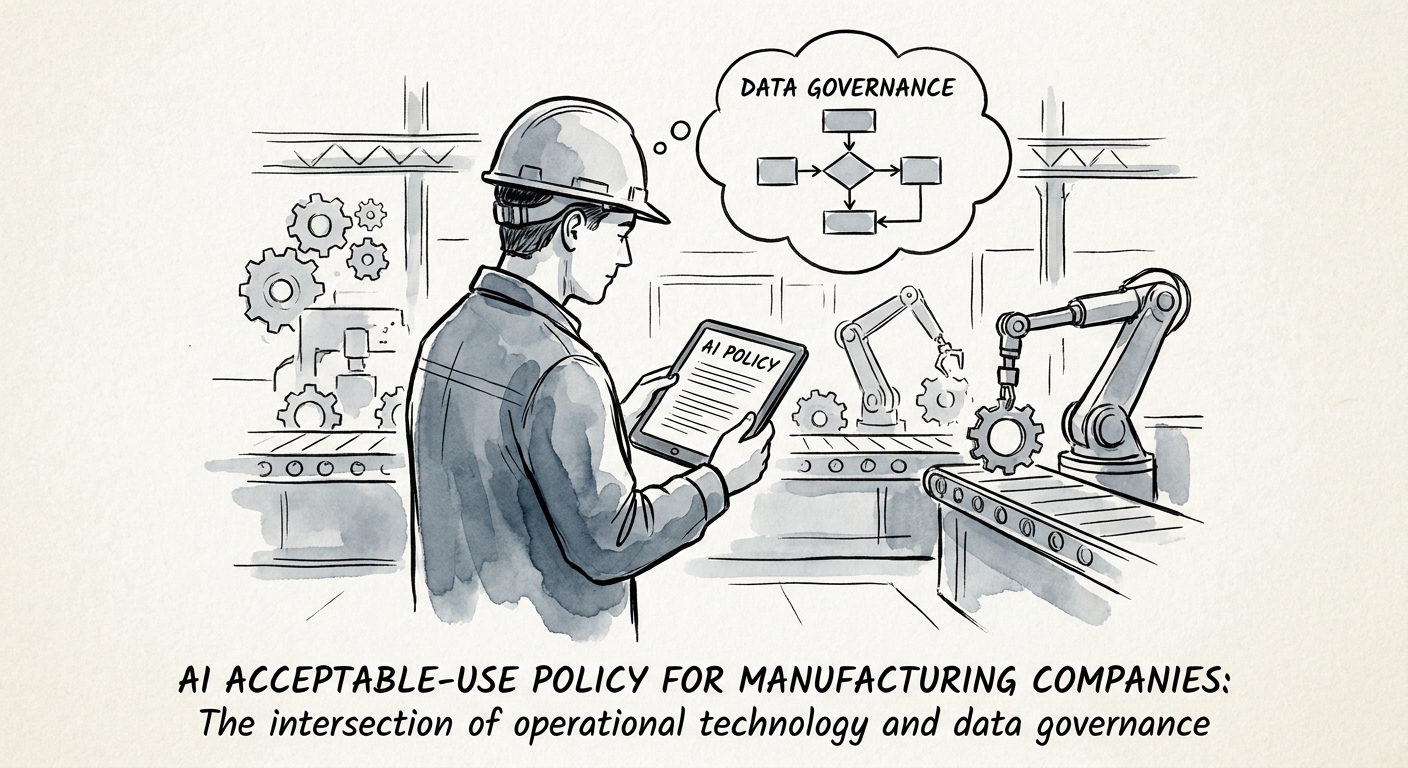
The line your policy has to draw before line two starts up
Picture a 120-person contract manufacturer. A process tech pastes a stalled-machine error code into a chatbot, gets a plausible-sounding fix, and changes a feed rate on a CNC cell. The part runs out of tolerance for three hours before QC catches it. Nothing was hacked. No data leaked. The AI was simply confident and wrong, and a tired operator trusted it.
That is the scenario a manufacturing AI acceptable-use policy actually has to prevent — and it's a different problem than the one a law firm or an agency writes their policy for. Your sensitive surface isn't just client confidentiality. It's torque specs, weld parameters, material certs, supplier pricing under NDA, customer forecasts, and the maintenance tribal knowledge that walks out the door when a 30-year tech retires. The research is blunt about why this matters more for smaller manufacturers: the RSM middle-market AI survey, the San Francisco Fed small-business AI analysis, and the OECD SME AI adoption report all point to the same gap: smaller firms adopt the tools faster than they build the skills and guardrails to use them safely.
So the policy's first job isn't a list of approved apps. It's one sentence the whole plant can recite: AI can help you write things down and find things faster — it can never decide what runs on the floor.
Sort every task into "draft it" or "decide it"
Skip the abstract risk tiers. Sort the actual jobs people do into two buckets, and post them in the break room.
Green — draft and search, human edits before use: turning a senior tech's verbal walkthrough into a clean SOP, summarizing a shift handoff, drafting safety-training materials, searching the maintenance manual archive ("what's the lockout sequence on the #4 press?"), or rewriting a vendor email. Low stakes, high leverage, and reversible.
Red — AI does not touch the decision: setting or changing a machine parameter, signing off a quality disposition, releasing a lot, quoting a price that depends on confidential supplier costs, or feeding a customer's demand forecast into a public tool. These need an approved system, controlled source data, and a named human who owns the call.
The dividing line is simple: if a wrong answer scraps parts, voids a cert, or breaches a supplier NDA, it's red. To structure the controls behind that line, the NIST AI Risk Management Framework gives you a way to map context and assign ownership, and CISA's AI Data Security Best Practices covers locking down what data the tools can see and where outputs go. Before any assistant gets pointed at your ERP, MES, or quality records, hold its configuration up against the vendor's own commitments — Microsoft 365 Copilot's privacy and data controls and OpenAI's enterprise privacy terms — so you know exactly whether a prompt about supplier pricing stays inside your tenant or doesn't.
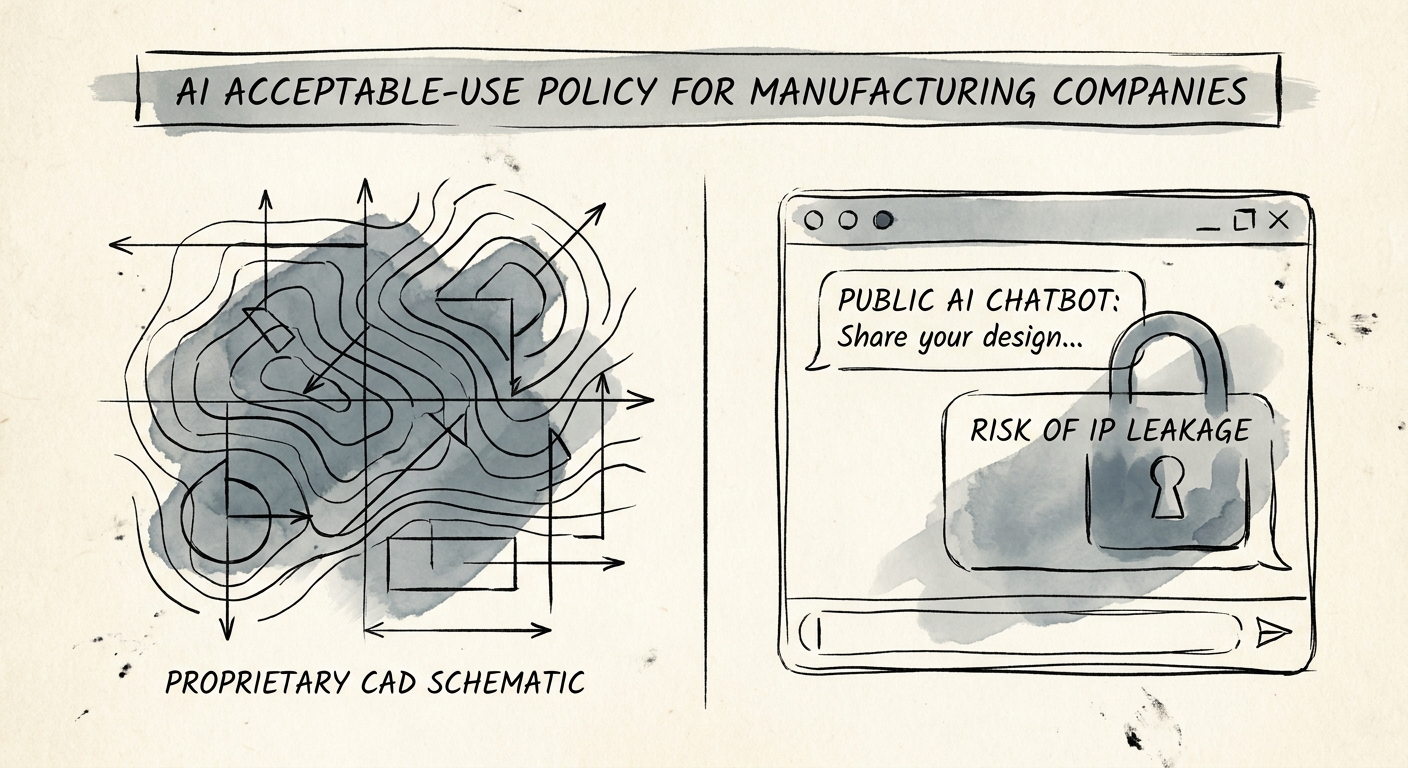
Make it a standing line item, not a binder nobody opens
A manufacturing policy that lives in a SharePoint folder is theater. Make it operational. Name one owner — usually whoever runs operations or continuous improvement, not just IT. Put a five-minute "AI use" check on the same agenda as your scrap and OEE review: which green-bucket workflows shipped this week, did anyone hit a red-bucket judgment call, and what got logged. When a tech is unsure which bucket a task falls in, the default is "ask, don't paste."
Start where the payback is obvious and the risk is near zero: capturing retiring techs' maintenance knowledge into searchable SOPs before that expertise leaves. It's the manufacturing use case where AI earns trust without touching a single production decision — and it's reversible if the draft is wrong.
To pressure-test whether your data is even ready for a controlled pilot, run the SMB AI readiness assessment. Then use the 90-day implementation plan to train the floor, stand up one governed pilot, and put a number on what it saved.
