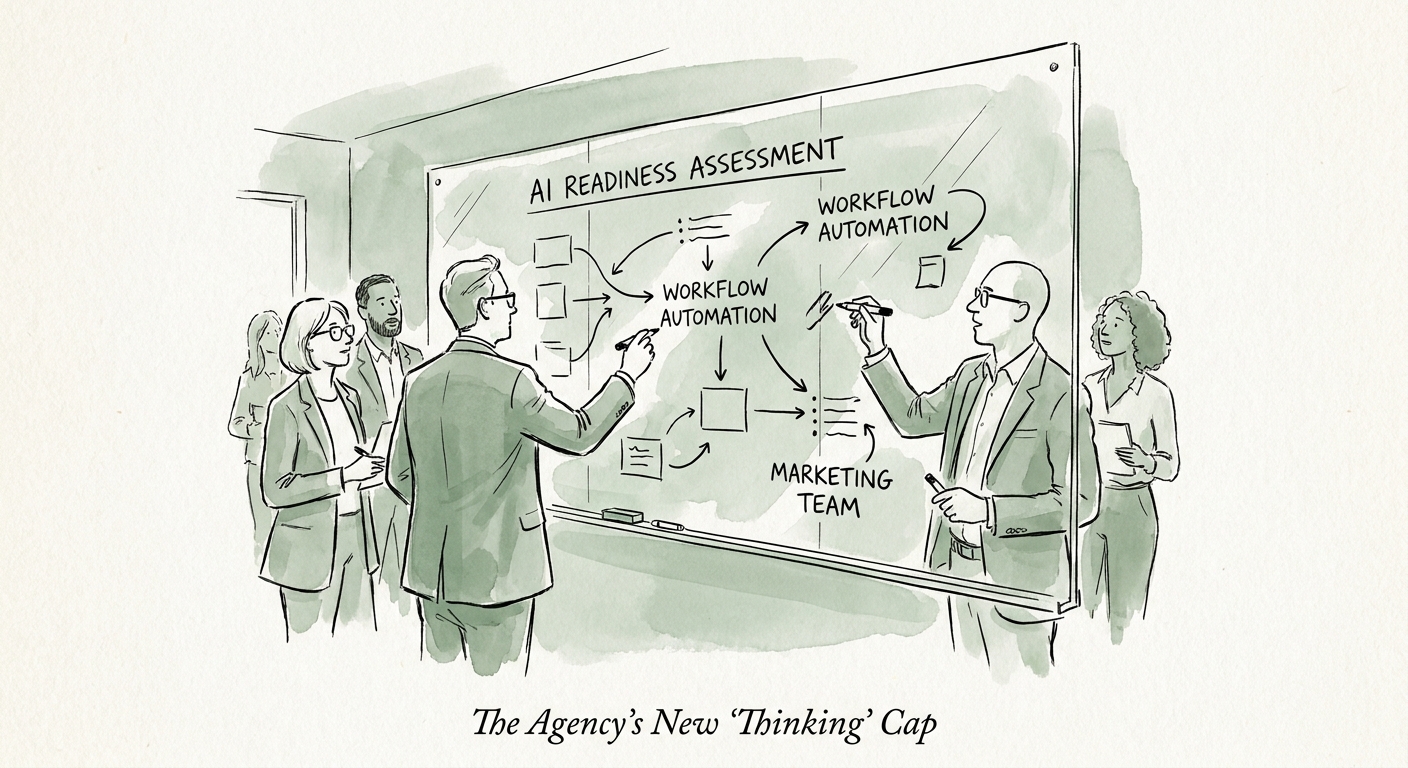
The readiness test isn't a tool count. It's a 60-second file hunt.
Here's the assessment most 10-person agencies skip. Pick a client you served two quarters ago. Now, in under a minute, find their current brand voice guide, the approved messaging boundaries, the last campaign's performance numbers, and the rule about who signs off before anything goes out the door. If that took you ten minutes and three Slack pings to a freelancer who's now on vacation, your agency is not AI-ready — and it has nothing to do with which model you've subscribed to.
AI is genuinely moving into the work. The Salesforce State of Marketing report and the HubSpot State of Marketing report both track that shift across content, segmentation, and campaign drafting. But those reports describe marketing departments with data teams. A 10-person shop running eight client accounts has a different constraint entirely: the source material AI needs to do useful work lives in someone's head, a Google Drive folder named "FINAL_v3", and a brand deck that hasn't been opened since onboarding. Feed that to a model and it will confidently invent the tone, the claim, and the offer — and you'll catch it on the client review call, which is the worst possible place to catch it.
Where to point it first — and the three accounts that will burn you
The first workflow to make AI-ready is almost never "write the campaign." It's the repetitive connective tissue: turning a 40-minute kickoff recording into structured account notes, repurposing one approved long-form asset into five channel variants, or drafting research briefs from a client's own past-performing content. These share a trait — stable, agency-owned source material and a reviewer who can spot a wrong claim in seconds. Drafting net-new strategy for a regulated client off thin inputs does not share that trait, and that's exactly where small teams get hurt.
Sort your client roster before you turn anything on. Three categories will bite a 10-person agency: clients in regulated verticals (a financial advisor, a supplement brand, a healthcare practice) where a hallucinated claim is a compliance problem, not a typo; clients whose voice is the product (a founder-led personal brand where "close enough" tone reads as a betrayal); and clients whose data you contractually cannot pool into shared tools. For everyone else, the readiness question is just four lines long: where is the work repeated, where is the source data actually reliable, who owns the review, and what breaks the client relationship if the model is wrong? The PwC Responsible AI survey is worth reading precisely because small teams assume governance is a big-company problem to defer — it isn't, and the NIST AI Risk Management Framework gives you a way to map client context and risk on a single page, not a binder. For an agency, "governance" means one paragraph in your SOW about how AI is used, one named reviewer per workflow, and a hard rule that brand voice and client claims get human sign-off. That's it. Write it before the first workflow goes live, not after the first client complaint.
Prove it on one workflow before it touches every account
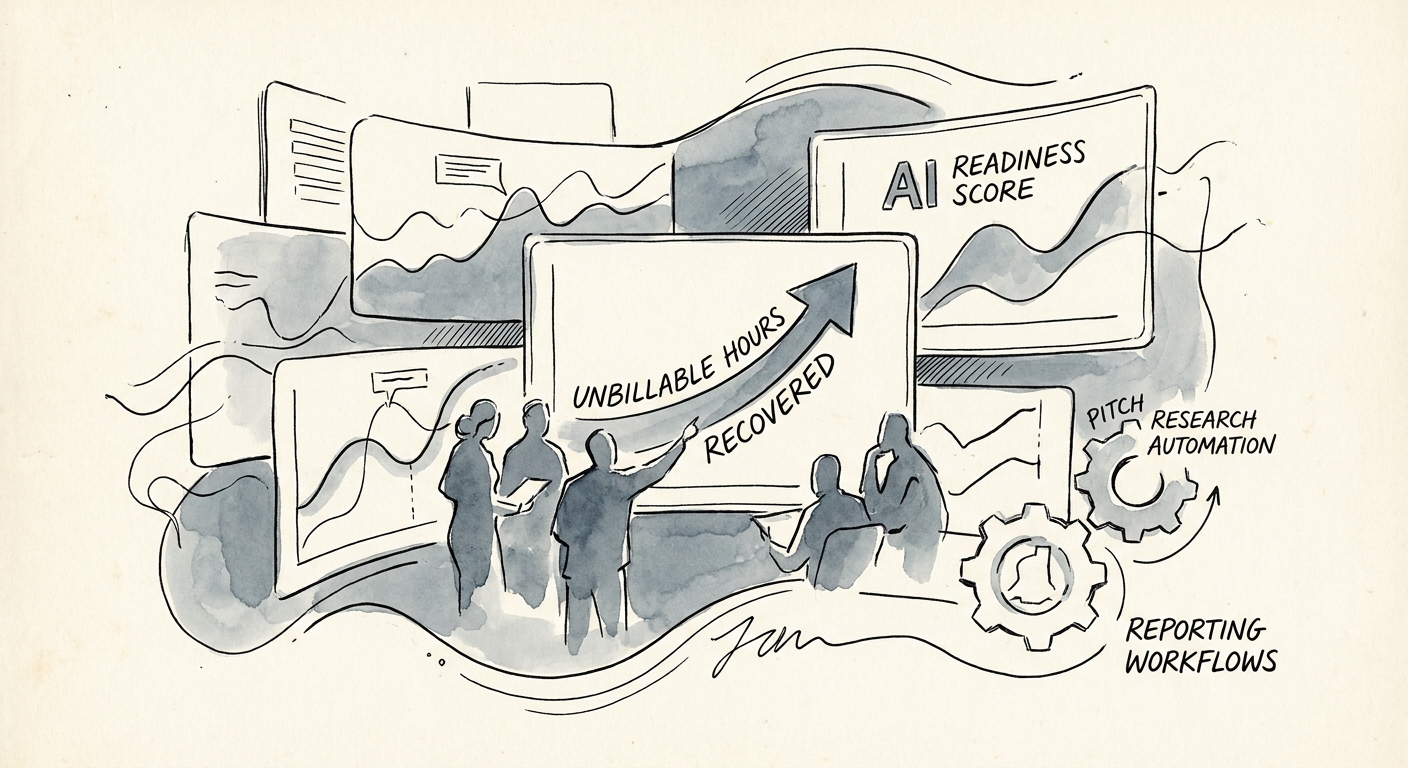
The temptation at 10 people is to roll a winning prompt across all eight accounts in a week. Resist it. The McKinsey State of AI research keeps landing on the same point: the value shows up when you redesign how the work actually gets done and people genuinely adopt it — not when you bolt a tool onto a broken process. So instrument one high-repeat workflow and watch four numbers for a month: cycle time from brief to first draft, how many revision rounds it takes, how much of your senior people's day goes to reviewing AI output, and the client acceptance rate on the work that came out of it. If revision rounds go up or review eats more senior time than the draft saved, the workflow isn't ready — kill it and pick a cleaner one.
This Monday: do the 60-second file hunt on one client, fix whatever you couldn't find in time, and pick the single most repetitive task on your busiest account to instrument first. If you want an outside read on which workflow is actually safe to start with, we'd open with a QuickStart AI Audit and bring in the AI ROI Calculator only after you have a real workflow with real numbers — not a tool subscription and a hunch.