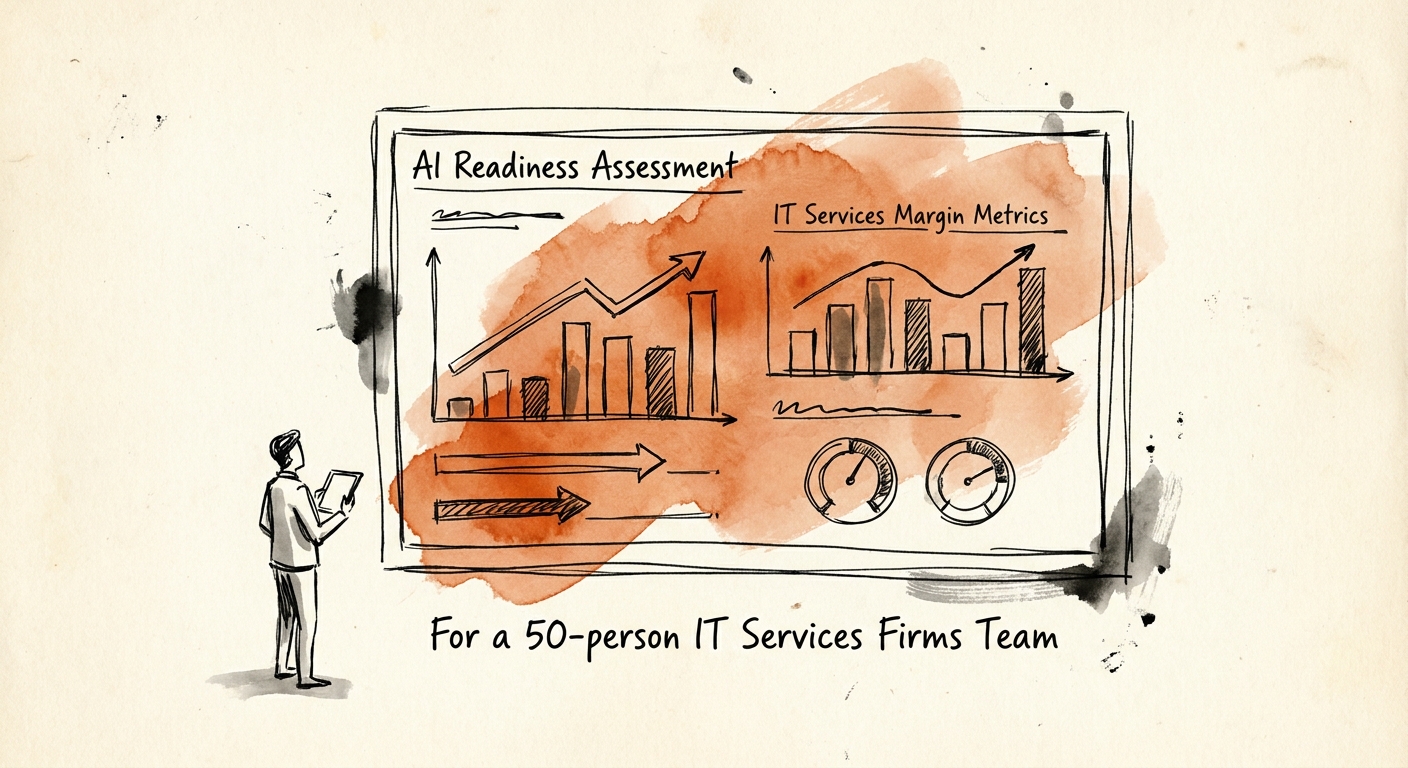
The real readiness test: open a ticket and ask if a stranger could finish it
Picture a 50-person IT services firm on a Tuesday. A migration ticket gets reassigned because the lead engineer is out. The new owner opens it and finds: "Migrated mailboxes, client aware of cutover. See Slack." That ticket is not ready for a human, let alone an AI. And that single failure tells you more about your AI readiness than any vendor demo will.
At this headcount you've crossed a threshold. You're past the founder-knows-everything stage but short of the documented-runbook stage. You've got three or four delivery managers, a handful of senior techs holding the hard accounts in their heads, and a ticketing system that's a graveyard of half-sentences. The OECD report on AI adoption by small and medium-sized enterprises and the San Francisco Fed analysis of AI and small businesses both land on the same uncomfortable point: the constraint at your size is rarely the tool, it's whether the work is captured well enough to act on. The RSM middle-market AI survey echoes it from the buyer's side.
So run the actual test before you score anything. Pull ten closed tickets from your three most complex accounts. Ask a competent engineer who didn't work them to reconstruct what happened and what the client expects next, using only what's written down. The percentage they can answer is your readiness number. If it's under 60%, an AI summarizing those tickets will produce confident, fluent, wrong answers, faster. The SMB AI readiness assessment gives you the full eight-dimension version, but that one exercise will tell you whether you're close.
The thing that bites IT services specifically: you hold someone else's keys
Most readiness advice ignores what makes your firm different from a marketing agency or an accounting shop. You operate inside other companies' environments. Their network diagrams, admin credentials, security exceptions, and "do not touch the legacy server in closet B" warnings live in your project notes. The moment you point an AI tool at that context, you've made a decision about where 50 clients' operational secrets get processed and stored, and most 50-person firms make that decision by accident.
Treat the NIST AI Risk Management Framework as a one-page workflow checklist, not a compliance binder: what work is the tool doing, how does it fail, who reviews the output, who's accountable when it's wrong. Then use CISA's AI Data Security Best Practices to answer the question that actually matters for your business: which client context is allowed near the model, what's walled off, and what gets logged. Say a 50-person firm runs managed services for a healthcare clinic and a defense subcontractor in the same tenant. Those two clients have incompatible rules about where their data can go. An AI workflow that doesn't know the difference is a breach waiting for a calendar invite.
The deeper failure mode at your size is inconsistency. Manager A tags tickets one way, Manager B another, and the senior tech who set up the hard accounts documents nothing because he remembers it all. Feed that mess to a model and you automate the inconsistency. Pick one account or one ticket type, standardize how it's captured and reviewed, and prove the pattern there first. The 90-day AI implementation plan sequences that cleanup so you're not boiling the ocean.
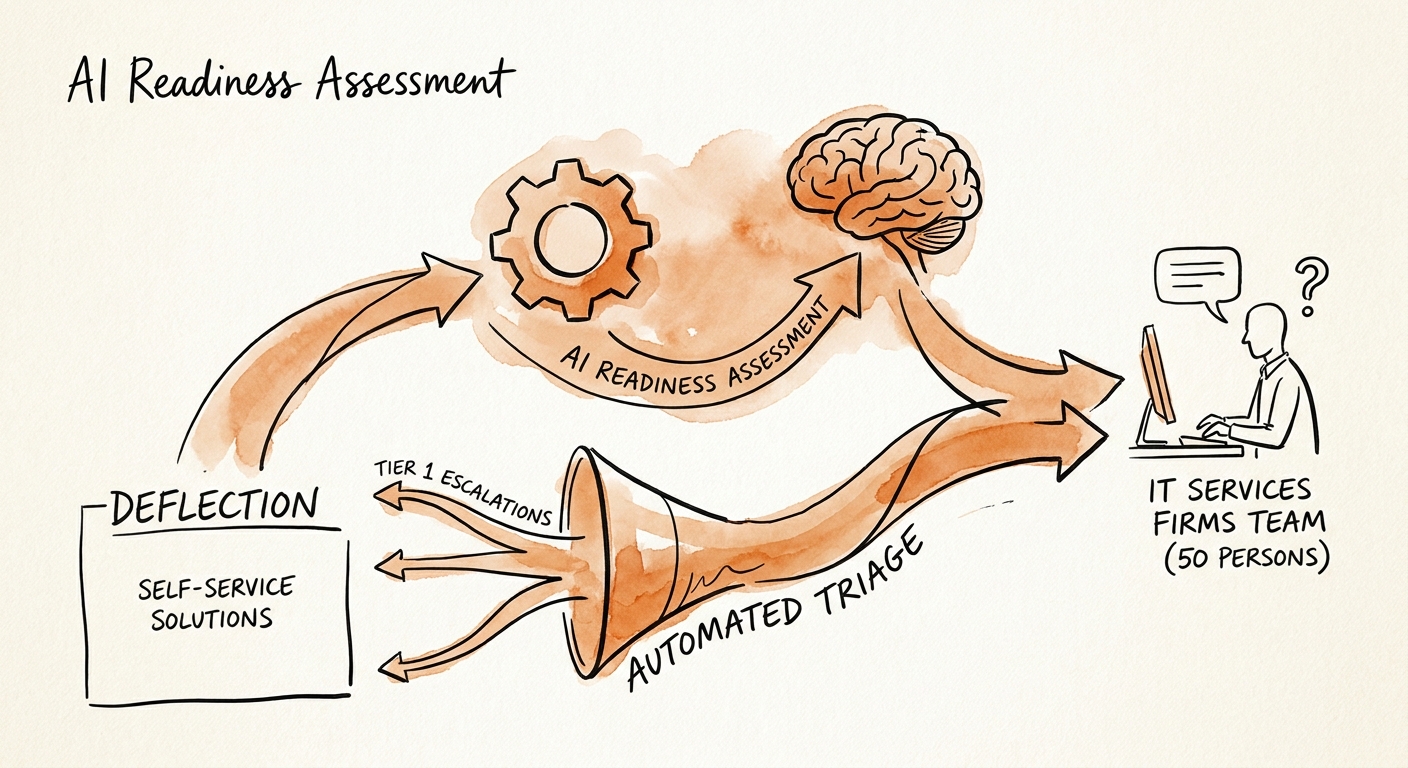
Pick one workflow, and measure rework, not minutes
The Deloitte State of AI in the Enterprise 2026 finding that matters for you: pilots create value only when they become governed, repeatable workflows, not when they impress people in a demo. For a 50-person IT services firm, the strongest first candidate is usually ticket triage and routing, or generating the first-draft status report that account managers spend Friday afternoon writing by hand. Both are high-volume, low-blast-radius, and easy for a manager to eyeball.
Here's the trap. Every dashboard will show you minutes saved, because a model writes a status summary in four seconds. That number is a vanity metric for a delivery business. The number that decides whether AI helped or hurt is rework: how often does a client reply "that's not what we agreed," how often does a triaged ticket land on the wrong engineer, how many implementation QA defects slip because the summary glossed the exception that mattered. If a 30-person delivery team saves two hours a week on reports but adds one reopened client escalation a month, you went backward.
So baseline three things before you turn anything on: ticket misroute rate, status-report correction rate, and reopened-escalation count per account. Run the pilot for a month against those exact numbers. If rework holds steady or drops while the work gets faster, you've earned the second workflow. If rework creeps up, you've learned your documentation isn't ready yet, which is cheaper to learn now than after rollout. Measure AI ROI against real operating baselines before you approve the next one.