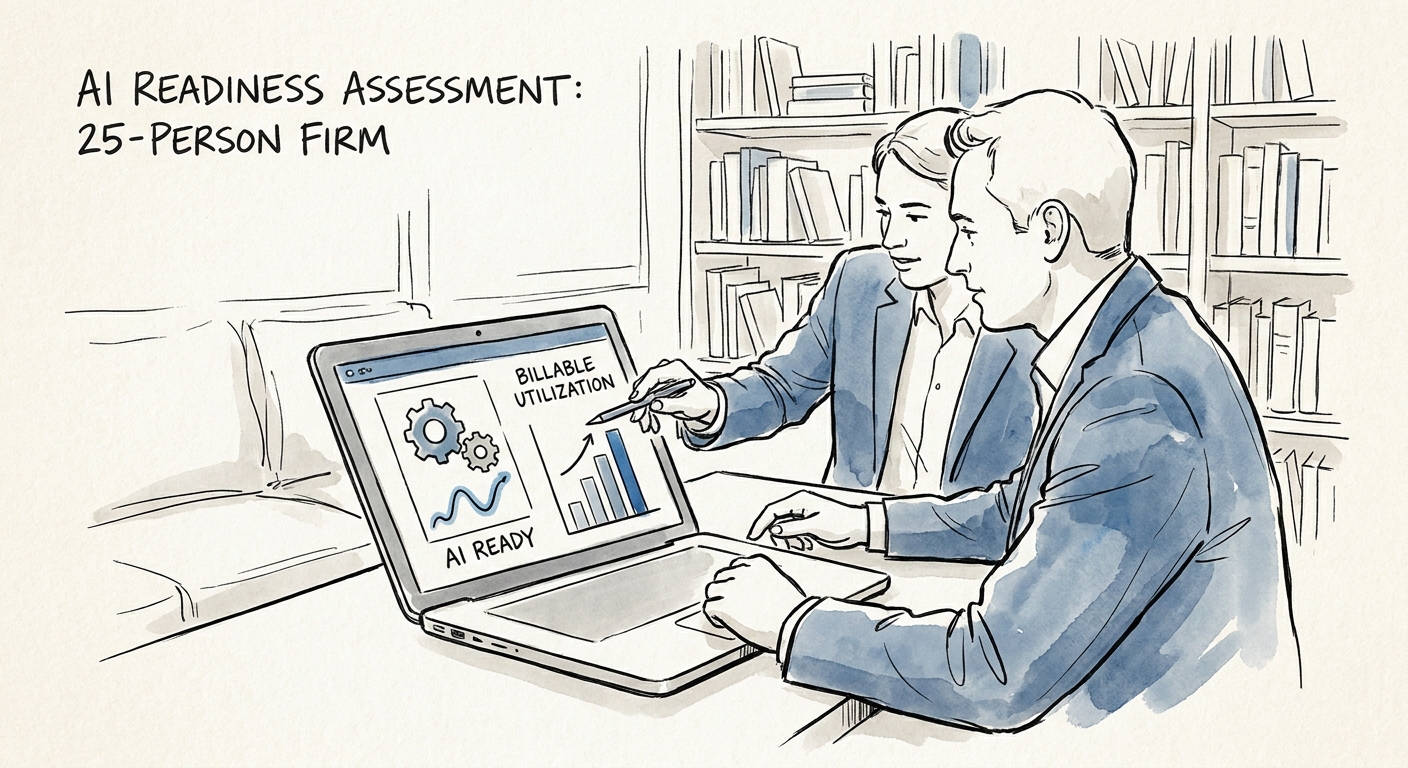
Your firm's IP is trapped in three partners' inboxes
Picture a 25-person firm: three partners, a dozen consultants, the rest delivery and ops. The most valuable asset isn't the methodology deck. It's the scoping judgment in a partner's head, the discovery questions one senior consultant always asks, the handful of proposals that won six-figure engagements. None of it is indexed. When a new consultant writes a proposal, they either reinvent it or copy the wrong template. That gap is the entire AI readiness question for a firm your size.
McKinsey's State of AI 2025 found that the firms capturing value weren't the ones with the most tools; they were the ones that redesigned how work actually flows. For a consulting shop that means a blunt test: if you fed your last winning proposals and your delivery templates into an AI tool tomorrow, would it produce something a partner would put their name on, or something that needs a full rewrite? If it's the second answer, your readiness problem is upstream of any tool, in how your knowledge is captured, tagged, and trusted.
The four questions that actually predict whether this works
Skip the maturity matrix. Four concrete checks tell you more. First, knowledge reuse: can you point to a single place where your best deliverables and proposals live, or are they scattered across personal drives? Second, proposal quality control: who reads a draft before it reaches a client, and what do they catch? Third, delivery governance: when a consultant cites a benchmark or recommendation, can someone trace it back to a real source? Fourth, client-data handling, and this is where consulting firms get burned. PwC's Responsible AI survey matters here precisely because so much of your raw material is confidential: a client's financials, their org chart, their unflattering internal diagnosis. Before any of that touches an AI workflow, you need a clear line on what gets anonymized and what never leaves a controlled environment.
IBM's research on AI capabilities reframes the whole thing usefully: return comes from capabilities, not from buying seats. For your firm the capabilities that matter are a clean, permissioned source library, a partner review cadence that already works on human-written drafts, and consultants trained well enough that they catch a fabricated statistic instead of forwarding it to a client. If your review process is already informal and inconsistent on human work, AI doesn't fix that; it accelerates the mess at the exact moment a client is reading it.
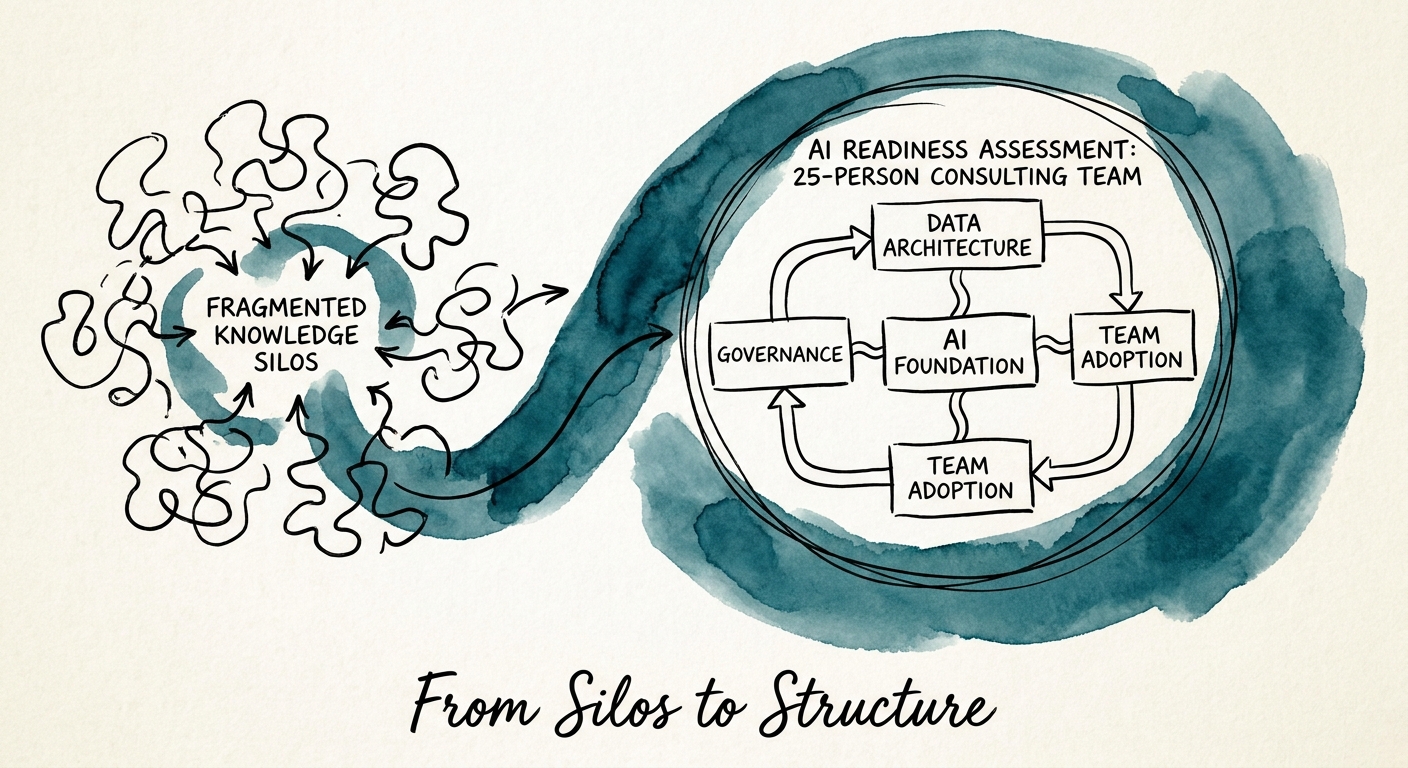
Pick one workflow. Make it the proposal first draft.
Bain's agentic AI report points toward autonomous, multi-step workflows, and that's a fine destination. It is a terrible starting line for a 25-person firm where one bad client-facing output costs you a referral. Start narrow and start where you can measure: proposal first drafts. Feed it your winning examples and your live discovery notes, let it produce a structured first cut, and track four numbers over your next batch of proposals: drafting time, how many partner revision passes it takes, whether every claim traces to a real source, and your win rate. If drafting time drops and win rate holds, expand to delivery QA next. If win rate slips, you learned something cheap about where your reuse breaks down.
To map the operating model around that first workflow, work through the AI Transformation Blueprint. To rank which workflow to start with against the others on your list, run the AI Opportunity Score before you commit a partner's time to it.
