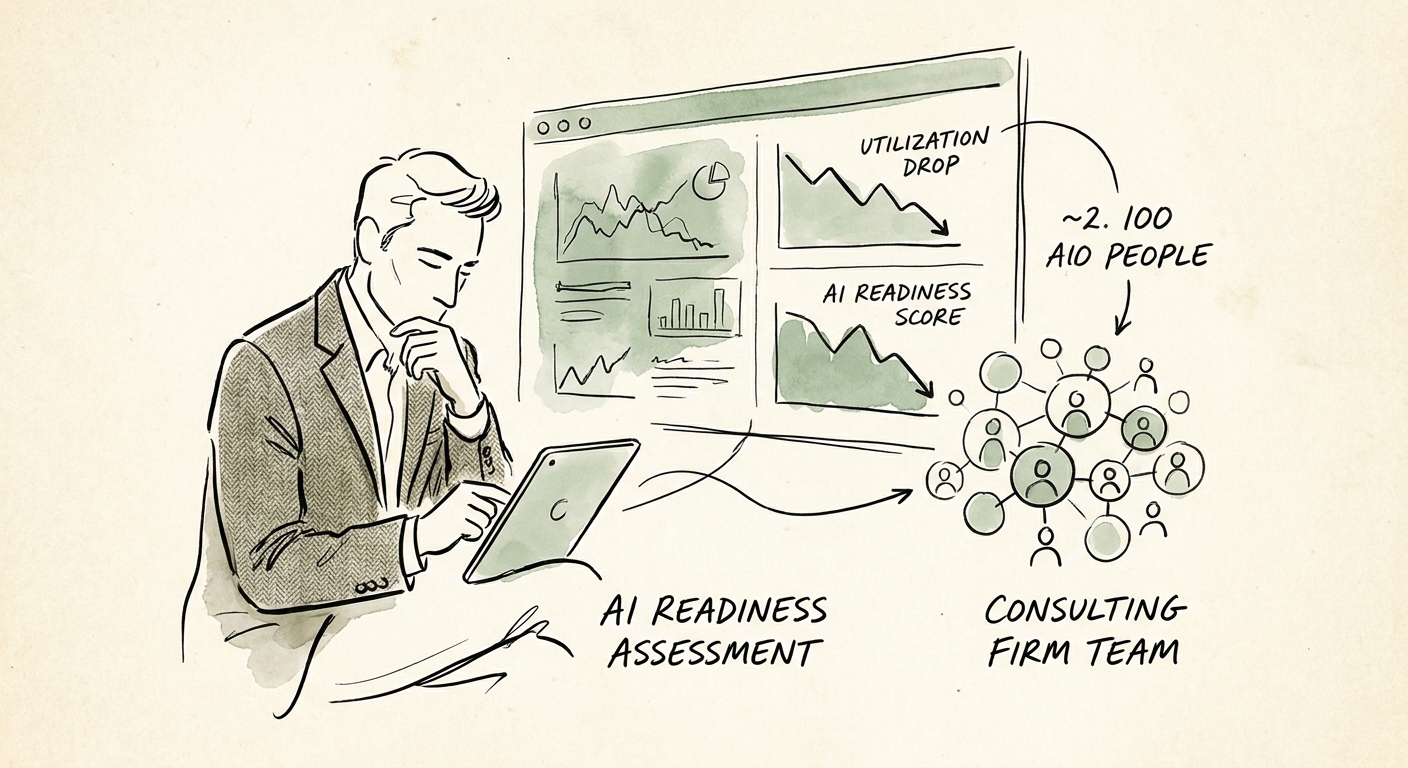
The bottleneck is a partner's calendar, not a chatbot
Picture a 100-person consulting firm on a normal Thursday. Two senior managers are stalled because the same partner has to review their workpapers before anything reaches the client. A proposal is late because the research that should take an afternoon took three days. A new hire is reconstructing a methodology that already lives in four old engagement folders nobody can find. None of that is an "AI curiosity" problem. It's a leverage problem, and AI is only worth discussing if it loosens those specific knots.
At this size you're past the stage where everything is bespoke and not yet at the stage where you have a real knowledge-management function. You have repeated delivery patterns, but they live in people's heads and inboxes. That's exactly the band where the RSM middle-market AI survey finds AI shifting from experiment to operating priority, and exactly where the OECD SME adoption report says the real blockers show up: skills, data readiness, process maturity, and risk controls. Translate those into consulting terms and they become staffing pyramids, document standards, and how much review one partner can absorb.
So a readiness pass shouldn't inventory tools. It should rank the places where the firm pays the same person to make the same judgment over and over: proposal research, discovery-note synthesis, turning past work into reusable assets, internal methodology search, QA review, and onboarding documentation. For each one, write down what it actually costs you today in hours and write-offs. If you can't name the cost, you're not ready to automate it.
Draw the client-data line before you draw the workflow
Here is the distinction that separates a consulting firm from a generic SMB: your raw material is often someone else's confidential information. A meeting-summary tool running on your own internal kickoff calls is a different animal from one that ingests a client's diligence room, privileged legal correspondence, or unaudited financials. Both are "AI for note-taking." Only one can blow up a client relationship.
That's why the readiness scorecard has to be two columns, not one. Column A is internal enablement: proposal drafting against sanitized templates, searching your own methodology library, summarizing internal training. You can move on these fast. Column B is anything that touches client deliverables or client data, and it doesn't ship until you've named the system of record, the access rule by role, the reviewer who signs off, and what gets logged. The NIST AI Risk Management Framework gives you the four-verb structure to make that map — govern, map, measure, manage — and the CISA AI Data Security Best Practices make the leakage paths concrete: prompts, retrieval indexes, and generated summaries are all places client data can quietly escape.
The practical test for any proposed workflow is one question: if this output is wrong or leaks, whose name is on it? If the answer is a partner and a client, the workflow needs source citations, version history, and an escalation rule attached before a single consultant uses it in anger. Most firms get this backwards — they pilot the client-facing use case because it's exciting, and skip the boring internal wins that carry almost no risk.
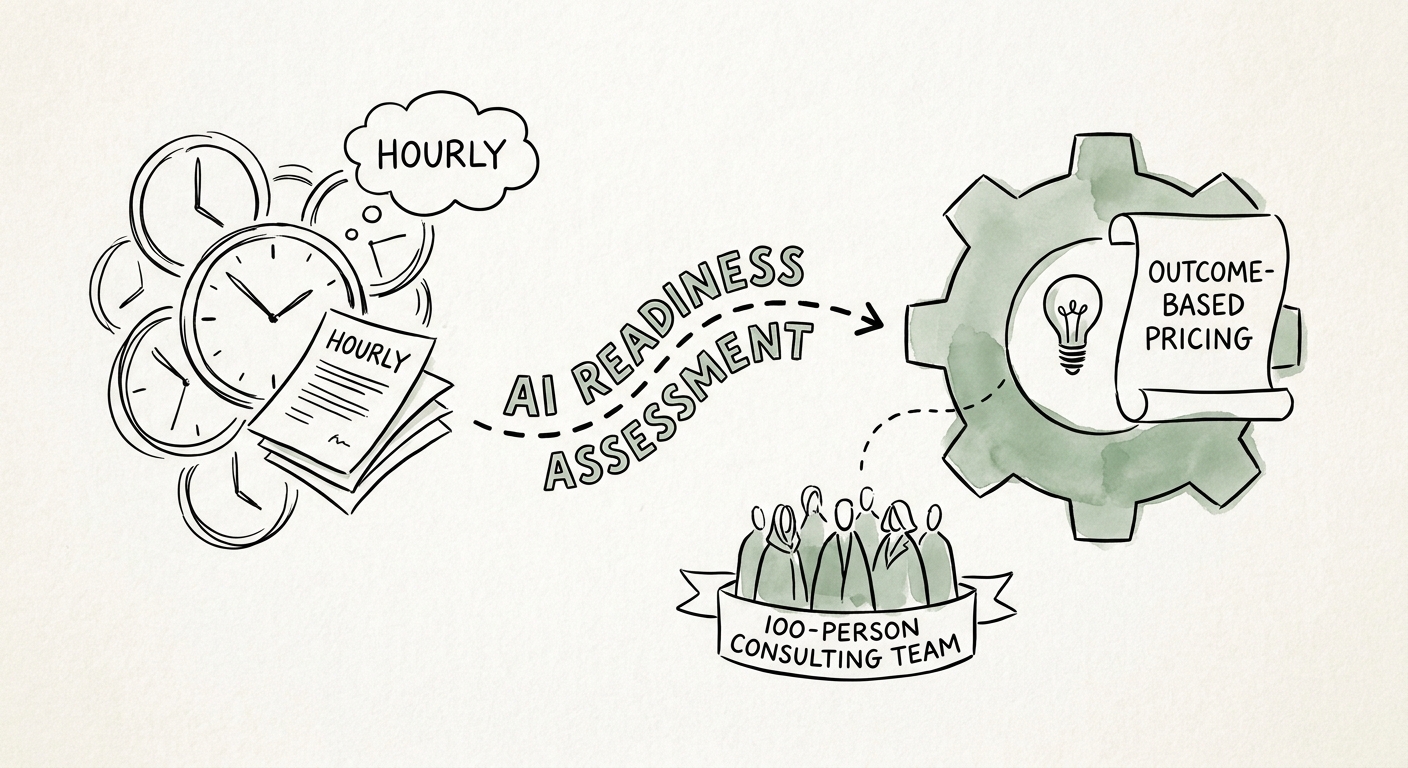
Tie the pilot to realization, then earn the second one
The Deloitte State of AI report keeps landing on the same point: value comes from changing a process, not from buying a license. For a consulting firm the process metrics are already sitting in your practice-management system. Pick one and attach the pilot to it: proposal turnaround time, QA defect rate, write-off percentage on a service line, new-hire ramp time, or the count of reusable assets a delivery team can pull from instead of rebuilding. "Consultants are using it" is not a result. "Write-offs on fixed-fee diligence work dropped because seniors stopped redoing research" is.
Resist the firm-wide assistant rollout. The Gartner agentic AI project forecast projects that more than 40% of agentic AI projects get canceled by end of 2027, and the ones that die are usually the ones that tried to do everything at once. Run a single workflow instead: one practice leader who owns it, one review rule, one training plan, and a weekly readout that shows whether behavior actually changed. If consultants are quietly working around it by week three, the tool lost — kill it and learn, don't expand it.
Monday-morning version: list your six repeated-judgment workflows, mark each one Column A or Column B, and circle the single Column A workflow with the clearest dollar cost today. That's your first pilot. If you'd rather pressure-test that pick against your numbers before committing a partner's time, the QuickStart AI Audit exists to find the one delivery workflow that improves leverage without putting client trust or workpaper quality at risk.