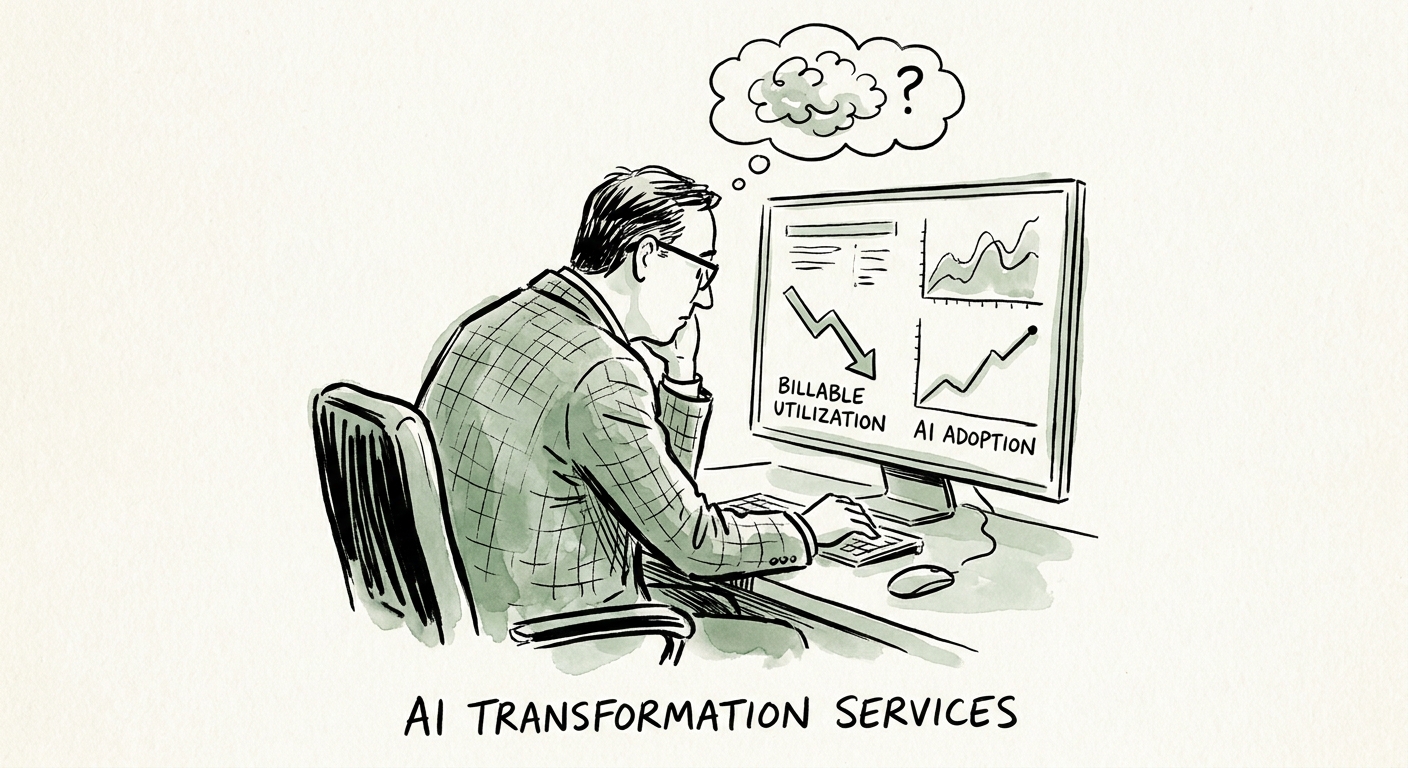
The hours you can't bill are where the money is
A consulting firm sells time, and the brutal part is that a large share of the week never reaches an invoice. Reading prior engagements to find a relevant framework. Reformatting a proposal for the fourth pursuit this quarter. Cleaning up discovery notes so a senior can actually use them. Hunting for the methodology doc someone swears exists. None of that shows up on a client bill, and all of it eats the realization rate.
That is the lens for AI here — not "what can a model do," but "which repeated, nonbillable motion is quietly dragging margin." The RSM middle-market AI survey shows leadership teams have moved AI from curiosity to a stated business priority. But the OECD report on SME adoption is honest about why it stalls: access to tools outran skills, governance, and data readiness. A firm that buys seats and waits for magic is buying the stall.
So pick a target the way a practice leader would. Say a 40-person advisory shop where seniors lose six hours a week to proposal assembly and research synthesis. Those two motions repeat across nearly every pursuit, they're measurable, and they map straight to throughput and realization. Start there — not at the flashy "AI writes the deliverable" demo, which is the one motion you can't afford to get wrong.
Draw the data boundary before you draw the workflow
A consulting firm runs on two kinds of knowledge that must never bleed into each other: client-specific facts you're contractually obligated to wall off, and reusable firm IP — methodologies, frameworks, sanitized patterns — that's your actual product. An assistant that treats both as one searchable pile is a confidentiality incident waiting for a deadline. The failure mode isn't a wrong answer. It's a polished paragraph that lifts Client A's pricing logic into Client B's proposal, with a citation that looks legitimate.
That's why the first design decision isn't the prompt — it's the source tier. Before anything gets built, classify what each workflow is allowed to touch: public sources only, approved firm methodology, sanitized historical work with client identifiers stripped, or live engagement materials. The NIST AI Risk Management Framework gives the sequence — map the context, measure the risk, manage the controls, keep ownership explicit — and the CISA AI Data Security Best Practices push the implementation toward role-based source access, logging, and safeguards on the data the system actually runs on.
Make it concrete: the proposal assistant gets approved methodology plus sanitized win patterns, and is explicitly blocked from any engagement folder. The research synthesizer can read a single named engagement's materials and cannot reach across to others. Every draft carries source citations a partner can trace, version history, and an exception path for the cases the rules didn't anticipate. You're not slowing the firm down — you're making sure the speed is defensible.
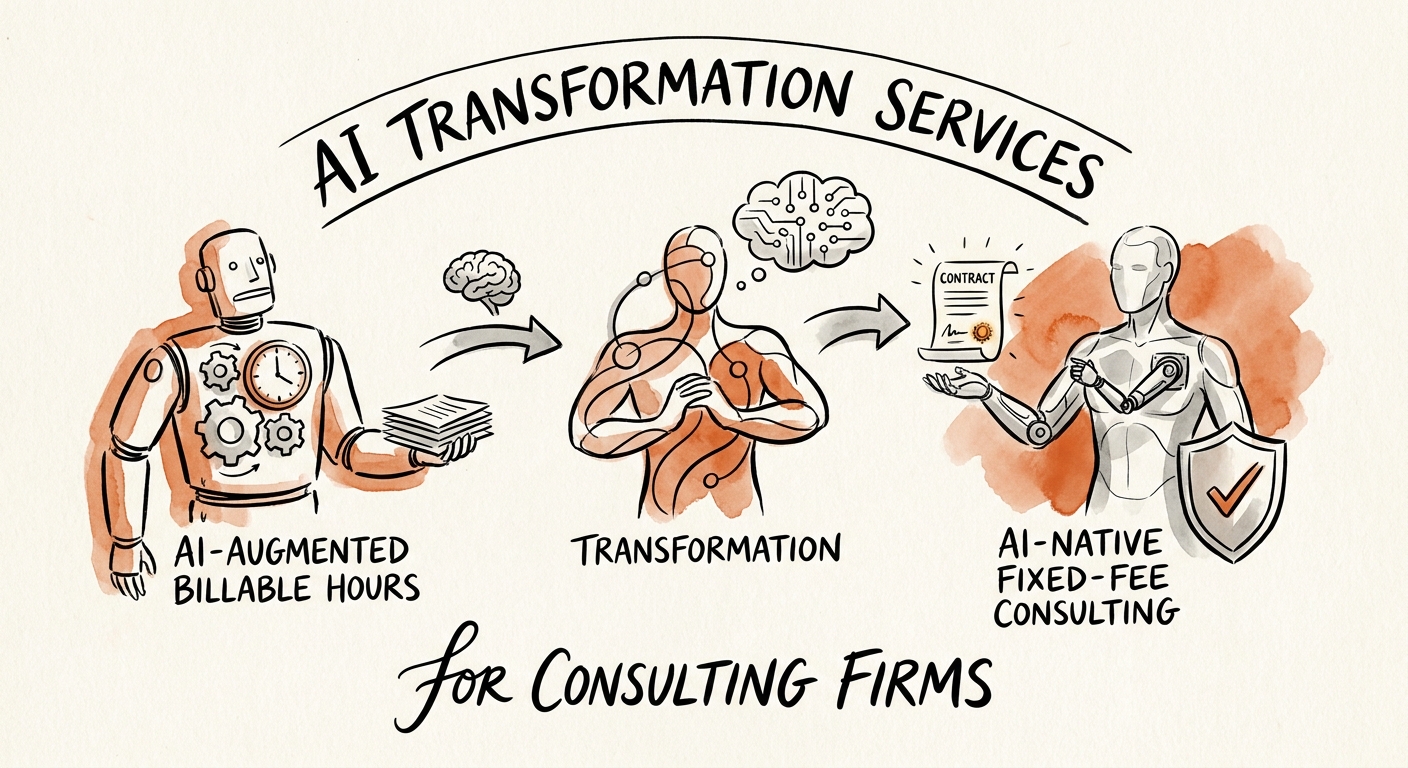
The metric that tells you it worked is on the engagement P&L
You'll know AI landed not because adoption charts look busy, but because the engagement economics move: review cycles get shorter, rework loops drop, juniors carry more leverage per senior hour, more proposals go out per week, and write-offs shrink. The Deloitte State of AI report backs the process-first view — value comes from redesigned workflows, not from a tool sitting next to an unchanged one.
And keep the first build bounded. The Gartner agentic AI forecast warns that a large share of agentic projects get canceled by 2027, and the ones that die are usually the unscoped, owner-less ones. So the first workflow ships with a named practice owner, an approved source library, a partner-review checkpoint on anything client-facing, and a weekly look at whether realization or proposal throughput actually moved. If neither budged in a month, you scoped the wrong workflow — kill it and move to the next candidate on the nonbillable-time list.
If you're choosing that first workflow now, AI for Professional Services walks through how to pick the one that improves delivery leverage and client confidence at the same time — instead of the one that just looks impressive in a demo.