
The practical answer
- Short answer
- A diagnostic playbook for PE Operating Partners integrating Google Cloud partners while protecting certification density, specialized talent, and services attach.
- Best fit
- Industry: Private Equity. Function: Post-Merger Integration
- Operating path
- Migration & Integration → Turnaround & Restructuring → Transaction Advisory Services
- Key metric
- Certification Protect the partner credentials and specializations that supported the acquisition thesis.
The 'Premier' Trap: Why GCP Deals Fail in the First 90 Days
You didn't buy a generic IT services shop; you bought a Google Cloud 'Premier' Partner with Specializations in Data & Analytics or Generative AI. You paid a premium for that badge because it unlocks Deal Acceleration Funds (DAF) and validates the firm's capability to enterprise buyers. But here is the math most PE sponsors miss: Partner Advantage status is dynamic, not static.
Unlike other ecosystems where status is often sticky, Google's Partner Advantage program recalculates eligibility based on real-time "Certification Density." If you acquire a 50-person boutique and merge it into a 500-person generalist MSP without ring-fencing the talent, your ratio of certified professionals dilutes overnight. You don't just lose a badge; you lose the margin-rich incentives that underpinned your Quality of Earnings (QofE).
The Certification Cliff
The moment you integrate HR systems, the clock starts ticking. If your new "combined entity" fails to meet the specialization requirements—often requiring a specific number of Professional Data Engineers or Cloud Architects per region—Google demotes you to "Member" status. The result? A sudden 15% drop in front-end margins and the evaporation of the DAF you forecasted for Q3.
You do not buy a GCP partner only for the customer list. You buy the technical density, certifications, and delivery motion that make the services attach valuable.
The 100-Day Integration Roadmap: Protecting the Multiplier
Successful integration of a GCP partner isn't about cost synergies; it's about preserving the services attach-rate engine. For every $1 of GCP consumption sold, the most valuable partners generate meaningful managed services and IP revenue. Here is how to protect that engine.
Days 0-30: The Talent Ring-Fence
Your first move isn't to consolidate back-office functions; it's to audit the Partner Advantage portal. Identify the specific individuals whose certifications anchor your "Specialization" badges. In a recent deal analysis, we found that 80% of a firm's elite status often rests on fewer than 12 key architects. If three of them leave because they hate your new timesheet policy, you lose the specialization. Implement focused retention packages specifically tied to certification maintenance for these anchors.
Days 30-60: Unifying the 'Commit' Motion
Generalist sales teams sell licenses; GCP specialists sell consumption commits. If you force your acquired GCP experts to adopt a generic "resell" motion, you will slow their velocity. Instead, integrate the sales motion around the Cloud Consumption Commitment (CCC). Train your broader sales force to spot data modernization triggers, but keep the technical closing motion with the acquired specialists. The goal is to cross-sell the capability, not just the license.
Days 60-90: Solving 'Tenant Sprawl'
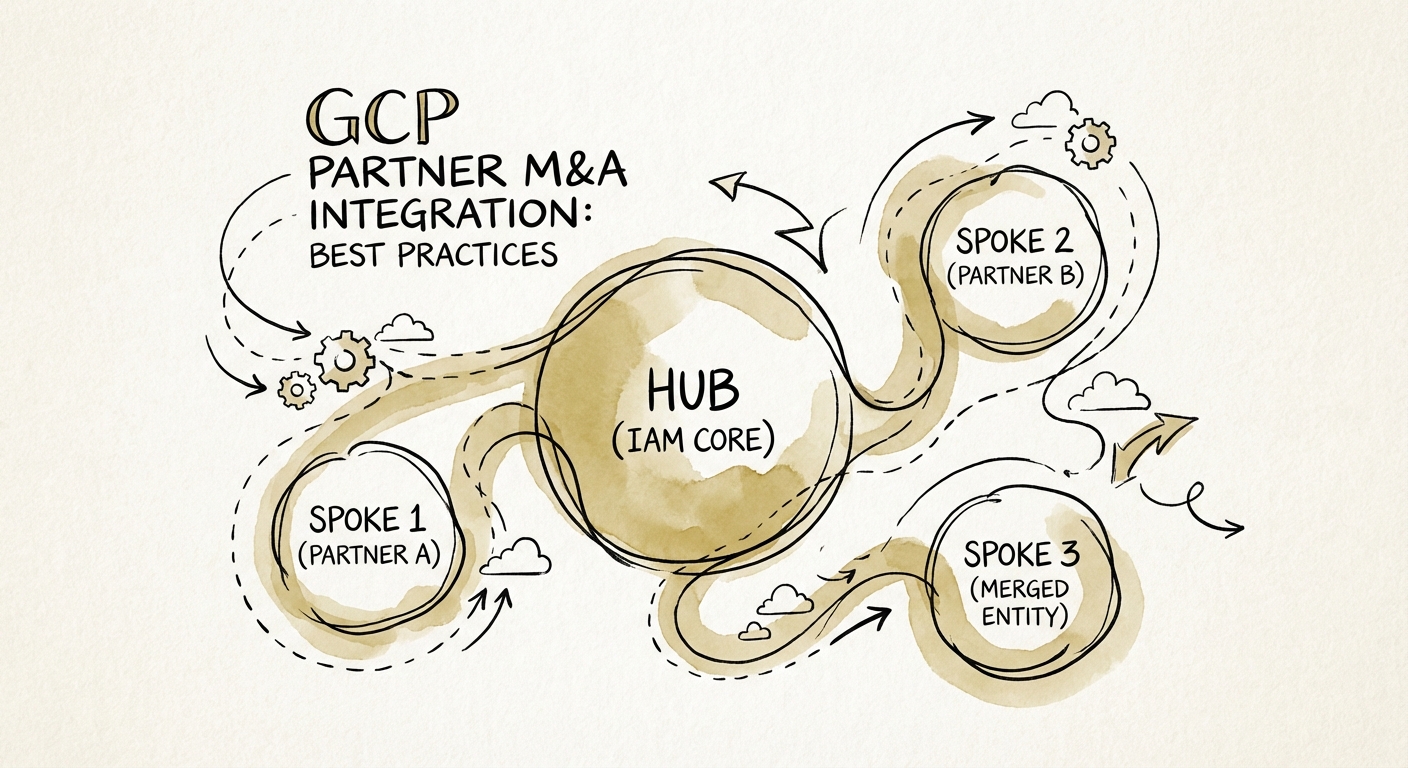
Technical debt in GCP M&A often looks like "Tenant Sprawl"—dozens of disconnected projects and billing accounts. Don't rush to merge the Google Workspace tenants or Cloud Identity domains immediately. Use a "Hub and Spoke" model for IAM (Identity and Access Management) federation first. This allows your teams to collaborate without triggering a massive, risk-laden migration that distracts them from billable work.
The Metrics That Matter (Beyond EBITDA)
To ensure you aren't piloting the integration blind, establish a dashboard tracking these three leading indicators of deal health.
1. Certification Density Ratio
Track the number of active Professional level certifications against total technical headcount. Set a red-line threshold that triggers immediate hiring or training actions if crossed. You cannot afford to drift below the Partner Advantage requirements.
2. The 'Attach Rate'
Measure the ratio of Services Revenue to GCP Consumption Revenue. If this drops below 4x, your integration is failing. It means you are selling "empty" cloud consumption without the high-margin consulting or managed services that justify the acquisition.
3. Technical Talent Net Retention
Forget generic turnover. Track attrition specifically within the "Specialized" talent pool (Data Engineers, AI Architects). In 2025, voluntary attrition in these roles is expensive and can disrupt specialization status. Every departure creates pressure on your integration thesis.