The practical answer
- Short answer
- Why Shopify Hydrogen specialists command 12.4x EBITDA multiples while standard agencies stall at 6x. A diagnostic guide for PE sponsors and founders.
- Best fit
- Industry: Ecommerce Technology. Function: M&A Strategy
- Operating path
- Exit Readiness → Operational Excellence → Transaction Advisory Services
- Key metric
- 6x Average EBITDA Multiple for Standard 'Liquid Theme' Shopify Agencies
The Great Bifurcation: Theme Builders vs. Headless Architects
In the Shopify Partner ecosystem, a dangerous valuation gap has emerged. On one side are the "Theme Builders"—agencies building standard stores using Liquid templates. These firms are trading at 5x to 7x EBITDA, viewed by private equity buyers as low-moat service providers susceptible to AI automation and low-cost offshore competition.
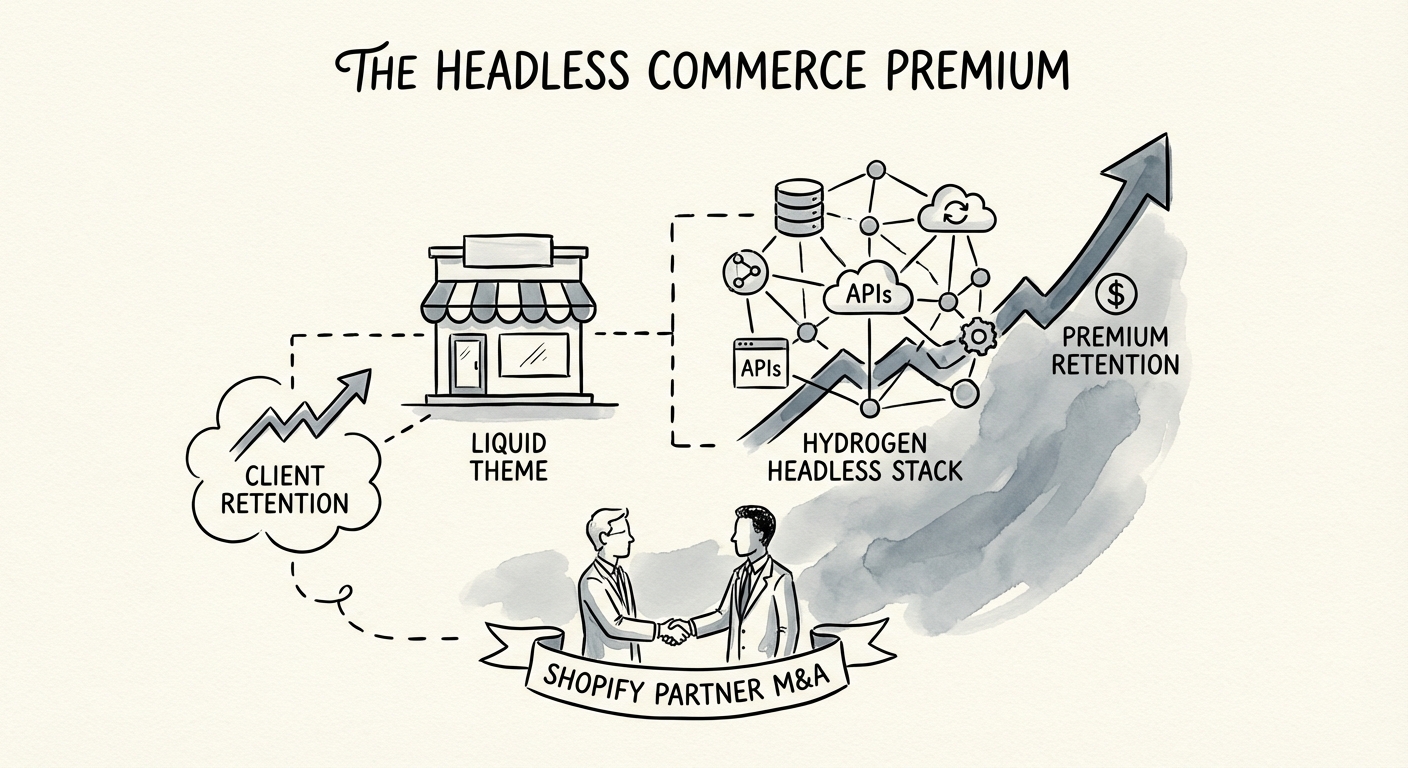
On the other side are the "Headless Architects"—partners specializing in Shopify Hydrogen, Oxygen, and Remix. These firms are commanding 12.4x EBITDA multiples on average in 2025/2026 deals. The reason is simple: they aren't selling websites; they are selling enterprise-grade software infrastructure.
The market data supports this premium. The global headless commerce market is projected to grow at a 22.4% CAGR through 2032, driven by enterprise demands for sub-second load times and omnichannel flexibility. For a PE sponsor, acquiring a standard Shopify agency is a bet on volume; acquiring a Headless specialist is a bet on infrastructure.
For further context on tier-based valuation gaps, see our analysis on Shopify Plus Partner Economics: The 'Badge Tax' vs. The 12x Exit.
In 2026, 'Headless' isn't just a tech stack; it's a valuation bracket. If you're still selling Liquid themes, you're selling a commodity. If you're deploying Hydrogen, you're selling enterprise infrastructure.
The Technical Moat: Why Hydrogen Drives Stickiness
The premium paid for Headless shops isn't just about growth; it's about retention. Standard Shopify themes are relatively easy to migrate away from. A merchant can fire their agency and hire a freelancer to tweak a Liquid file tomorrow. This creates high churn risk, a red flag in technical due diligence.
Headless architectures, however, create a significant technical moat. When an agency builds a storefront using React and Hydrogen, integrating with a CMS like Sanity or Contentful, they embed themselves into the client's engineering workflow. This architecture requires continuous DevOps, API management, and React expertise—skills that the average marketing manager cannot replace with a $50/hour freelancer.
The Stickiness Multiplier
This technical complexity translates directly to financial value:
- Higher Retainer Floors: Headless maintenance contracts often start at $15k/month vs. $3k/month for standard themes.
- Longer LTV: The switching cost for a headless implementation is 3-4x higher than a standard re-platform.
- Revenue Quality: Revenue is classified as "Engineering Retainer" rather than "Marketing Support," which commands a higher multiple in quality of earnings (QofE) reports.
The Pivot: From Commodity to Asset
For founders of Shopify agencies stuck in the "Liquid Trap," the path to a 12x exit requires a fundamental pivot in talent and go-to-market strategy. You cannot upsell your way to a headless premium; you must re-engineer your delivery model.
Our due diligence data shows that firms achieving the 12x premium share three characteristics:
- Talent Density: Their engineering team is >60% React/Node.js developers, not just frontend designers.
- IP Development: They have built proprietary "accelerators" or starter kits for Hydrogen that reduce setup time, effectively creating a software-like gross margin profile on service delivery.
- Managed Services Mix: At least 45% of revenue comes from long-term managed services contracts focused on performance optimization and API maintenance, not just ad-hoc design tweaks.
The window to claim this premium is narrowing. As Hydrogen becomes the default for enterprise Shopify, generalist agencies will be pushed further down market, while the specialists will consolidate the enterprise segment.