The awkward size for AI
A 150-person company is the worst possible size to buy AI consulting, and that is exactly why the quote you get back is so hard to read. You are past the stage where one ops person can run a ChatGPT experiment in a corner and call it a pilot. You are nowhere near big enough to have a transformation office, a data team, and a governance lead who already know where everything lives. So when a consultant hands you a number, you have no internal yardstick for whether it is fair or fantasy.
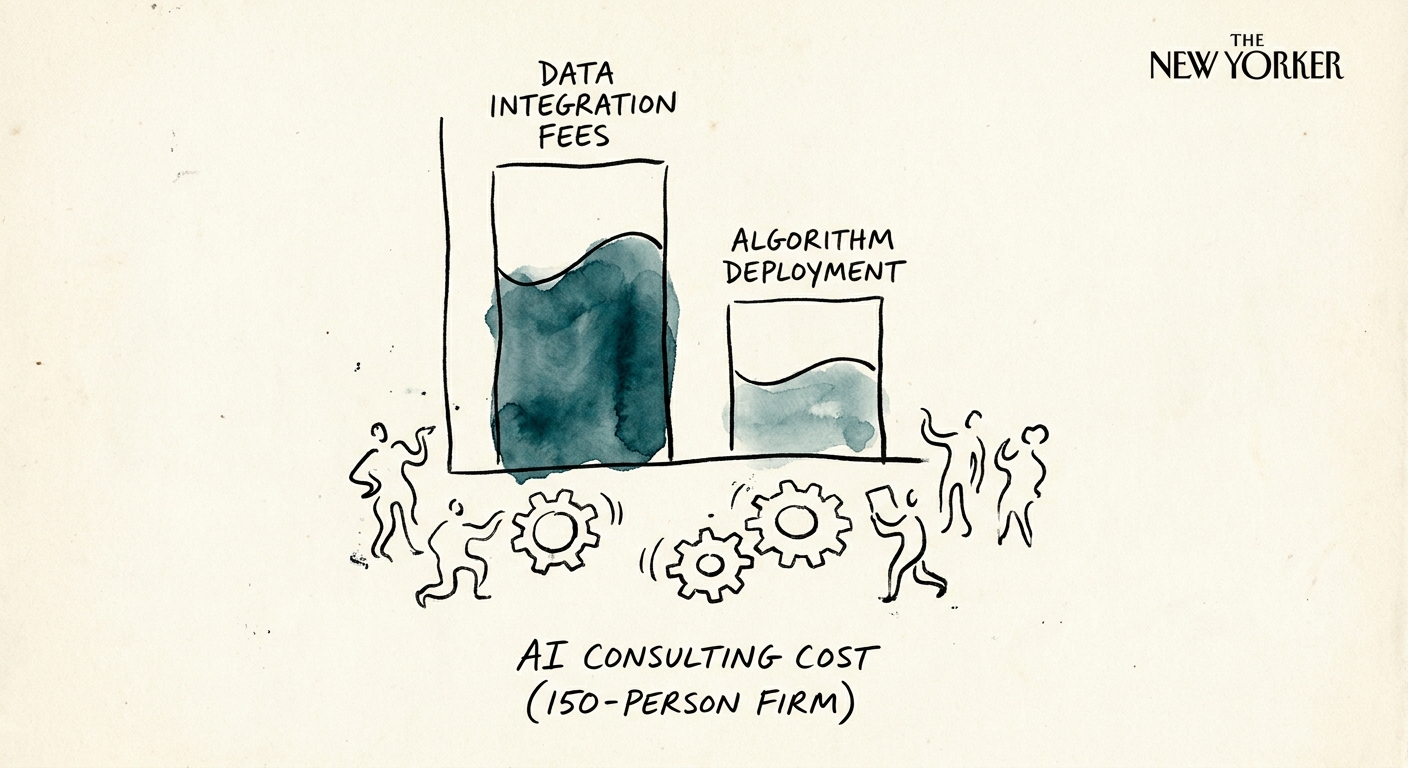
Here is the thing the rate card hides: at this headcount you almost certainly have five or six systems of record that don't talk to each other. A CRM. A finance platform. Project or ticketing tools. HR. A pile of SharePoint or Google Drive folders that grew like weeds. The cost of an AI engagement at 150 people is driven far more by stitching across those systems and governing who can see what than by which model you pick. McKinsey's State of AI 2025 ties realized value to workflow redesign rather than standalone experiments, which is another way of saying the integration work is the work. IBM's Institute for Business Value frames the same problem from the capability side: outcomes depend on data, operating model, adoption, and measurement together, not a tool in isolation. A quote that lumps all of that under one "implementation" line is hiding the part of the bill you most need to inspect.
Read the quote line by line
A serious estimate for a company your size breaks into pieces you can argue about separately: a diagnostic, data access and cleanup, the actual workflow build, a security and permissions review, training, and a way to track whether the thing worked. If you only see one of those line items, you are not looking at a plan, you are looking at a deposit on surprises.
The permissions line is where 150-person companies get burned, because it is invisible until it isn't. Say a 150-person services firm rolls out an assistant on top of its existing tools. Microsoft's own Copilot data protection architecture spells out why: these assistants inherit whatever permissions already exist. If your shared drives have spent five years accumulating "anyone with the link" access — and at 150 people, they have — then the assistant can now surface salary spreadsheets, board decks, and that one folder of customer contracts to anyone who asks it nicely. That cleanup is not optional polish at the end. It is a budget line that belongs near the top.
The NIST AI Risk Management Framework gives you a plain sequence to hold the consultant to: map the context, measure the failure modes, manage the controls, and name an owner for each. And PwC's 2025 Responsible AI survey is blunt that this only works when the controls live inside the teams making rollout decisions, not in a policy PDF nobody opens. Price the controls before the build. A quote that treats governance as a one-line review at the end is quoting you a problem, not a solution.
Buy one proof, not a transformation
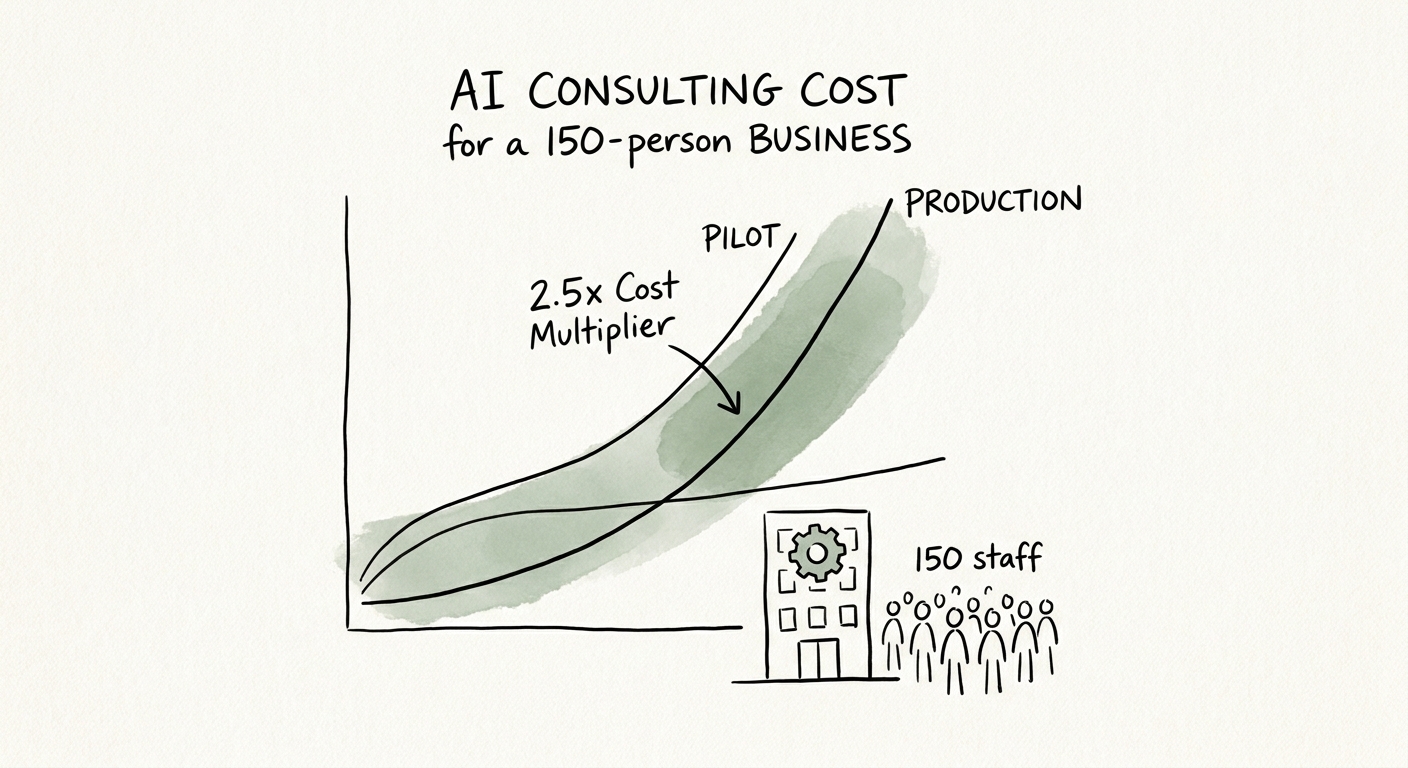
The mistake at 150 people is buying the big roadmap on the first invoice. You do not yet have the evidence to fund a transformation, and the consultant does not yet have proof their approach fits your mess. So make the first engagement small and falsifiable. It should deliver a ranked list of use cases, one workflow actually built and governed end to end, a baseline number you measured before you started, and a clear stop-or-scale decision at a fixed date — roughly a 90-day window. If it works, you fund the next thing with real data. If it doesn't, you stopped at the cost of one workflow instead of a year. Bain's agentic AI research makes the same point structurally: the more ambitious agentic work only pays off once the foundation is proven, which is exactly what that first engagement is for.
Before you take a single consulting call, get your own number. Run the AI Opportunity Score to find which workflows are actually worth touching first, model the payback with the AI ROI Calculator, and use Human Renaissance AI transformation services to turn that into a scope finance, operations, and IT can all inspect line by line. Walk into the quote with your own baseline. It changes the entire conversation.