The 11 PM Reuse Problem
It's 11 PM and a senior associate is building a fixed-fee proposal for a 40-person manufacturing client. They search the shared drive for "manufacturing SOW," find a clean-looking deck from eighteen months ago, lift the scope language and the pricing table, swap the logo, and send it. Two weeks into delivery, the team discovers the pricing model assumed a staffing mix the firm no longer runs, and the scope language quietly committed them to a deliverable that now takes three extra weeks. Nobody was careless. The wrong document was simply the easiest to find.
That is the real reason internal knowledge search is so tempting in a professional services firm — consultants burn billable and non-billable hours hunting for prior work product, expert notes, and reusable templates that everyone swears already exist. OECD research on SME AI adoption keeps landing on the same point: smaller firms get value from narrow, practical tooling, not another transformation deck. Faster retrieval at the moment of delivery is exactly that kind of narrow win.
But speed cuts both ways. Manual search is slow enough that it forces a pause — you skim three versions and notice the one marked "DO NOT REUSE." A good retrieval system removes that pause. It will surface the outdated pricing model, the client-specific claim you're not allowed to repeat, and the unapproved draft just as confidently as the approved version. The first thing you are buying is not search. It is the ability to tell a consultant, at 11 PM, which of those four documents is actually safe to send.
What Has to Be True About the Source Before You Index It
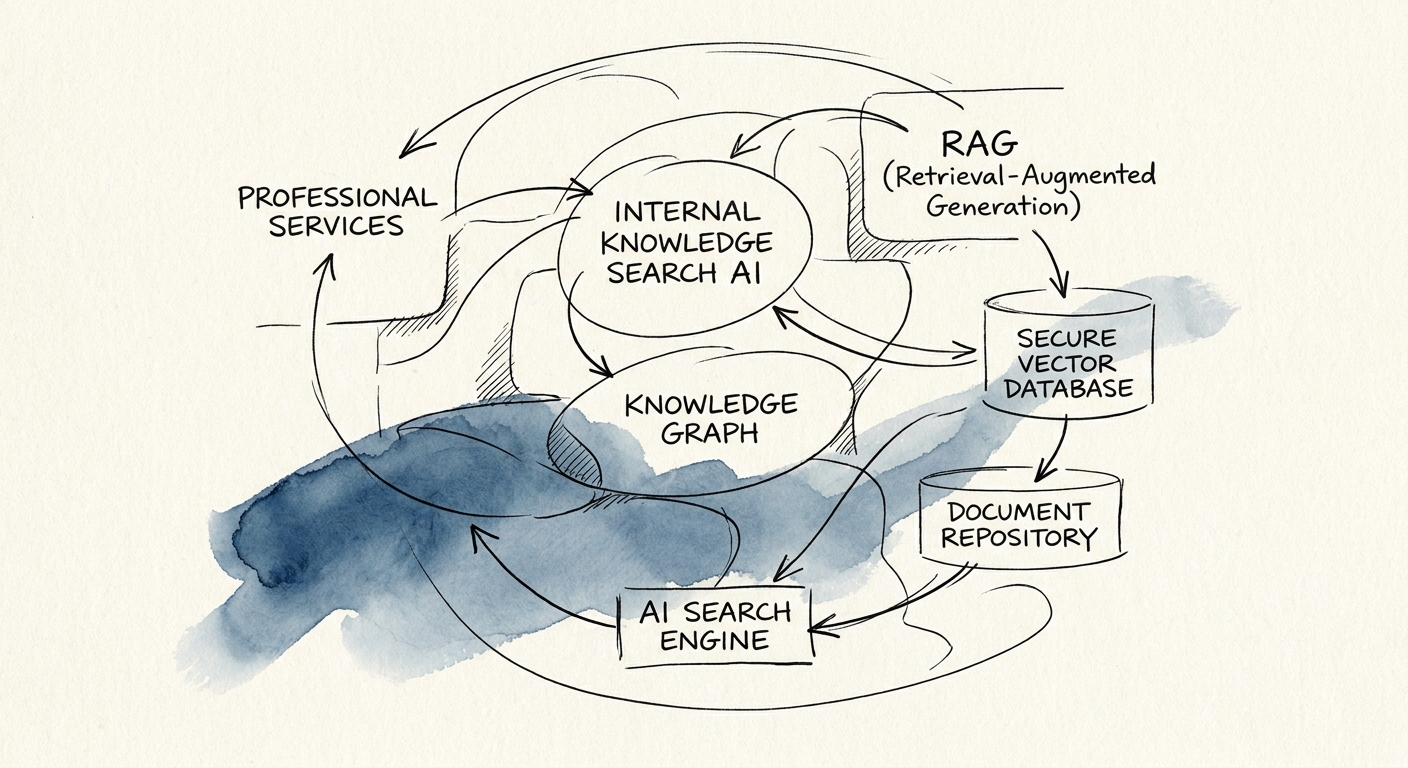
The instinct is to point the tool at the whole drive and let it learn. Resist it. The drive is where engagement memory goes to rot — every closed project leaves behind client-confidential exhibits, half-finished WIP, and three forks of the same playbook. Index that and you've built a faster route to the clutter. Start instead with a single practice area and a deliberately small set of assets that have an owner: approved playbooks, sanitized client examples, current SOW clauses, delivery templates, and an expert directory. For each one you need four facts the model can show the user — who owns it, the effective date, the source link, and whether a human has reviewed it recently enough to trust.
The NIST AI Risk Management Framework is the right scaffold for this, and it reads less like compliance and more like a delivery checklist: name the intended use ("find the current approved scope language"), define what a good answer looks like, control who can retrieve what, and decide in advance how the system fails loudly rather than silently. CISA's data-security guidance pushes those principles into the plumbing. Retrieval has to honor engagement-level permissions — the associate on the manufacturing account should not be pulling the financial-services client's restricted exhibits — and every result has to carry its source and date on the surface, with a visible flag when a document hasn't been reviewed in, say, a year. The flag is the whole game: it's what turns "I found a deck" into "I found a deck the firm still stands behind."
Buy, Build, or Wait — and How You'll Know It Worked
The decision is rarely build-from-scratch. Buy or configure an existing search platform when permissioned retrieval, citation previews, and freshness controls already live in your stack — most firms are closer to this than they think. Build custom logic only when the answer has to combine document retrieval with something a generic tool can't do: routing the question to the right partner, factoring in the delivery stage, or excluding materials tied to a specific engagement. And genuinely wait — don't pilot at all — when no one owns the taxonomy or when retired client work is still tangled up with reusable firm knowledge. Indexing a mess just produces a faster mess.
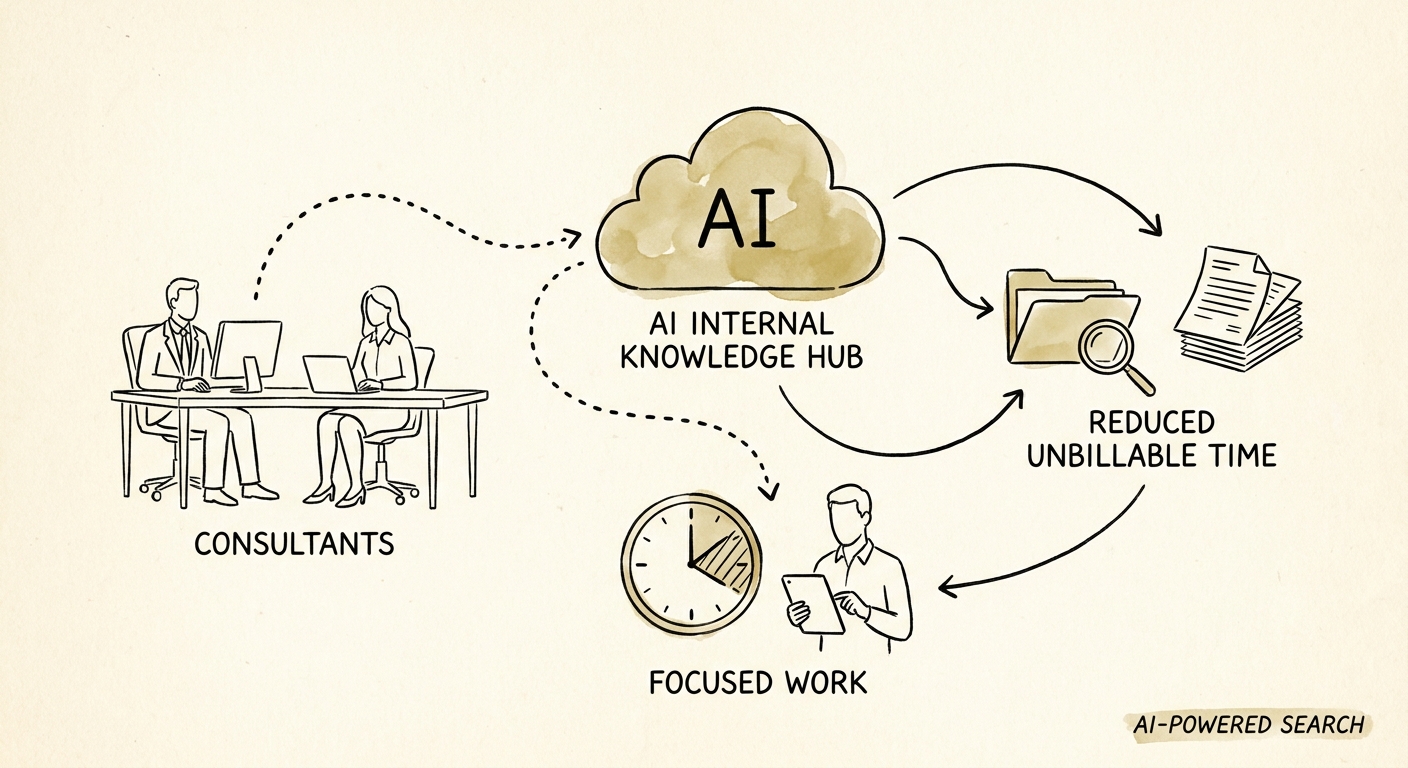
When you do pilot, measure the things that actually change delivery risk, not just stopwatch time. Track how many retrieved assets a reviewer accepted versus rejected as stale, how often consultants reached the right expert faster, and whether teams cut rework from using a wrong template. A knowledge-search rollout has succeeded when reuse quality goes up — not merely when documents come back quicker. Pair that with a named operating owner whose actual job is to retire dead templates, approve which examples can be reused, maintain the practice-area tags, and rule on which client materials are permanently off-limits. Skip that role and the index degrades back into clutter within a quarter.
If you want a starting move for Monday: pick one practice area, pull the ten templates your associates reach for most, and have a partner mark each one current, stale, or never-reuse. That single afternoon of triage tells you more about your readiness than any vendor demo. Once a first practice area proves that faster retrieval also means safer delivery, you can fold it into a broader AI transformation blueprint.