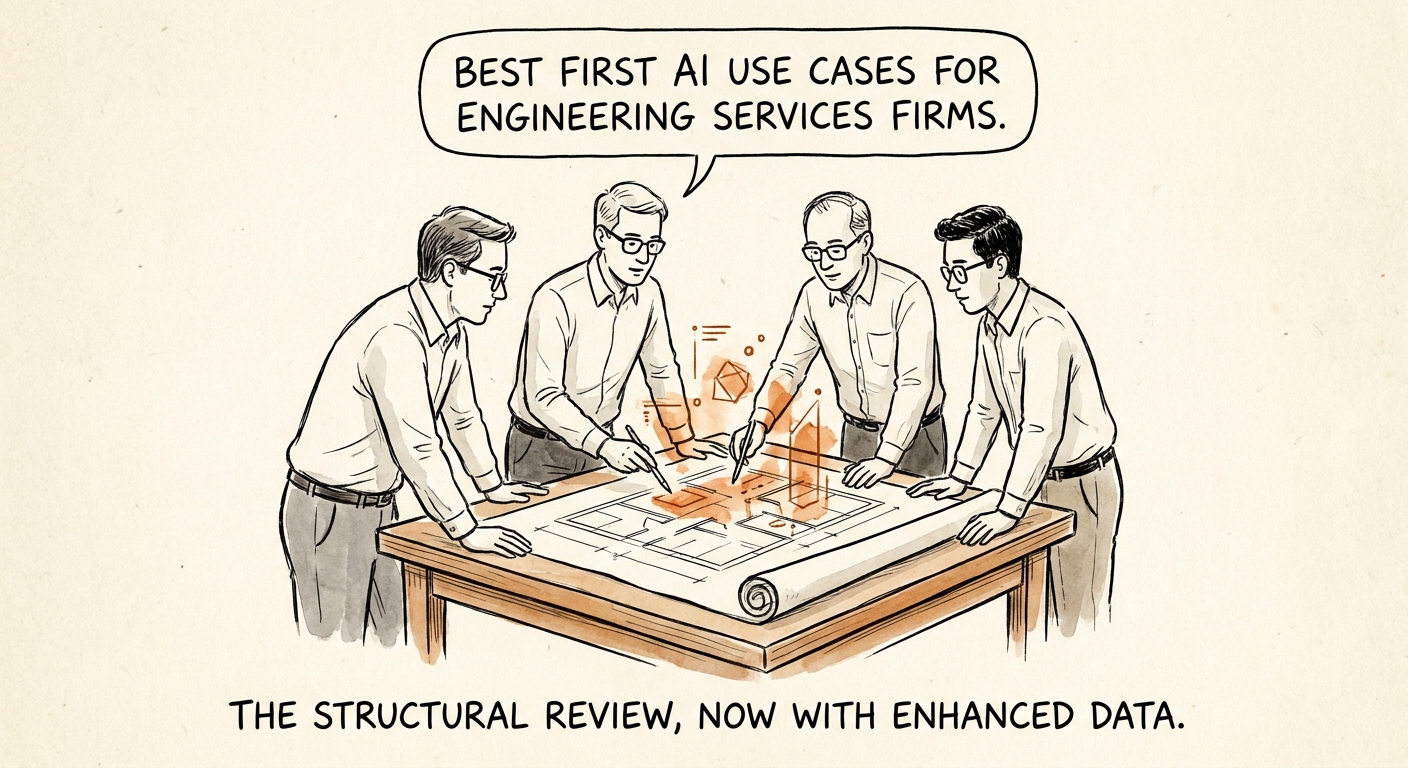
Your senior engineer is your most expensive search engine
Picture a 60-person civil and structural firm. A new scope comes in that's nearly identical to a job you closed three years ago — same soil conditions, same client type, same code edition. The right move is to pull that project's calcs, the RFI log, and the proposal you won it with. Instead, a principal who bills $250 an hour spends forty-five minutes clicking through nested project folders named after long-departed PMs, because nobody can remember whether it was the "Riverside" job or the "Phase II" job.
That's the real cost AI should attack first in an engineering services firm — not the engineering. The first wave of use cases should sit around your billable experts and clear the drag they wade through to do the work they're actually paid for: retrieving prior project knowledge, drafting status reports for the dozen jobs in flight, assembling proposal sections from past winning bids, and pre-organizing QA evidence before a reviewer signs.
The Atlassian State of Teams 2025 reporting on context-switching and information hunting maps almost exactly onto a project-based firm, where every PM juggles design files, client emails, RFIs, and submittals across systems that don't talk to each other. And the Google Cloud DORA research on AI-assisted technical work makes the operating point bluntly: AI helps when it's wrapped in review, throughput, and stability practices — not when it's pointed at the part of the work where a wrong answer carries liability.
The line you cannot let AI cross: the stamp
Here is the distinction that separates a safe rollout from a malpractice exposure. In engineering services, there is a moment where a licensed professional puts their name — and their license — behind a design, a load calc, a code-compliance determination, or a client commitment. AI does not go near that moment. It does not certify work, it does not approve a design exception, it does not tell a client "yes, the foundation will hold." A qualified human owns every one of those, the same as before.
What AI does is hand that reviewer a clean, organized package so the judgment call is faster and better-supported: here are the relevant precedents, here's the prior submittal language, here are the open items flagged for your attention. The NIST AI Risk Management Framework gives you the vocabulary for drawing this line on paper — separating assistive workflows (draft, retrieve, summarize) from autonomous decisions (certify, commit, approve) — which matters when a client's procurement team or your own E&O carrier asks how AI touches your deliverables.
The second trap is quieter and more common: permissions. Your project files, client-confidential drawings, fee proposals, and QA notes are scattered across a SharePoint, a project management tool, and three engineers' laptops with access rules nobody has audited since the last reorg. Point an AI retrieval tool at that and it will cheerfully surface a confidential client's pricing to the team bidding their competitor's job. Read the Microsoft 365 Copilot data protection architecture before you connect anything — clean access controls are not a phase-two nicety, they're the prerequisite.
What to measure before you fund the big build
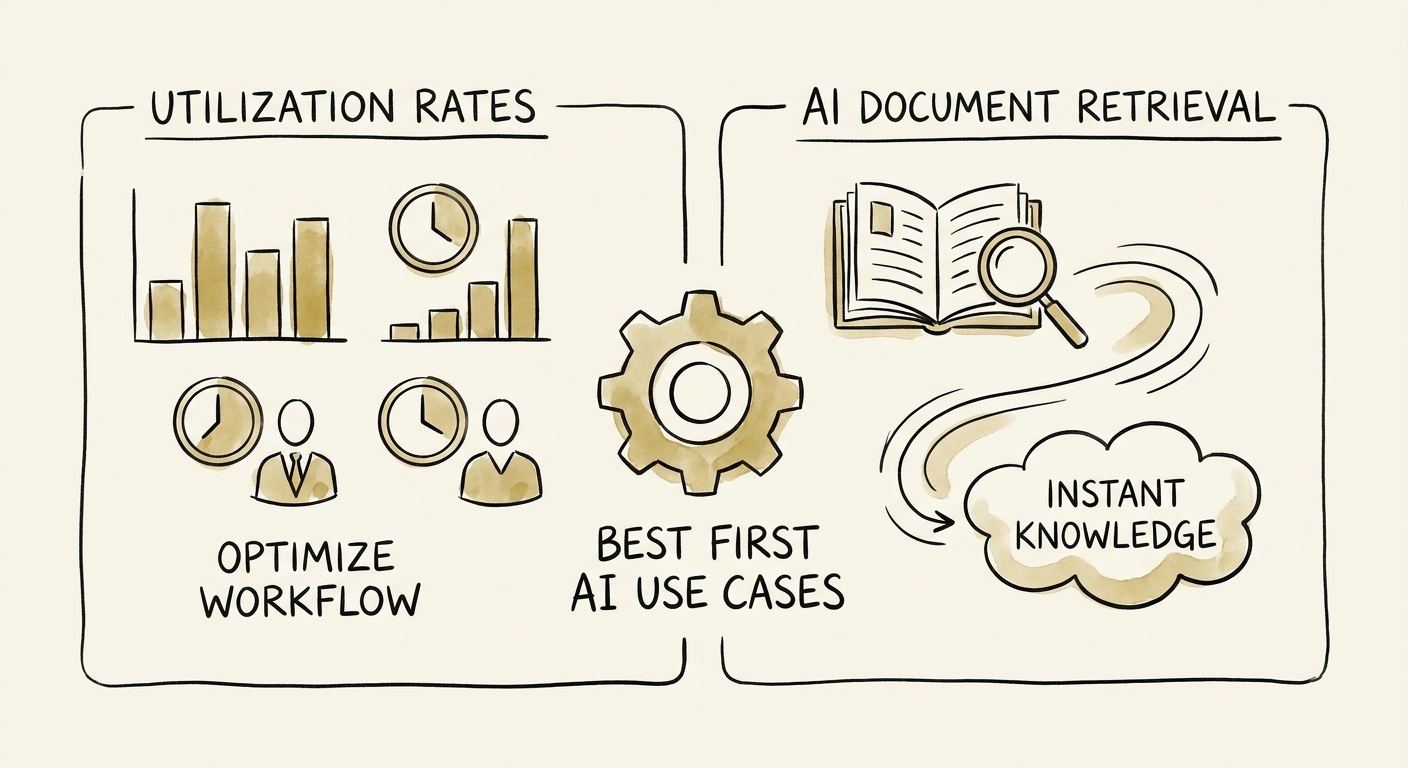
Engineering services firms live and die by utilization and project margin, so measure the pilot in those terms, not in vague "productivity." Track five things from day one: retrieval quality (did it find the right prior project, or a plausible-looking wrong one?), reviewer correction rate (how much does the PE rewrite the AI draft?), hours to assemble a status report across active jobs, proposal rework cycles before submission, and how long QA evidence takes to organize ahead of signoff.
Run it narrow. Pick one practice group and one document type — say, drafting the technical-approach section of proposals from your last ten wins — and watch whether senior hours shift from clerical assembly back to billable design. If the reviewer correction rate stays high after a few weeks, the tool isn't ready and you've learned that cheaply, on a workflow where a mistake costs a redraft, not a structural failure.
When you've got real numbers from that first lane, size the next one. Walk through the professional-services AI workflow guidance for the broader rollout pattern, and run your pilot's measured time savings through the AI ROI Calculator before you write a check for a firm-wide build.