You sell trust and hold the keys. That changes where you start.
Picture the third escalation of the day. A tech is staring at a 40-message ticket thread for a client whose environment they last touched in February, trying to reconstruct what was already tried before they call the customer back. That reconstruction — done badly, fast, under SLA pressure — is where IT services firms quietly bleed margin and goodwill. It is also the most tempting place to point AI, and the right one, for a reason most vendors skip past.
An IT services firm is not a typical mid-market business adopting AI. The RSM middle-market AI survey shows adoption moving fast across the middle market, but you carry a liability the corner accounting firm does not: you hold privileged access to other companies' systems. When a retailer's AI summarizes an order wrong, the retailer eats it. When your AI touches a client's incident notes, device inventory, or vendor credentials and gets it wrong, you've put your customer's environment — and your reason for existing — at risk. So the first filter isn't "what would save the most time." It's "where does a bad output cost an awkward review instead of a breach?"
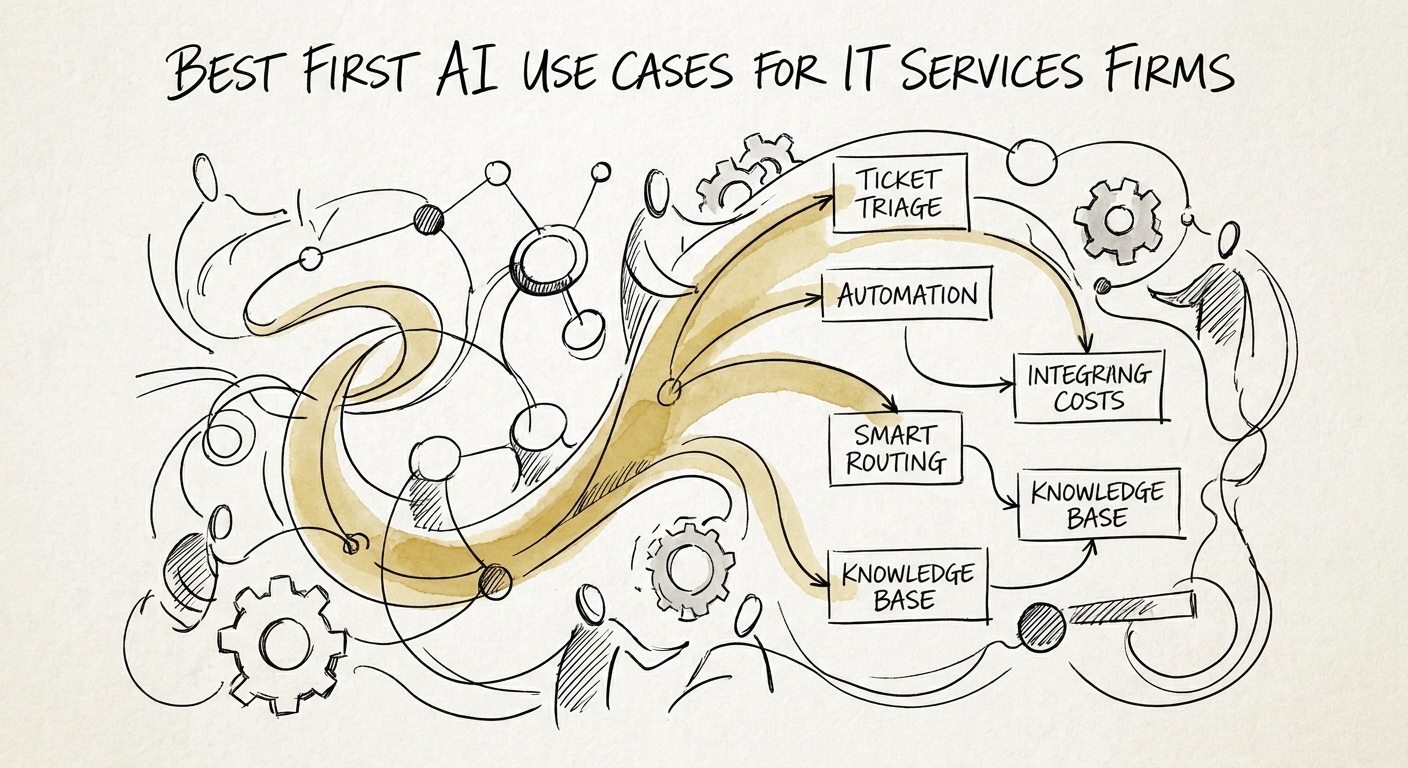
That filter points to a short, specific list: escalation context summaries, vendor ticket digests, internal knowledge search across your runbooks, project status notes for QBRs, and renewal-risk flags. Every one of these rebuilds context that already exists somewhere in your PSA, and every one ends with a human who can catch a mistake before it reaches a client. Score them honestly against business value, data sensitivity, control needs, and how clearly you can measure the lift using the AI use-case scoring model — the ranking will surprise the people who wanted to start with auto-resolution.
The use case to avoid is the one your client demo'd to you
Here is what most teams get wrong. A vendor shows your owner an agent that reads a ticket and closes it. It demos beautifully. So the firm's first AI project becomes "autonomous resolution" — and six weeks in, nobody can explain why the bot reset a production service account at 2 a.m. on a client's domain controller, because no one designed the permissions or the logging before they shipped it.
For an IT services firm, security controls are not a phase-two checklist. They're table stakes for release one, because your workflows touch customer systems, employee records, incident history, device telemetry, and credentials. The NIST AI Risk Management Framework gives you the governance frame; CISA's AI data security best practices and NIST Cybersecurity Framework 2.0 are the operating references your own clients probably already expect you to follow. Use them on yourself first.
The practical line is simple: a safe first workflow prepares, it does not act. It drafts escalation context. It summarizes a ticket. It searches approved knowledge. It writes a status note a human sends. It does not close tickets, approve change requests, push config to production, or commit anything to a customer without a named person reviewing it. The same firm that would never give a new hire domain admin on day one should not hand it to a model either. Keep the first release scoped to preparation and clean handoffs using the service desk escalation workflow guide, and write down who reviews each output before it leaves the building.
Earn the agent. Prove one assistant first.
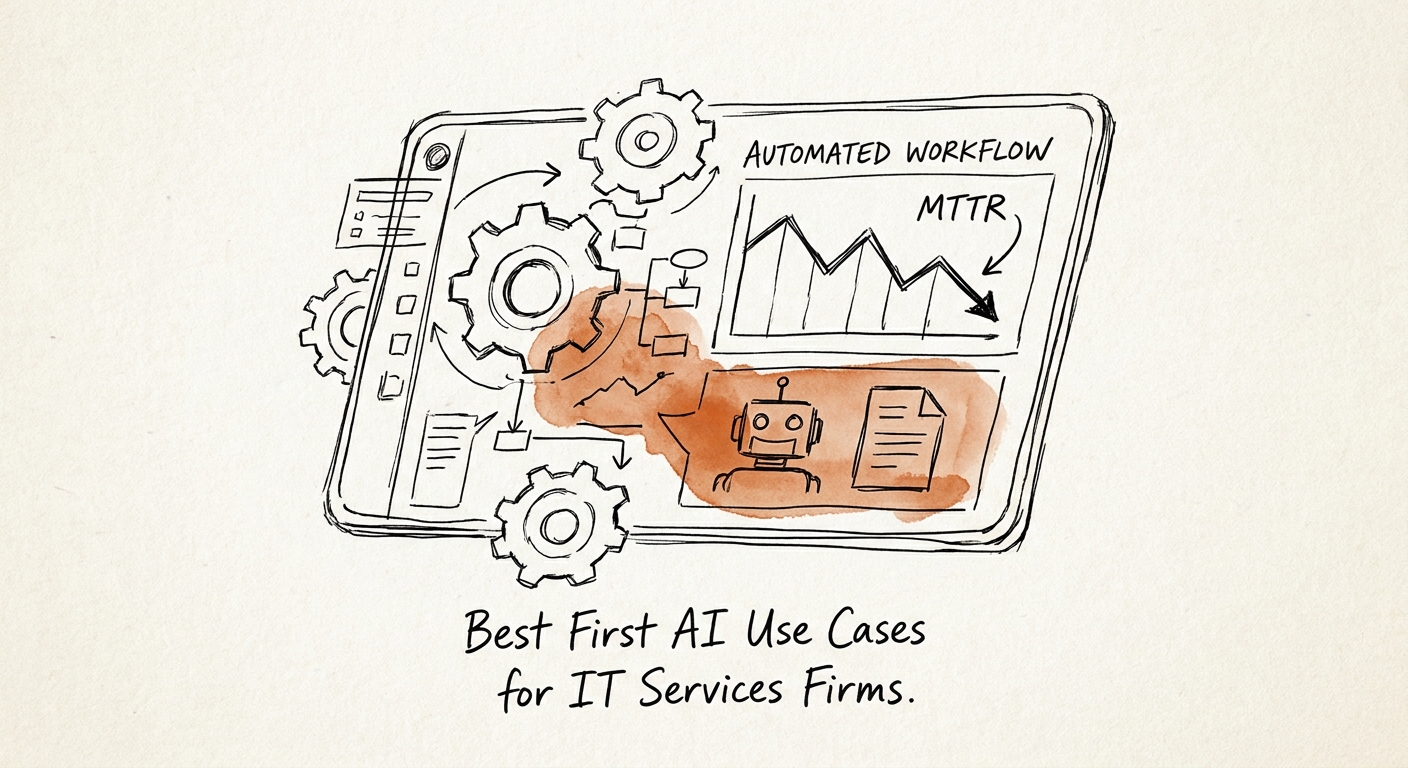
Give yourself one number and a deadline: prove a single governed workflow in 90 days. Not "we deployed AI." Prove that escalations now arrive with clean context, that techs stop re-asking questions answered three tickets ago, that handoffs between tiers get faster, and that your knowledge base actually gets cleaner because the search tool exposed every gap in it. The Deloitte State of AI report is blunt about this: the value lives in the process change, not the model. If your runbooks were a mess before, the assistant just makes the mess searchable.
This restraint isn't caution for its own sake. Gartner predicts over 40% of agentic AI projects will be canceled by the end of 2027 — most because cost, value, data quality, and controls were never clear. Skipping the assistant stage to jump straight to autonomous orchestration is the surest way to land in that 40%. The firms that win are the ones that proved one workflow held up under real ticket volume before they ever let a model take an action on a client system.
So this week, pick one workflow from the list — escalation summaries is the usual winner — name its human reviewer, and write down the one metric you'll judge it on in 90 days. When that workflow is boring and reliable, use the AI pilot versus production workflow guide to decide whether it's earned production controls, and only then start the conversation about agents.