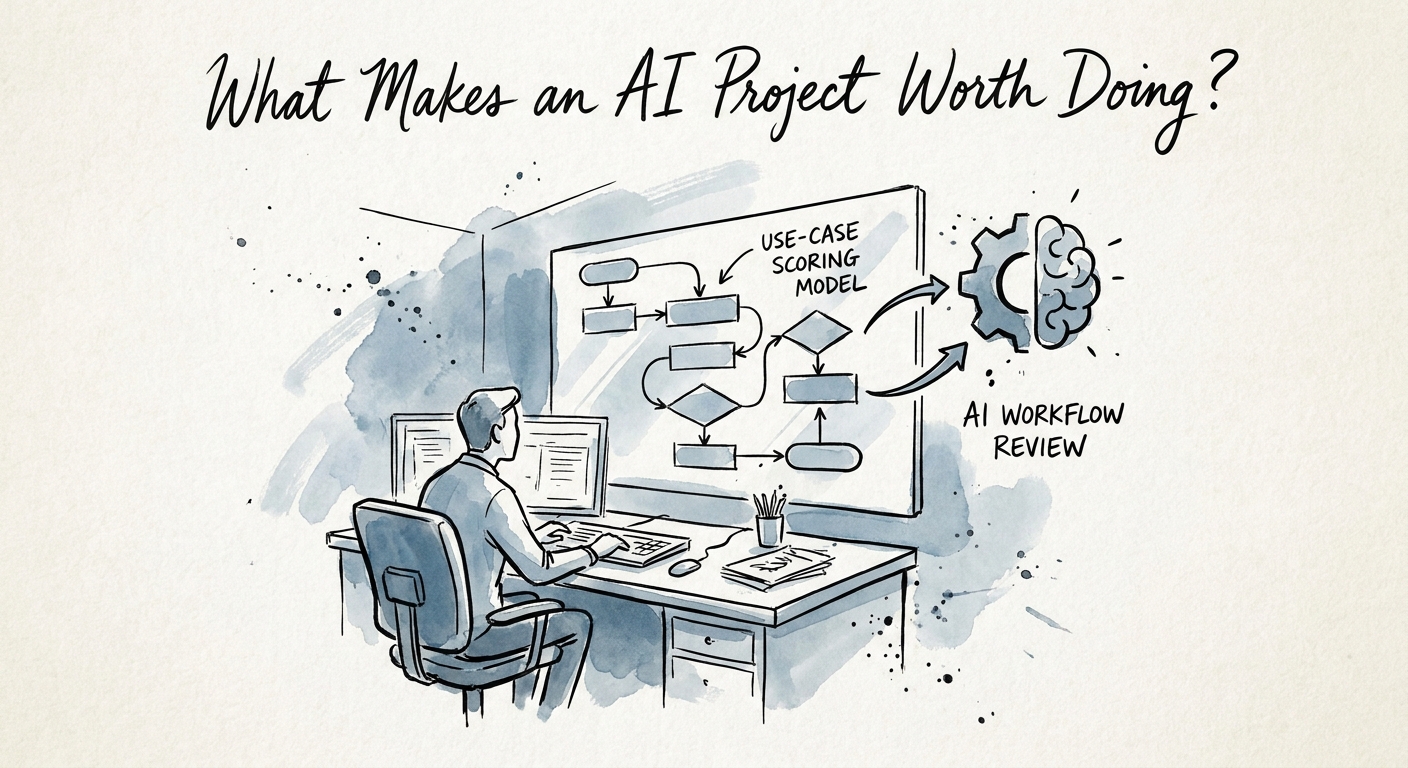
You have eleven AI ideas and room for one
Walk into most 30-to-200-person companies and the AI list already exists, scattered across a sales rep's note, a Slack thread, a vendor demo someone half-remembers, and a customer who asked why the company can't "just use AI for that." The constraint is never ideas. It's the two or three people who would actually have to build, babysit, and adopt whatever gets chosen. Pick wrong and you don't just waste a quarter; you spend the company's appetite for trying again.
The San Francisco Fed's small-business AI analysis shows interest climbing fast among smaller firms, which is exactly the problem. Rising interest produces more candidates, not more clarity. Enthusiasm is not a prioritization method, and "the CEO is excited about it" is the most expensive selection criterion there is.
What you need is a way to compare a flashy idea and a boring one on the same axis and trust the answer. The boring one wins more often than people expect. An invoice-coding workflow with a clear reviewer and last month's accuracy already tracked will beat a churn-prediction model that needs six months of data cleanup, every time the calendar matters.
Six dimensions, scored side by side
Take every candidate through the same six questions and write a 1-to-10 on each. Business value: does this move revenue, cut a real cost, lift quality, or finally make something visible that managers fly blind on today? Repetition: does the task happen often enough that automating it returns the build cost — daily and weekly tasks score high, the once-a-quarter special does not? Data readiness: does approved, reachable source material already exist, or are you quietly signing up to clean a database first? Risk and reviewability: when it's wrong, who catches it before a customer or a regulator does? Adoption effort: can the team change its habits without a reorg or a new hire? Measurement clarity: can you state the before-number today, or will you be guessing whether it worked?
The OECD's report on AI adoption by small and medium enterprises is worth borrowing one distinction from: it separates dabbling with AI from embedding it in a core business activity. Your scores should reward the second. A tool a few people poke at occasionally is not the same as a workflow the business runs on, and the six dimensions are built to expose that difference.
Score comparatively, not theatrically. A support-triage workflow that lands at a 7 with clean ticket history beats a forecasting idea that scores a 10 on value but a 2 on data readiness. The model isn't there to manufacture a tidy winner — it's there to surface the tradeoff you'd otherwise argue about for three meetings.
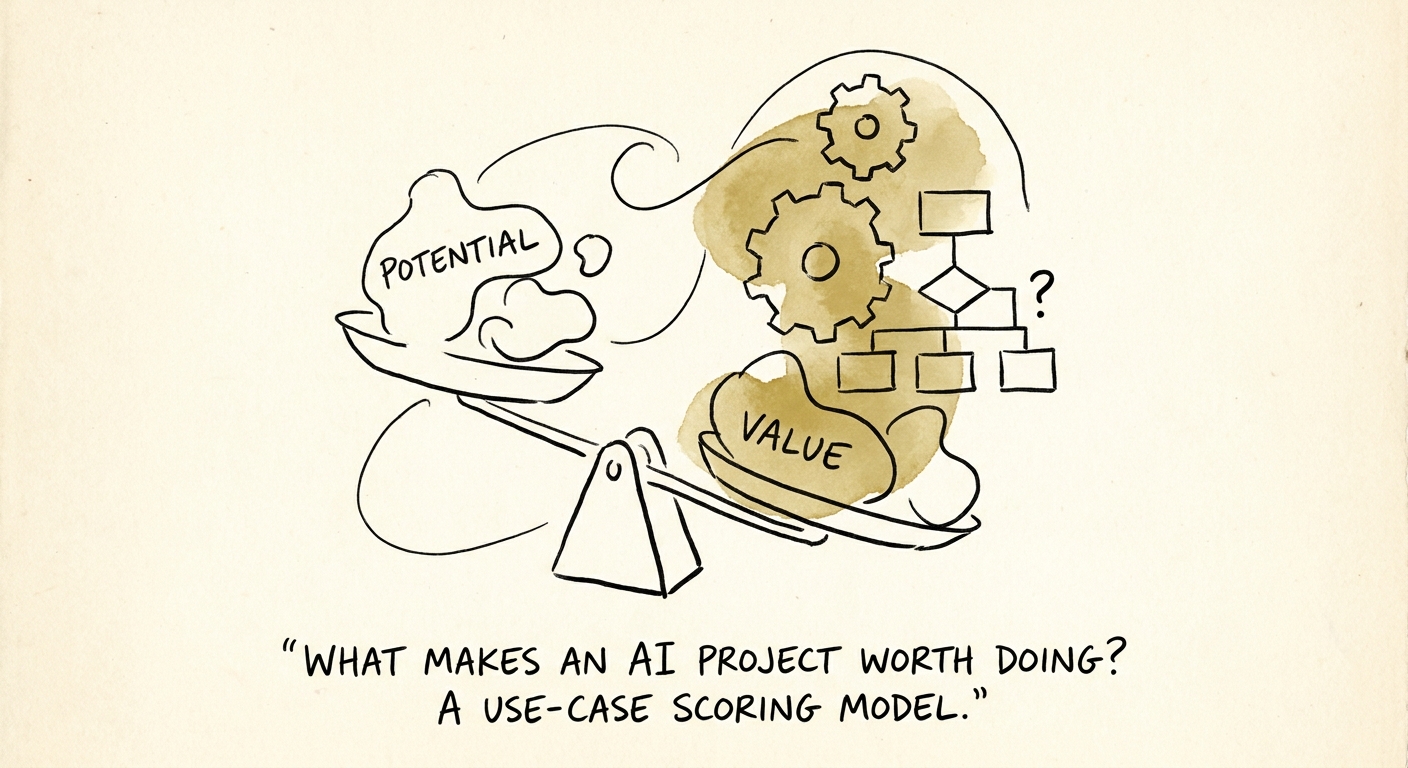
The real output is a reject list
Sort the scored candidates into four buckets. Do now: enough value and enough readiness to start this quarter. Investigate: promising, but one number is unknown — run a one-week fact-find before committing. Defer: good idea blocked on data cleanup, a policy decision, or an owner who doesn't exist yet. Reject: too vague, too risky, or too thin on value for where the business is right now. The reject and defer lists are the point. Saying no on paper, with a reason attached, is what keeps the next shiny demo from jumping the queue.
The Deloitte State of AI report keeps documenting the same gap: lots of ambition, far less in production. That gap is a decision-discipline problem, not a technology one. Scoring closes it by leaving a trail — why this workflow, why now, what risk we accepted, what we deliberately left for later. When something changes in six months, you reopen the spreadsheet instead of restarting the argument.
The fastest way to run your list through this lens is the AI Opportunity Score — it walks the same six dimensions and hands back the four buckets. Take the AI Opportunity Score when you have a pile of AI ideas and need one defensible first move you can start on Monday.
