Two proposals, same logo, ten times the price
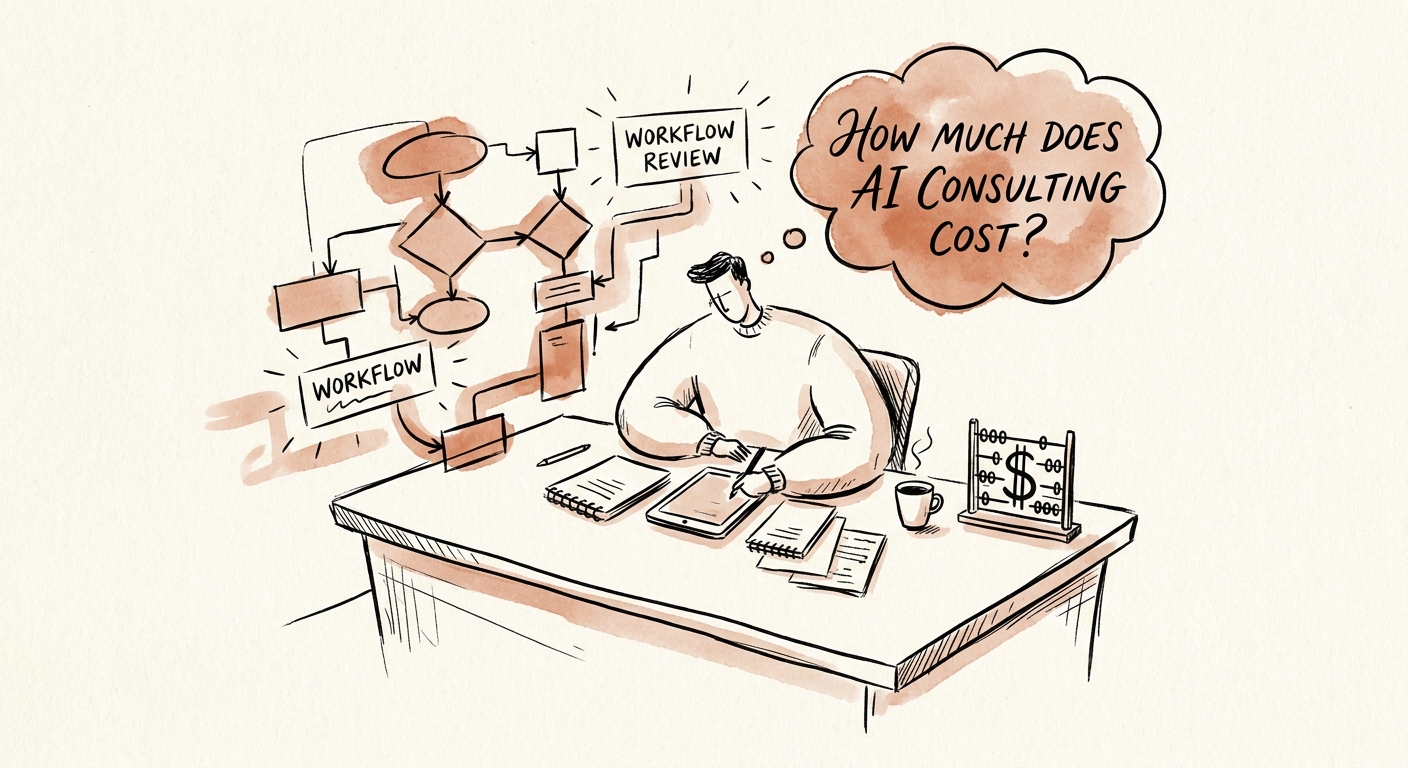
Picture a 30-person insurance brokerage that asks three firms to quote "AI consulting." One comes back at $6,000 for an audit. One comes back at $9,000 for "an AI strategy." One comes back at $70,000 for a "transformation." Same buzzwords on every cover page. The owner has no idea why the spread is that wide, and most of the people quoting can't explain it cleanly either.
Here is the rule that cuts through it: price should track the operating work required to make a workflow actually change, not the novelty of the model behind it. An audit that picks one workflow, checks whether your data is clean enough to use, and flags the risks can legitimately live in the low thousands. The number climbs the moment the job involves wiring into your CRM and policy-admin system, setting who's allowed to approve an AI-drafted client email, writing test cases, and training the people who'll live with it. Plenty of buyers are eager to spend — the RSM middle-market AI survey shows the appetite is real — but appetite is not the same as a way to tell disciplined work from expensive theater.
For a small business specifically, the cost drivers are rarely the AI. They're the boring constraints: a workflow nobody can describe in one sentence, source data scattered across spreadsheets and a legacy tool, fuzzy rules about what's allowed to touch customer communications, and a team that needs hand-holding to adopt anything new. A prompt library is cheap. A workflow that spans intake, finance, and customer messaging is not. A strategy deck is cheapest of all — and the worst value if it leaves your Tuesday unchanged.
What each price tier should actually put in your hands
Map the dollar figure to a deliverable you can hold, not to hours billed. A focused audit — figure a $4.5K starting point — should hand back a ranked list of where AI is worth trying, honest notes on whether your data is ready, the risk boundaries you'll need, and a recommendation for the first thing to build. A roadmap engagement adds sequencing, vendor calls, the policy gaps you'll have to close, training needs, and a 30-to-90-day plan. An implementation sprint is the only tier that should leave you with a working workflow: review rules, a named owner, defined source data, test cases, and a way to measure whether it paid off.
The tell for whether you're overpaying is simple — does the higher price buy more operating responsibility, or just more meetings? Real implementation money goes to configuring the tool, connecting approved systems, standing up a review queue so a human signs off before an AI draft reaches a client, building evaluation examples, documenting what happens when the model is wrong, and setting the weekly cadence that keeps it from quietly rotting. Judge a retainer by decisions made and workflows that improved, not by workshop attendance.
This is also where small firms get stuck for reasons that have nothing to do with budget. The OECD SME AI adoption report names implementation capacity — not strategy, not awareness — as the binding constraint for smaller businesses. So that's where the spend should concentrate: getting one workflow to the point where your team can use it, govern it, and measure it without you in the room. It explains why the $70K "transformation" so often disappoints. Breadth is cheap to promise and expensive to deliver, which is part of why Gartner expects over 40% of agentic AI projects to be canceled by the end of 2027.
Use the budget as a scoping weapon
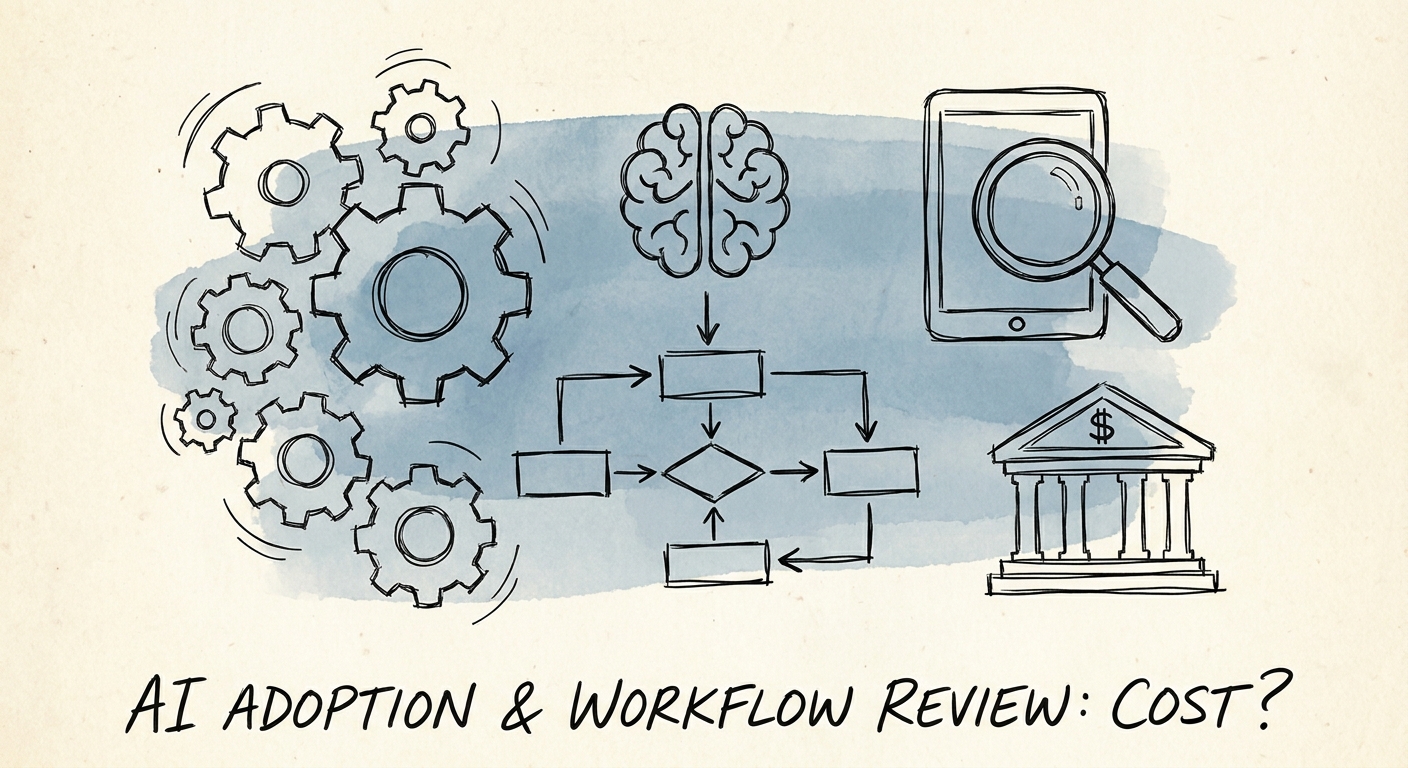
A constrained budget is a feature. If you only have a few thousand to spend, that forces the engagement down to one audit or one contained workflow — which is exactly the right first move for most small businesses anyway. If you're being asked for five or six figures, make the firm prove the extra money buys integration, controls, training, and measurement, and not a thicker binder. The San Francisco Fed's analysis of AI and small businesses and the Deloitte State of AI report both point the same direction: outcomes track execution and adoption, not the size of the ambition statement.
Before you sign anything, make whoever's quoting answer five questions in plain language. Which specific business process is different after this work? What source data does it use? Who approves the outputs before a customer sees them? What single metric proves it worked? And what's the plan if the first workflow turns out to be a dud and should be killed? A consultant worth the fee answers all five without retreating into model names and tool categories. One who can't is selling you the vocabulary, not the result.
If you want a bounded way to price your first move before committing to a platform or a big retainer, start with the QuickStart AI Audit — it's built to put a real number on the first workflow, with the same operating discipline behind a 68% win-rate system, rather than an off-the-shelf advice deck. Start with the QuickStart AI Audit when you'd rather scope one workflow well than buy breadth you can't yet absorb.
