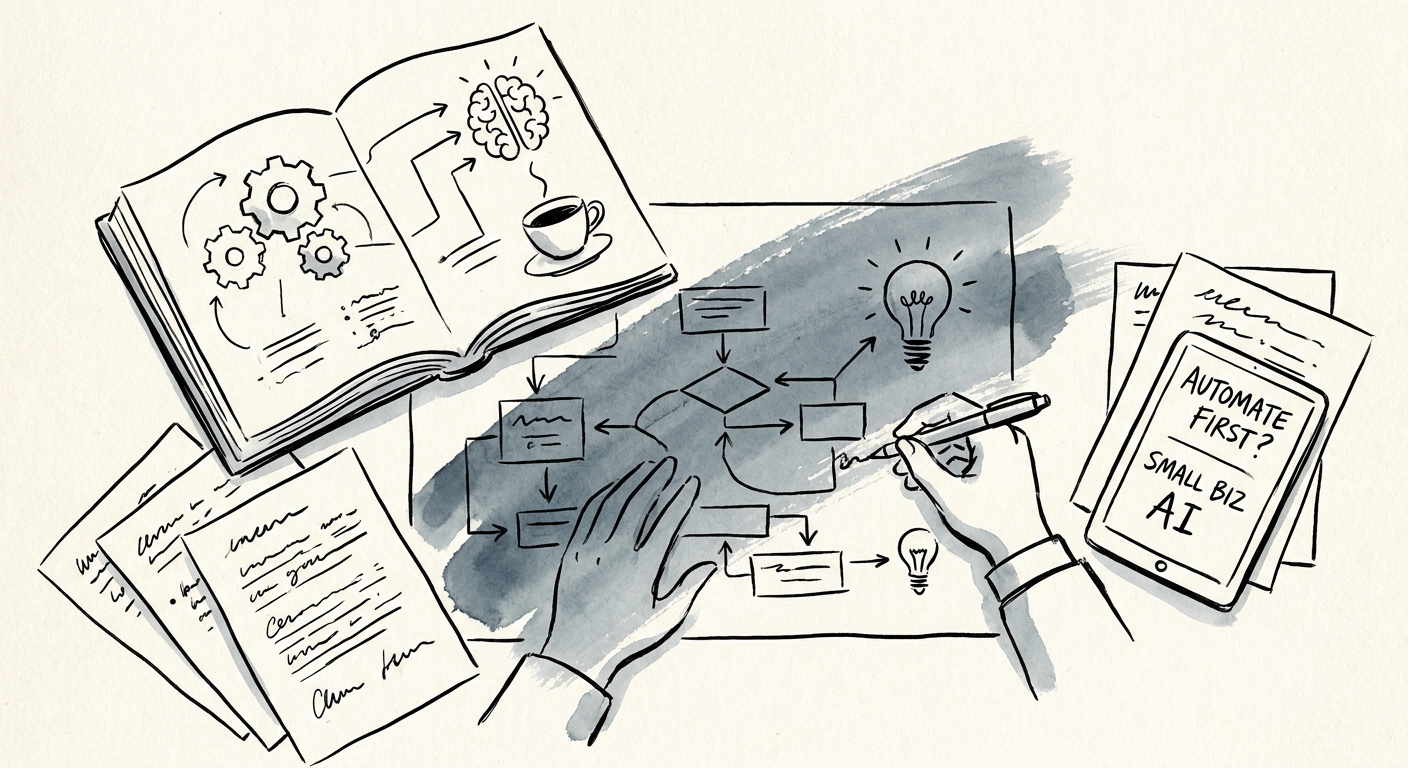
The demo is not the decision
Picture a 35-person home-services company. A vendor walks in, shows a slick assistant answering customer questions in real time, and by Friday someone has signed a contract. Six weeks later the tool is logged in by two people, neither of whom owns the result, and nobody can say what got better. That is the most common way a small business spends its first AI dollar, and it is exactly backwards.
Interest is not the problem. The San Francisco Fed's small-business analysis shows curiosity is climbing fast. Curiosity just doesn't tell you which task to point at first. The thing that does is unglamorous: walk the work that already eats hours every single week before you let anyone show you a product.
For a company under 250 people, the best first candidates are the chores nobody brags about. Triaging a shared inbox. Drafting the first pass of a proposal. Summarizing yesterday's support tickets. Chasing unpaid invoices. Pulling the weekly numbers into something a manager will actually read. These share three traits a flashy demo usually lacks: the inputs are visible, the volume repeats, and one person already knows whether the output is good or garbage.
Score five workflows, ship one
Before you pick, run every candidate through the same five questions and write the answers down. One: does it touch revenue, cost, quality, speed, or what leadership can see? Two: are the documents and data it needs actually accessible and approved for use? Three: can a person check the output before a customer or a dollar is affected? Four: will the team genuinely change how they work, or will they quietly route around it? Five: can you measure today's baseline without guessing?
The same task scores differently in different shops, which is the whole point. Sales follow-up jumps to the top when response times are slow and the CRM has enough context to draft from. Support triage scores high only when labels, queues, and escalation rules already exist for the AI to lean on. Invoice follow-up needs clean customer-status data or it will dun the wrong people. Weekly operations reporting is ready only when managers already trust the source numbers. A workflow that fails question two or three for you isn't a bad idea, it's a later idea. Park it.
This is also where most small-business AI quietly stalls. The OECD's SME adoption report draws a hard line between using a general tool and adopting AI inside a core activity. Plenty of small teams have someone pasting into a chatbot; far fewer have changed how an actual operating workflow runs. Your scorecard exists to find the second kind.
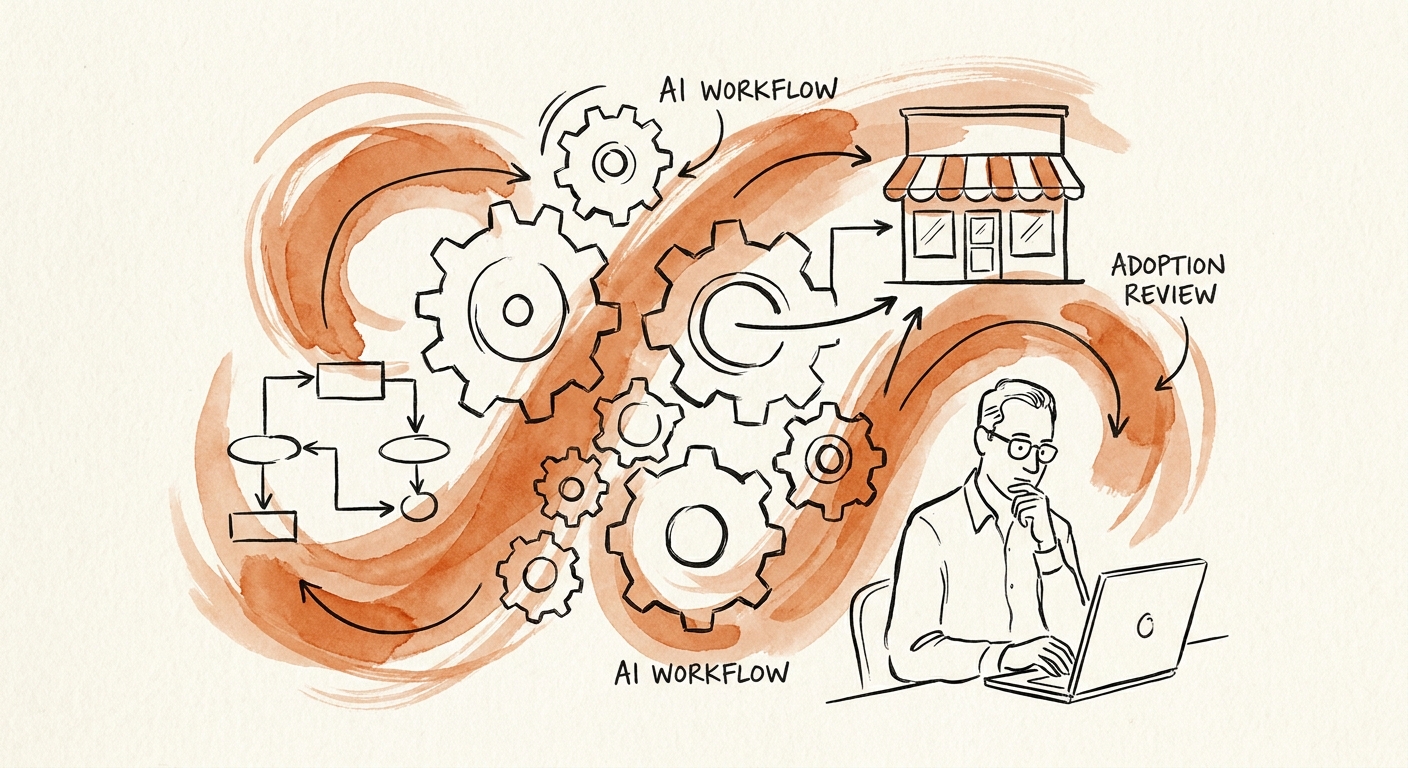
The first build is really a governance rehearsal
Here's the part owners underestimate: the first pilot's real job isn't saving time, it's teaching the company how it will run AI for everything after this. So build the smallest version that still forces the habits. Name one owner. Hold a fifteen-minute weekly review. Keep a running tally of outputs the team accepted versus rejected and why. Write down which documents the tool may read and which it may not. Decide, out loud, what result would make you scale it and what would make you kill it.
Then measure with evidence your team already respects, not "hours saved" on a slide. Faster first responses. A CRM that's actually clean a month in. Fewer manual handoffs between people. Reports that need less rework before they go out. Time only counts when the freed-up capacity goes somewhere visible. If nobody can feel the difference at the Monday meeting, you picked the wrong workflow, and that's useful to learn cheaply on one task instead of expensively across the whole company.
If you want to compress the picking step, the fastest path is a QuickStart AI Audit that scores your candidate workflows with you. The implementation discipline behind it is the same kind that built forecasting infrastructure to 92% accuracy elsewhere, applied here to your first AI workflow instead of your hundredth. Or start solo: take the AI Opportunity Score and let it surface the one task to automate before you sit through another vendor demo.
