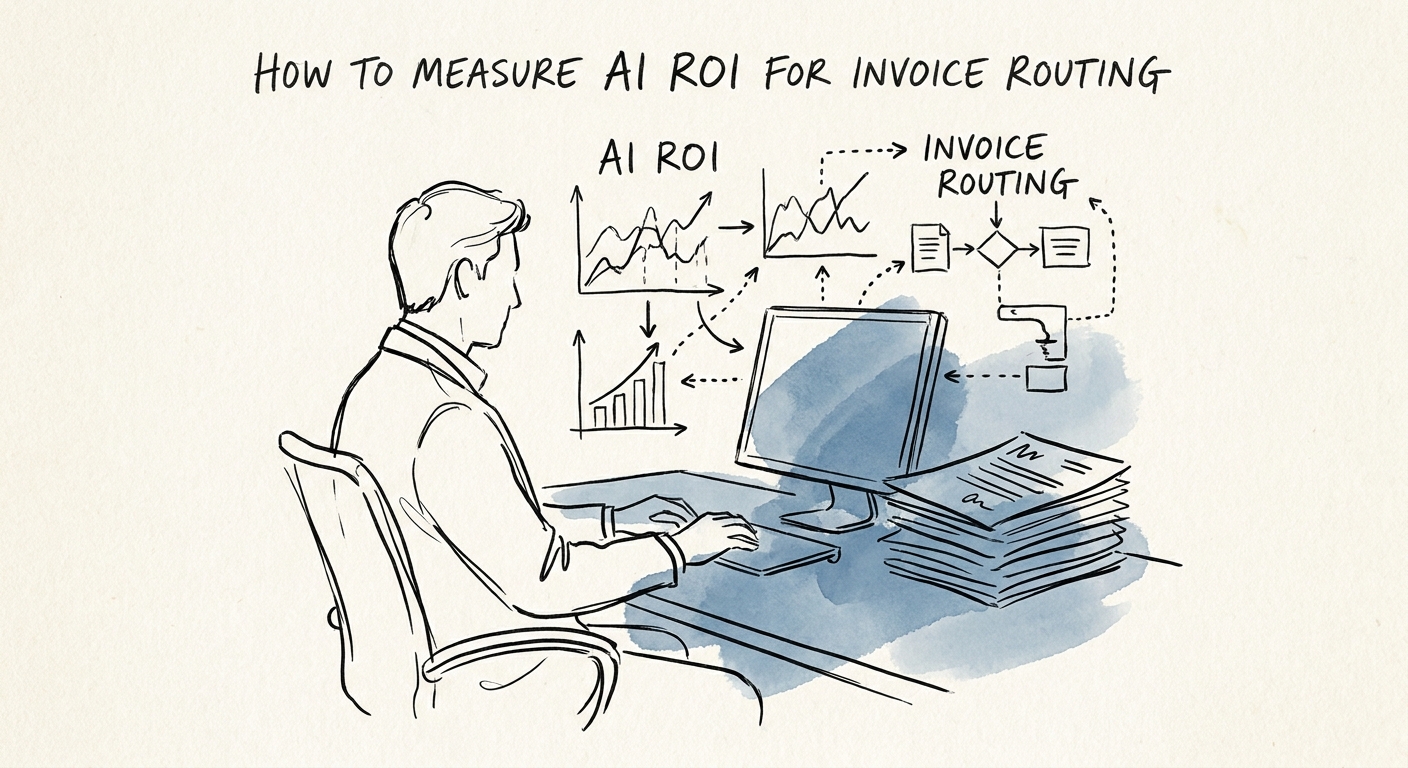
The invoice that sat for nine days
Picture a 60-person distribution business. A $14,000 freight invoice comes in, gets classified as "general expense" by the AP clerk on a Tuesday, and lands in the queue of a manager who doesn't own freight. He assumes someone else has it. It sits for nine days, the early-payment discount evaporates, and the vendor calls about a past-due notice that should never have existed. Nobody did anything wrong, exactly. The invoice just went to the wrong person and silence did the rest.
That is the failure AI invoice routing is supposed to kill, and it is also the reason "AI saved the finance team time" is a useless way to measure it. Saved time is invisible on an income statement. A captured 2% discount, a vendor that stops escalating, an approval that clears in hours instead of weeks — those are visible. The U.S. Census AI business adoption analysis and Deloitte State of AI in the Enterprise 2026 both show mid-market finance teams moving fast on automation. But adoption isn't the same as a result you can defend in front of your controller. Start with one bounded thing: let AI classify the invoice, pull the PO number, amount, and GL code, and pick the approver. Leave the approval authority exactly where it is today.
Four numbers, measured before you ever turn it on
You cannot prove improvement against a baseline you never wrote down. Before the pilot routes a single invoice, pull last quarter's AP data and capture four things. First, days in queue from receipt to approval, and specifically the long tail. The average will lie to you; it's the invoices stuck past 10 days that cost discounts and trigger vendor calls. Second, misroutes: how often an invoice landed on someone who had to forward it because it wasn't theirs. Most teams have never counted this and are quietly shocked at the number. Third, exception rate: invoices the system couldn't auto-handle and kicked to a human. Fourth, duplicate touches: the same invoice opened, set down, and reopened by two or three people because ownership was never clear.
Then run the AI on those same four numbers and demand they move in the right direction together. A trap to watch: AI can shrink your queue age while quietly raising your misroute rate, because it's confidently routing fast to the wrong place. Faster wrong is worse than slow. The weekly review should read accepted routes, overridden routes, and low-confidence extractions side by side, with a named owner who signs off, not a dashboard nobody opens. Once those four are moving and owned, the AI Opportunity Score and the AI ROI Calculator turn them into a dollar figure you can put in front of the board.
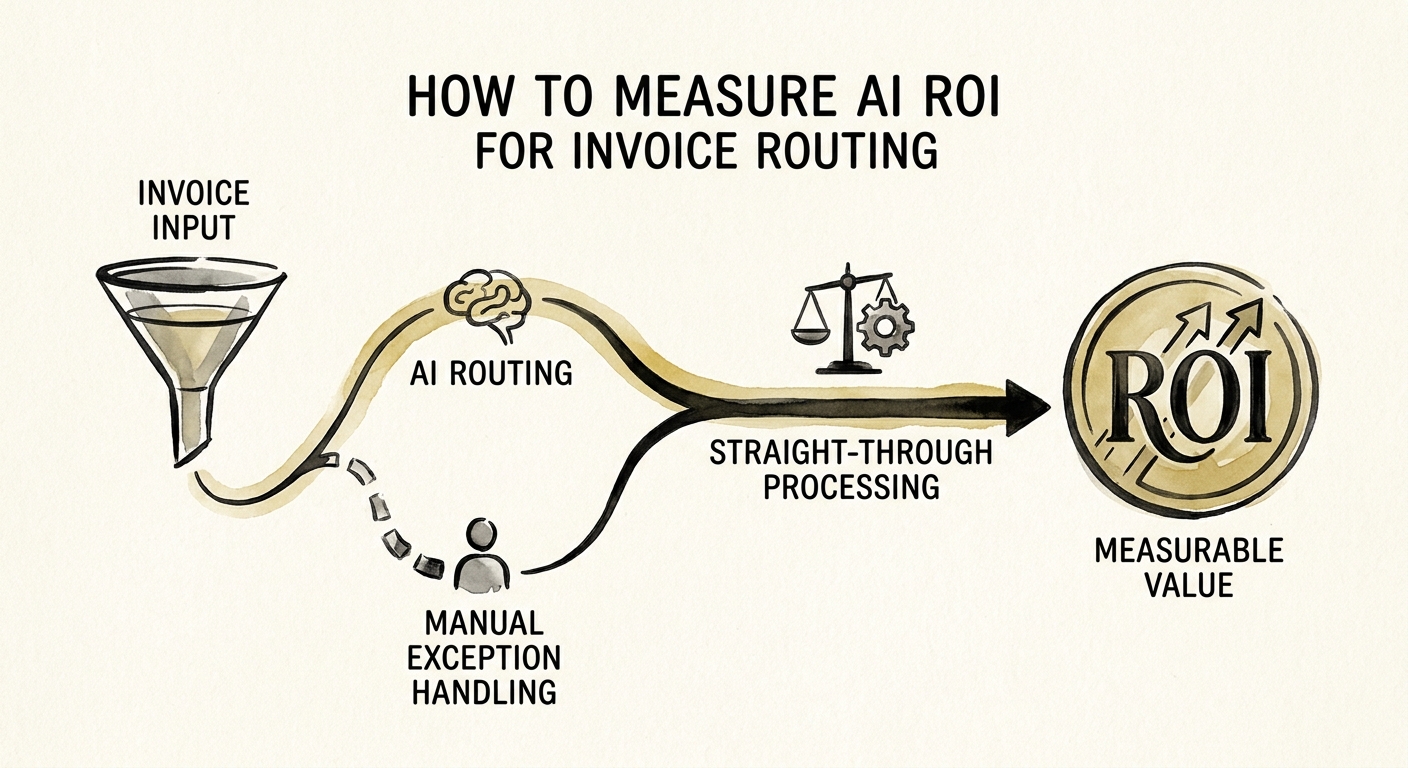
The audit trail is part of the ROI, not a tax on it
Invoice routing is where AI bumps into segregation of duties, and that is the part most pilots skip until an auditor asks. If the AI can route a payment and an approver rubber-stamps it without the system preserving who saw what and when, you haven't automated AP, you've created a control gap with a faster clock. The NIST AI Risk Management Framework gives you a clean way to write down intended use, the risks of a bad route, and who is accountable when one slips through. And because you're feeding the model vendor records, approval logs, and payment data, CISA's AI data-security best practices should set how that data is stored and retained, not your vendor's defaults.
Here is the Monday move: this week, count your misroutes and your queue tail from last quarter by hand. Those two numbers, written down before anything changes, are the difference between proving the AI worked and hoping it did. Only widen scope past invoice routing into broader AP automation once cycle time has dropped and your misroute rate, segregation-of-duties exceptions, and audit-trail gaps have not crept up to pay for it.