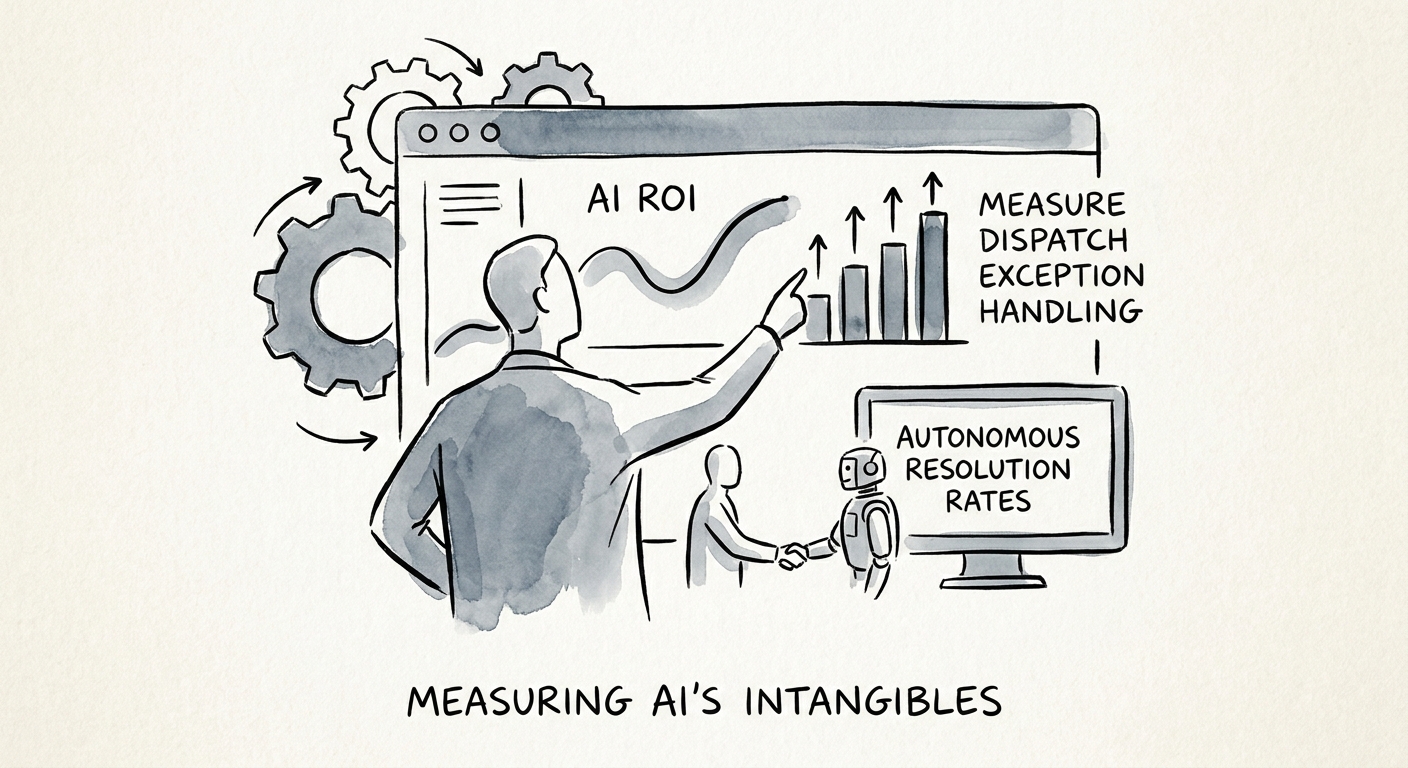
The 9:40 a.m. that decides your whole day
A tech texts that the morning install ran two hours long. Now the 11:00 window across town is dead, the afternoon parts pickup is at risk, and the dispatcher is staring at a board with eleven open jobs and no clean way to re-slot them. That single exception, multiplied across a fleet, is where field service margin quietly leaks: a missed window becomes a callback, a callback becomes a second visit, and a second visit is a truck roll you already paid for once.
So before you let a dispatch AI touch the board, write down what that 9:40 a.m. costs you today. Baseline the missed appointment windows, the supervisor overrides, the parts-related delays, the avoidable second trips, and how late the customer found out their window slipped. The Salesforce State of Service report shows service work is increasingly a blend of human and machine handoffs — but a handoff only counts when it lands in the schedule, not in a dashboard. ROI here is not "the model saw the exception." It is "the model reslotted the window before the customer knew anything went sideways."
Garbage routing comes from garbage inputs, not bad models
The reason most dispatch recommendations get overridden is rarely the algorithm. It is that the model rerouted a job to a tech who is not certified on that equipment, or to a truck that is missing the part, or it ignored that this account has an SLA the others do not. The NIST AI Risk Management Framework is genuinely useful here: map the exact failure modes — wrong skill, wrong inventory, wrong priority, broken escalation — and measure how often each one fires, because each is a different fix.
And dispatch lives in more than the core field system. Half the context that should drive a reroute sits in a tech's notes, a shared calendar, an email thread about a VIP customer, a service doc on the right install sequence. The Microsoft 365 Copilot data protection architecture is worth reading specifically for role-based access and audit logging: if the model is reading those side channels to make routing calls, you need to know the source was fresh and the recommendation was reviewable. The IBM Institute for Business Value AI capabilities research frames the same point from the operating-model side — the data and the controls are the product, not the chat box.
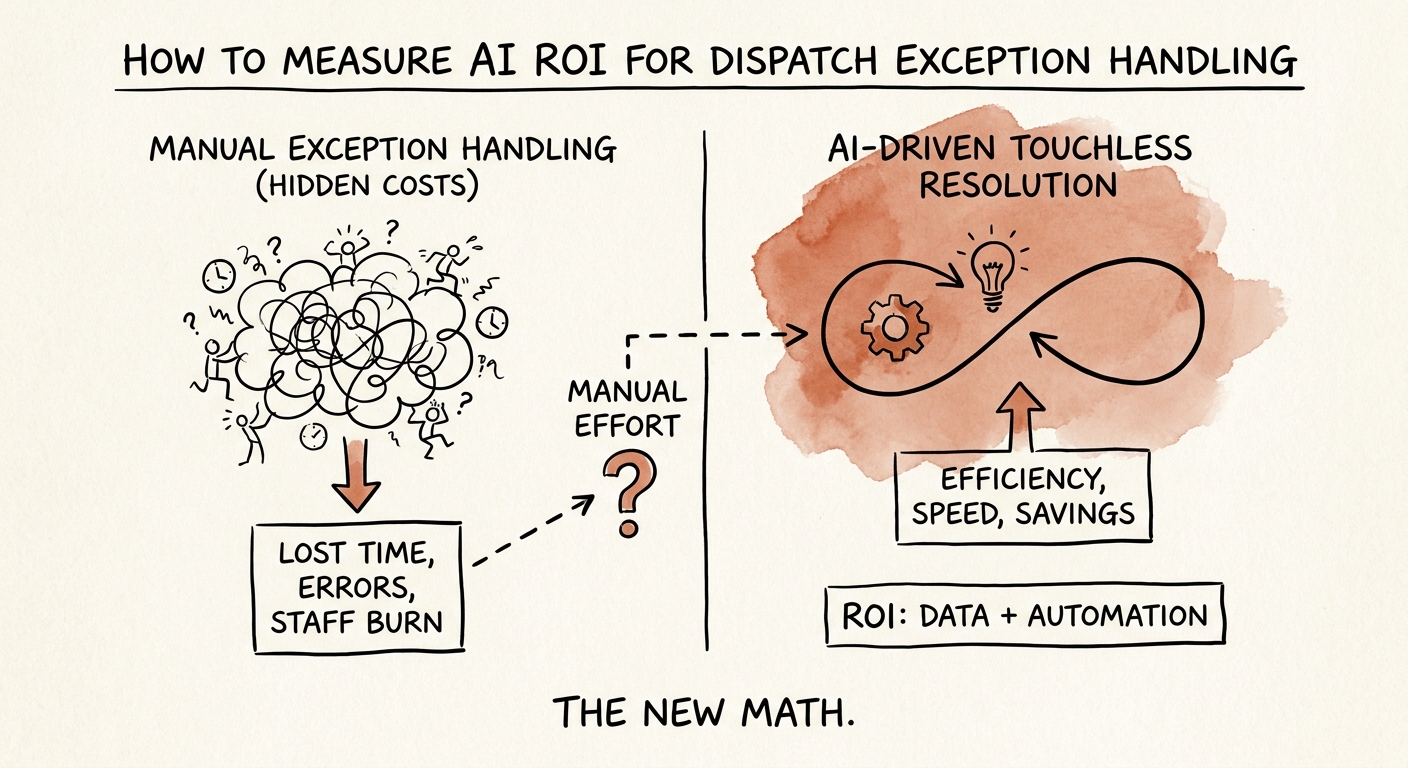
The one number that tells you it's working: override rate
Run the pilot on a single region for 90 days and watch one thing above all — how often the dispatcher rejects the AI's reroute. If override rate is falling while exception aging and second trips also fall, the model has earned the board. If dispatchers keep overriding, the model is confidently wrong about skills, parts, or priority, and the answer is to fix that source data and the escalation rules — not to roll it out to three more regions. A tool that summarizes the disruption after the window already broke is a prettier incident log, nothing more.
Here is the Monday move: pull last quarter's exceptions and tag each one as "could have been resaved with a faster reroute" or "no slot existed regardless." That split tells you the realistic ceiling before you spend a dollar. Then pressure-test it against route, technician, and customer-impact numbers with the AI ROI Calculator and the AI Opportunity Score, or bring it to Human Renaissance AI transformation services to scope the pilot around your fleet.