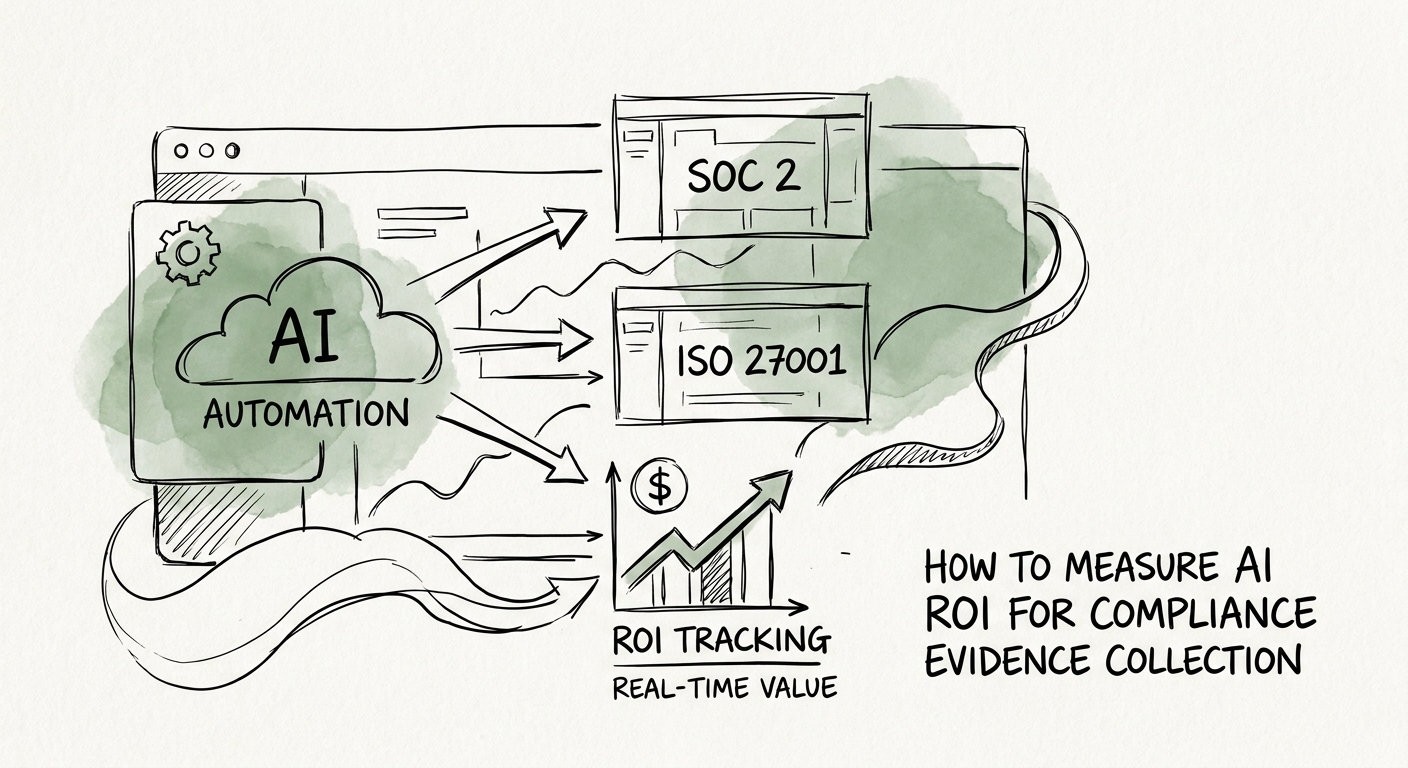
The packet that gets handed back
Picture the SOC 2 window at a 90-person technology-enabled services firm. An auditor asks for evidence that access reviews ran every quarter. A control owner pastes three Teams screenshots, an exported spreadsheet from the IdP, and an email thread that says "approved." Two days later it comes back: which review cycle is this, who's the approver of record, and why does the export date sit outside the period? Now the same control gets proven twice, and the clock starts over.
That second loop is the cost AI is supposed to remove, and it's also the thing most teams forget to measure. The temptation is to count documents assembled per hour. The number that actually moves your audit forward is narrower: evidence request age, first-pass acceptance, reopened items, missing source links, and reviewer time spent re-proving a control that should have closed the first time. If you don't baseline those five before you turn anything on, you can't tell a real gain from a faster way to generate rejections.
IBM Institute for Business Value AI capabilities research is blunt about why: capability tracks with data quality, operating model, adoption, and measurement, not with the model itself. For evidence collection that translates into homework you do on paper first. Name the system of record for each control, the control owner who produces the artifact, the review owner who accepts it, and the acceptance rule that says "this satisfies the requirement." Skip that and you've handed AI a pile of screenshots with no idea which one is canonical.
Where the evidence actually lives is the whole problem
At a services firm, evidence is never in one place. The access review is in the IdP. The approval is in an email. The remediation ticket is in Jira. The policy acknowledgment is a PDF someone exported in March. The vendor risk attestation is a Teams message. AI that drafts an audit packet from all of that is genuinely useful, right up until it pulls a stale export or surfaces a document the requester wasn't permitted to see.
That's why the NIST AI Risk Management Framework is the right anchor for this workflow rather than a generic productivity lens. Compliance evidence has to keep its chain intact: which record, which owner, which date, which approval path. NIST's discipline of mapping use cases, measuring failure modes, and governing accountability is exactly what stops AI from blurring a control's provenance in the name of a tidier packet. The tool's job is to gather and arrange, never to decide what counts as proof.
And the data hygiene is not free. Microsoft 365 Copilot's data protection and auditing architecture spells out what you're actually opting into when evidence sits across SharePoint, Teams, exports, and shared folders: permissions have to be cleaned up so the tool can't surface what an owner shouldn't see, retention has to match audit expectations, and the audit logging itself becomes part of the evidence trail. Charge that cleanup against the value case. A firm that lets AI assemble packets over messy permissions hasn't sped up its audit, it's manufactured a new finding. Mirroring the broader read in McKinsey's State of AI, the value shows up only where the surrounding workflow is governed, not where the demo looked slick.
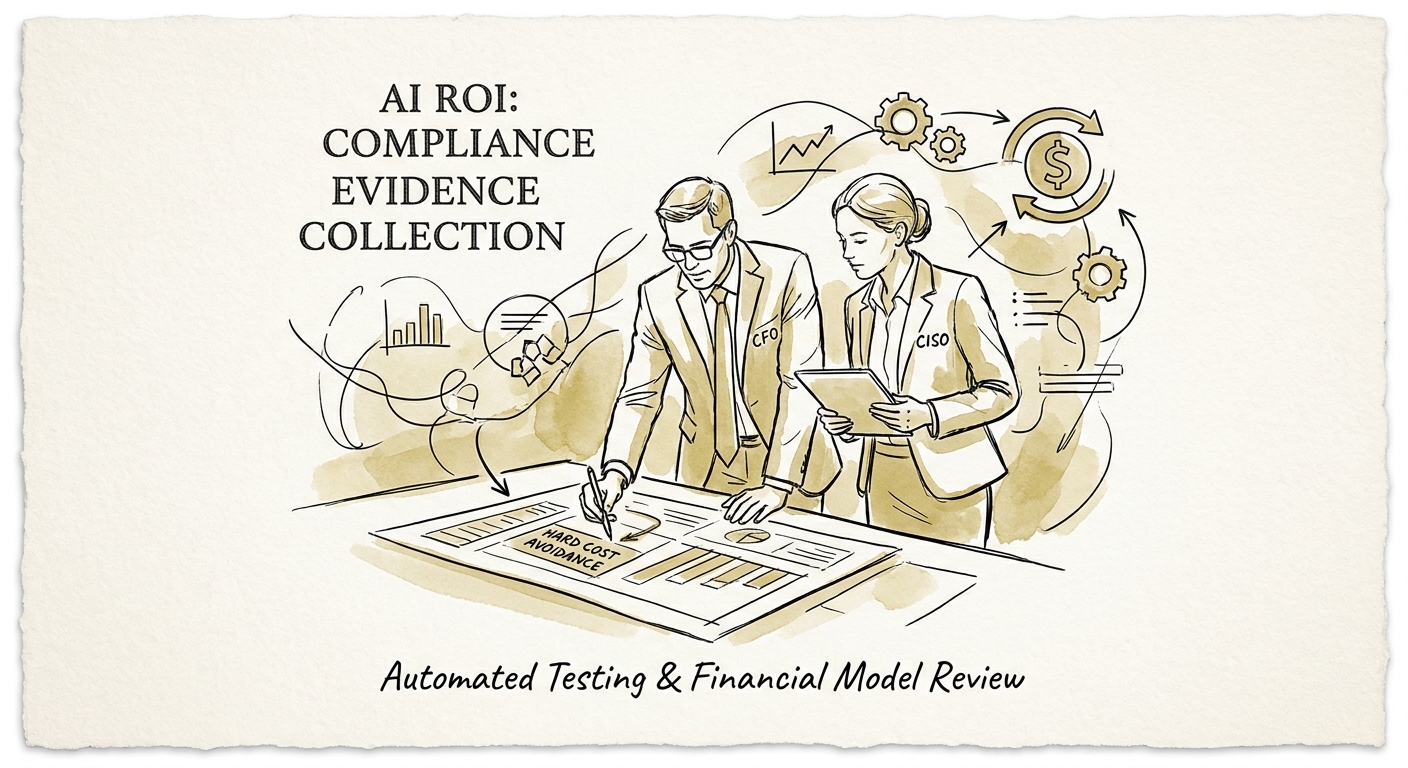
The one comparison that settles it
Run your first pilot against a single recurring obligation, say the quarterly access review, for two cycles. Before AI, log the four numbers that decide whether you have ROI: how long a control owner takes to respond to an evidence request, what share of that evidence is accepted on first review, the reopen rate, and how many escalations the reviewer has to chase. Then turn AI on for the next cycle and put the same numbers next to the old ones.
The verdict is unforgiving and that's the point. If packets arrive faster but auditors or your internal reviewer bounce more of them, first-pass acceptance falls and reopens climb, you've bought speed and paid for it in rework. If response time drops, acceptance rises, and reopens shrink, the control owner is delivering accepted evidence with a cleaner trail, which is the only definition of ROI an audit committee will recognize.
What you can do Monday: pick one control, write down its system of record, owner, reviewer, and acceptance rule, and capture this cycle's four baseline numbers before any tool touches it. From there, the AI ROI Calculator and the AI Opportunity Score help you size the case, and Human Renaissance AI transformation services can help you wire it into a measured evidence workflow instead of a document-speed claim.
