The alert that nobody worked
Say a distributor turns on AI-driven inventory exception reporting and the first week generates 1,900 flagged SKUs: shortages, slow-movers, late inbound, replenishment conflicts. The vendor demo celebrates the number. The planning team does something more honest — they ignore most of it, because the queue is bigger than the hours they have to work it. Six weeks later the expedite freight bill hasn't moved, the stale-stock pile hasn't shrunk, and someone asks what the tool actually bought.
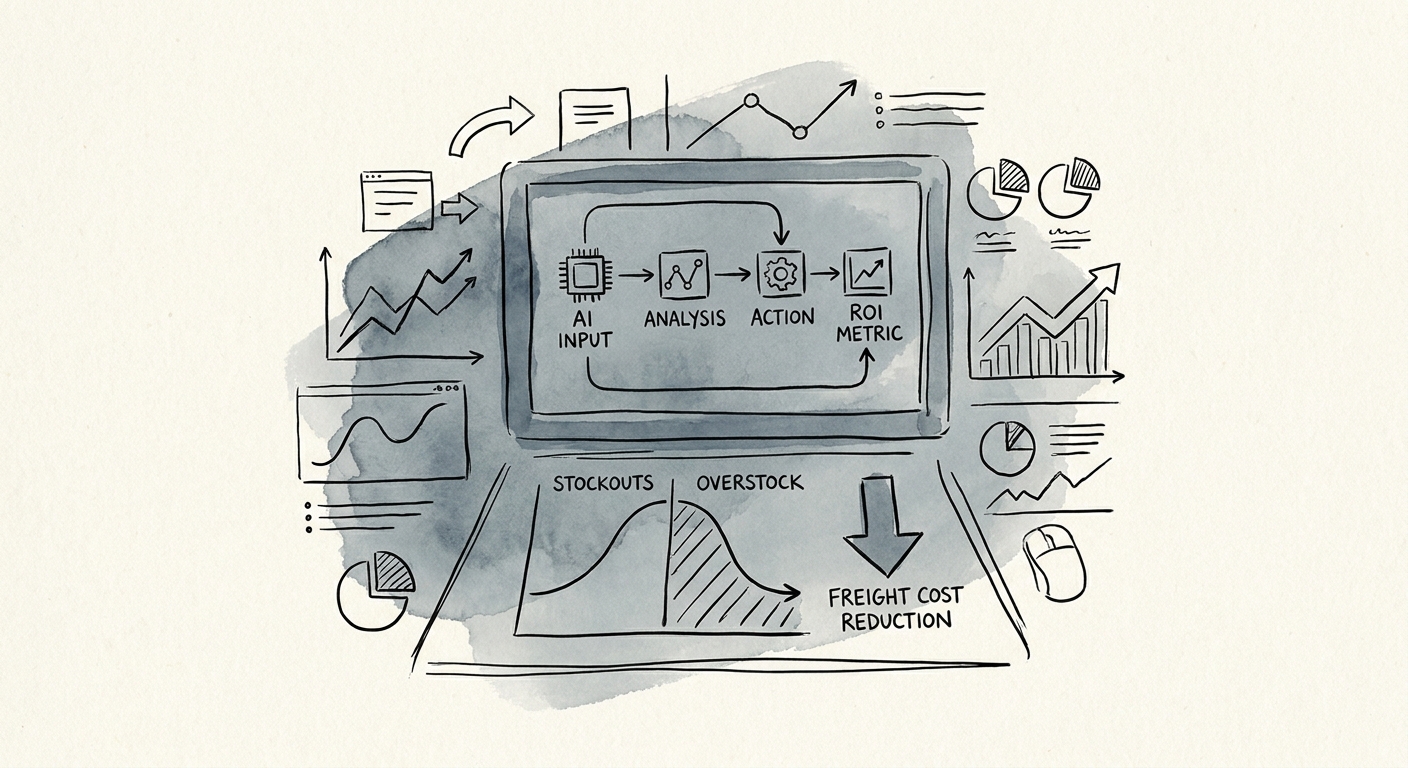
That gap is the whole measurement problem. An exception report has no ROI of its own. It only converts to value when a planner sees a shortage, an aging slow-mover, or a supplier signal early enough to make a different decision — pull the substitute, cancel the expedite, release the PO a week sooner. McKinsey's State of AI 2025 keeps landing on the same point: the money is in redesigned operating practice, not the model. For inventory, the practice you're redesigning is the path from ERP or WMS signal to a planner's hand on the dial. So measure that path, not the row count.
The catch is that the path only works if the underlying SKU, site, supplier, lead-time, and substitution data is trustworthy — IBM's Institute for Business Value research is blunt that data readiness gates whether AI capabilities deliver at all. An exception that fires off a stale lead time or a missing substitution rule isn't a signal, it's a future override. Your baseline should split the two from day one: total alert volume on one line, alerts that produced an action on another. If those two lines never converge, you don't have an ROI problem, you have a noise problem wearing an ROI costume.
The four numbers that tell you the truth
Forget the dashboard's headline tile. Four operational numbers separate a working inventory exception model from an expensive alarm clock, and you can pull all four from the planning floor without a data-science team.
Exception aging — how long does a flagged exception sit before someone touches it? A shortage caught and resolved before the next planning meeting is worth real money; one that ages four days until it becomes a stockout was a notification, not a save. Track the median age-to-action by exception type, because shortages will behave nothing like slow-movers, and lumping them hides the failure.
Override rate — when a planner overrides an alert, the model just told you something. A 5% override rate on shortage alerts is fine seasoning; a 40% rate on stale-stock warnings means the model is blind to demand context or an approved substitute and is generating rework. The NIST AI Risk Management Framework is the practical fit here — map each exception type, measure its false-positive rate, write the override rules down, and assign one owner for bad signals so the noisy categories get fixed or muted instead of silently distrusted.
Avoided expedite work — the cleanest dollar line. Expedite freight, rush POs, and manual interventions that didn't happen because the exception surfaced early. This is where the freight bill either moves or it doesn't.
Decision timing — are replenishment and substitution calls happening earlier in the cycle than they did before the tool? If the same decisions land at the same late hour, the model added latency, not lead time.
One more guardrail quietly decides the whole thing: planners don't work from system data alone. They cross-reference emailed forecasts, a shared spreadsheet a supplier sent Tuesday, a Teams thread about a delayed container. Microsoft's Copilot data protection and auditing architecture is the reference for why source freshness, role-based visibility, and audit trails belong in the ROI model — a recommendation built on last quarter's forecast or a file the planner shouldn't have seen isn't a saving, it's a liability you haven't been billed for yet.
What you do Monday — and when to kill it
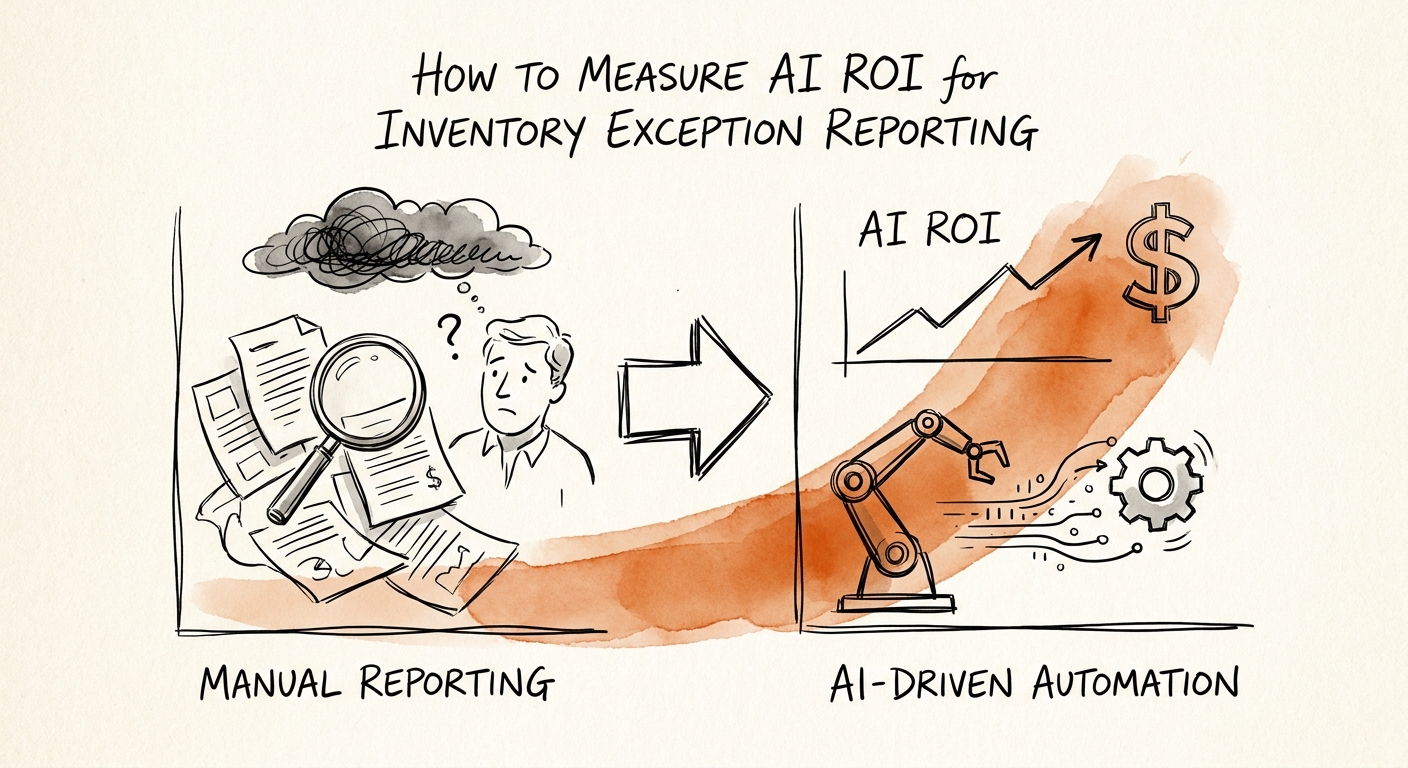
Run one baseline week before you trust any after-numbers: capture today's median exception aging, override rate by type, expedite spend, and how late in the cycle replenishment calls land. Then give the model 90 days against that same scoreboard. Don't grade it on alert volume — grade it on whether those four numbers moved for a replenishment owner you've actually named.
Then make the unglamorous decision honestly. If overrides are climbing and the freight bill is flat, the right move is rarely "roll it to every site." It's narrow the SKU scope to the categories where the data is clean, repair the lead-time and substitution feeds underneath, or retire the pilot before it metastasizes into a queue nobody works. Scaling a noisy exception model across ten warehouses doesn't multiply ROI — it multiplies the alerts your best planners have already learned to ignore.
If you want to put numbers against this before your next planning cycle, the AI ROI Calculator turns avoided expedites and decision timing into a defensible figure, the AI Opportunity Score pressure-tests whether your inventory data is ready to support the model at all, and Human Renaissance AI transformation services can help you wire the SKU scope, source controls, and planning-owner accountability into a decision you can stand behind.