Watch one ticket bounce, and you'll see the real cost
A printer-can't-authenticate ticket comes in. Tier-1 asks the user three questions, tries the two obvious fixes, and escalates. Tier-2 opens it forty minutes later and asks the user the same three questions — because the answers are buried in comment four, the OS version was never captured, and the "escalation note" says "see above." That re-discovery loop, repeated across hundreds of tickets a week, is where an IT service desk actually loses its time. Not in the hard fixes. In rebuilding context that already existed.
That is the workflow worth pointing AI at first, and it's a narrow, well-bounded one. Adoption is climbing fast — the RSM middle-market AI survey shows mid-market teams moving quickly — but speed is the trap. The win here isn't deflecting tickets or auto-closing them. It's that the engineer who picks up the escalation opens it and knows everything the last person already learned.
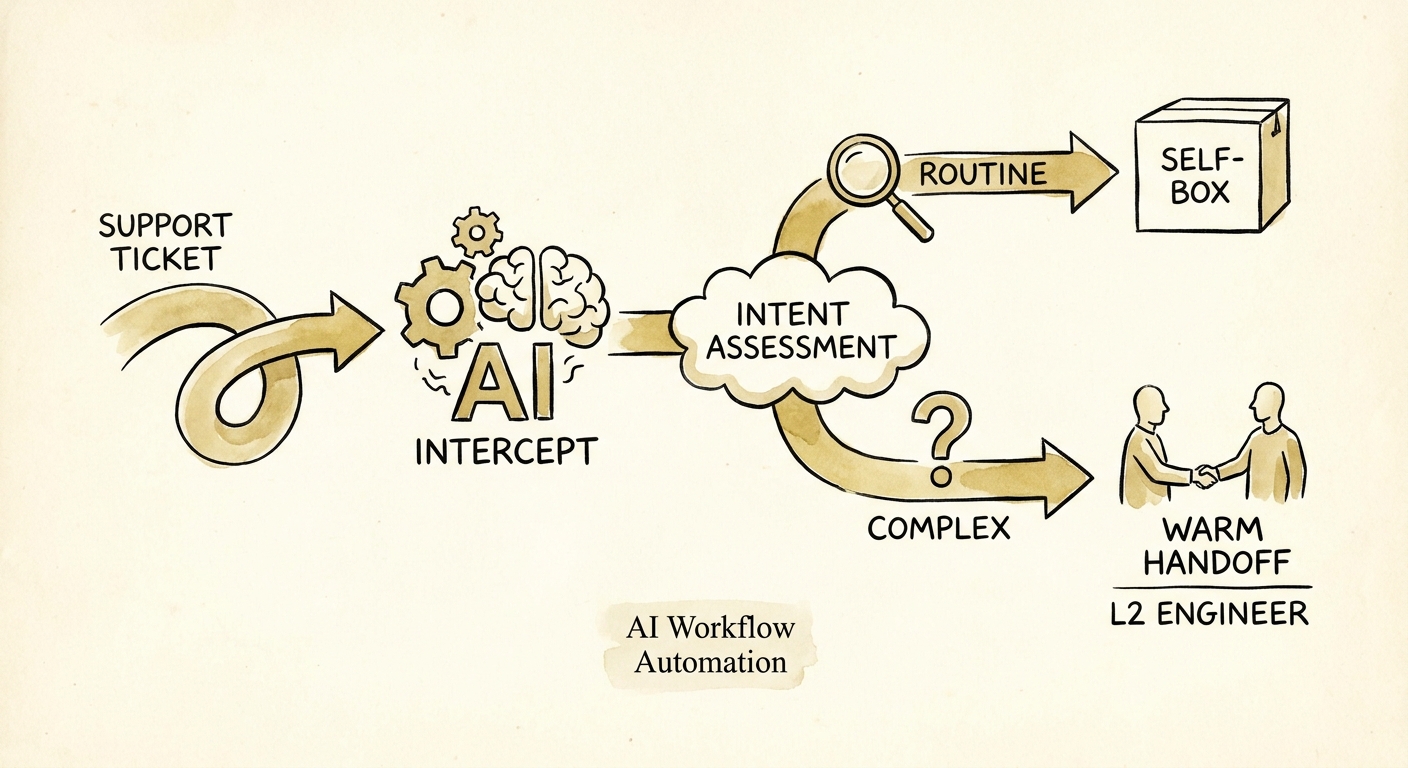
So scope the first build to exactly that handoff: summarize the ticket thread, pull the environment details (device, OS, last change, error string) into a structured block, search your approved knowledge base for the matching runbook, and draft the escalation note plus a suggested category — all for human review. It does not close tickets, promise the user a resolution, or skip tiers. If you haven't mapped your current path yet, start by finding the manual work worth fixing and follow the comment trail on your last twenty escalations. The gaps repeat.
An escalation assistant reads things a help desk shouldn't expose by default
Here's what makes this workflow different from a marketing chatbot: the ticket thread it's summarizing may contain VPN configs, employee laptop inventory, a pasted error log with an internal hostname, a customer's account context, and occasionally a credential someone dropped into a comment they shouldn't have. The moment your assistant can read every ticket to draft a note, you've built something with broad read access to sensitive operational data. That needs guardrails before it touches a live queue, not after.
The NIST AI Risk Management Framework gives you the governance frame, and CISA's AI data security best practices are specific about protecting the data feeding the system. Concretely for a service desk: scope the assistant to the knowledge sources you've approved (not the open web), make permissions role-aware so a tier-1 draft can't surface tier-3-only runbooks, log every draft it produces, and require a human to approve any customer-facing wording. Map all of it against the five functions of the NIST Cybersecurity Framework 2.0 so the assistant lives inside your existing identify-protect-detect controls instead of becoming an unmonitored side channel into the ticketing system.
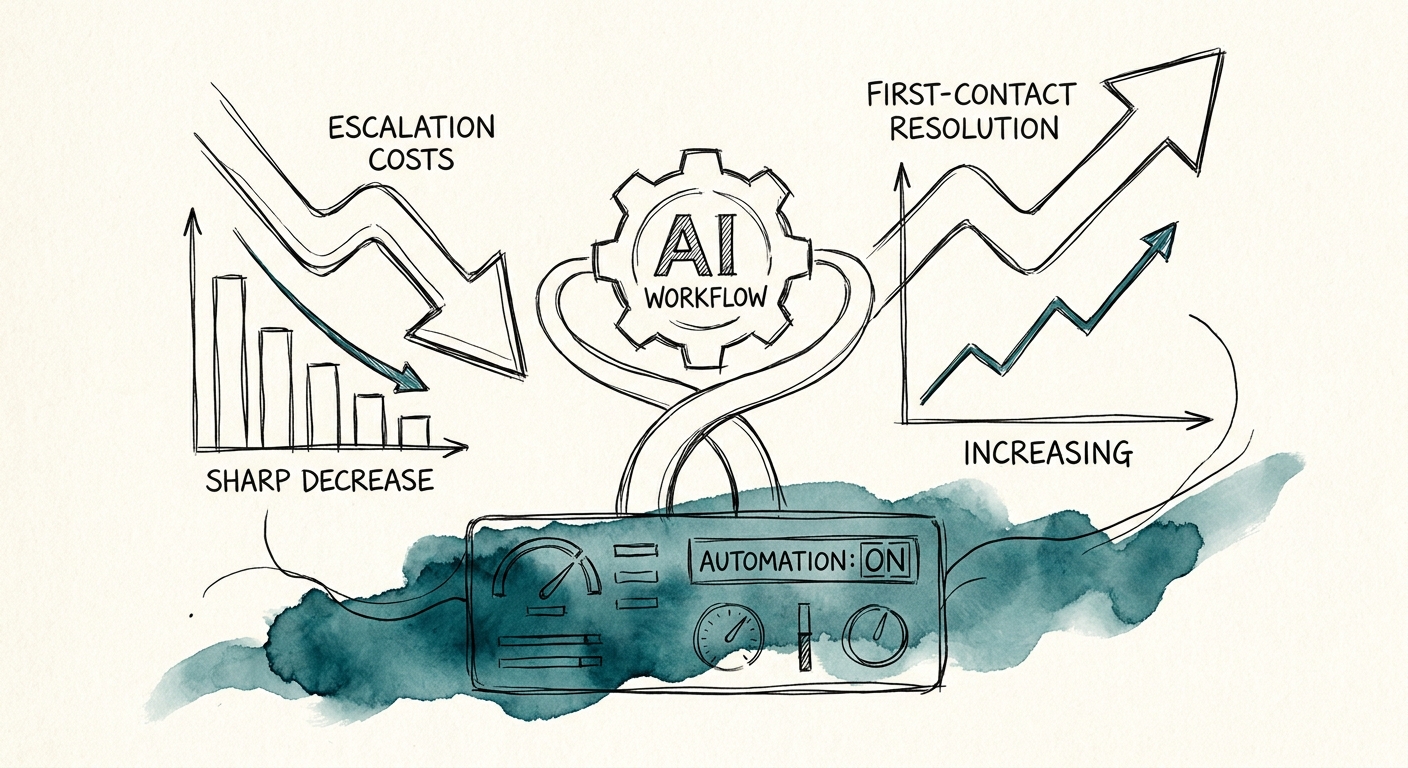
Then measure honestly with a ROI model that doesn't fake the savings. The metrics that actually move on this workflow: how many escalation notes arrive with the environment block already filled, how often tier-2 has to re-ask the user a question, and first-pass routing accuracy. Don't claim "X hours saved" unless your staffing or ticket throughput genuinely changed — better handoff quality is the real, defensible win, and it's enough.
Stay an assistant until the service lead stops double-checking it
The temptation, three months in, is to let the thing start routing and resolving on its own. Resist it. The Gartner agentic AI forecast projects that over 40% of agentic AI projects get cancelled by 2027, and the failures cluster exactly where teams hand decision authority to a workflow before the controls and the trust are real. An escalation assistant that prepares the work is low-risk. An agent that decides priority and skips tiers on its own is where the cancellations come from.
The Deloitte State of AI report offers a sharper test than "are people using it": did the pilot become a production workflow with accountable review? On a service desk, the evidence is unglamorous and concrete — your intake fields tightened, your knowledge base got cleaned up because the assistant kept surfacing stale runbooks, escalation ownership got clearer, and there's a standing weekly review of where the drafts helped and where they were wrong.
Run it as an assistant for a full review cycle. When the service lead stops reading every draft before it posts because they've stopped finding errors, that's your signal to widen scope — one step at a time. To decide whether your escalation flow is ready for production controls or still needs process cleanup first, work through the pilot versus production workflow guide.
