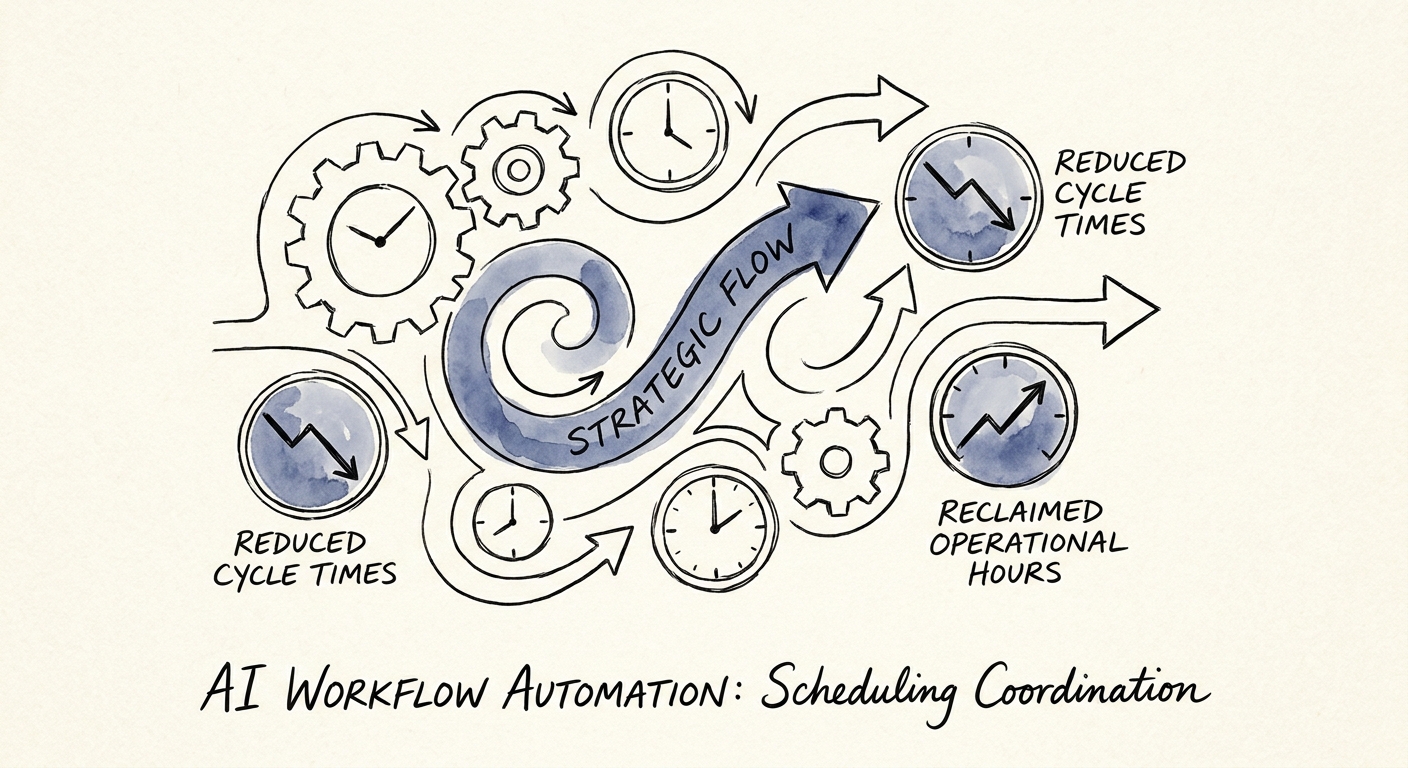
The job that vanished when she went on vacation
Picture a 60-person managed-services shop. Forty field techs, six service coordinators, a few hundred open tickets at any moment. One coordinator — call her the one everyone Slacks before they touch the board — knows that the hospital client gets bumped ahead of everyone, that the tech who lives near the airport corridor takes the early calls, that a "P2" from one account is really a P1 because of a handshake nobody documented. Then she takes a week off, and the schedule quietly falls apart. Reschedules spike. A contractual response window gets blown. Nobody did anything wrong; the operating model just walked out the door for five days.
That is the exact gap a scheduling AI either closes or exposes. The McKinsey State of AI 2025 finding that bites here is that AI value comes from redesigning the work, not bolting an assistant onto it. If schedule priority lives in someone's head, an automation layer doesn't learn the rule — it just executes the absence of one faster. And because scheduling sits at the seam between your people and the customer, that failure is loud: Salesforce's State of Service research ties connected service workflows directly to whether the customer feels handled or dropped.
So before anyone evaluates a vendor, do the unglamorous thing: make four constraints explicit on paper. Priority (whose job jumps the line and why). Availability (skills, certifications, drive radius, on-call windows). SLA (the real response clock per account, not the one in the contract template). And the approval path (who can override the schedule, and what happens when they're asleep). If you cannot write those four down in a morning, the AI will not invent them for you.
The handful of jobs where automation should stop and ask
Here's where most scheduling deployments quietly rot: the happy path works beautifully, and the exceptions — the small slice of jobs that eat most of your coordinator's day — get hidden behind a confident recommendation. A good scheduling AI handles the routine assignment silently and surfaces the hard call loudly. A bad one papers over the tradeoff, and you find out three days later when the wrong tech showed up to the wrong site.
The NIST AI Risk Management Framework gives you the spine for this without the jargon: map the situations where the system can be wrong, measure how often it is, manage a control for each failure mode, and name a human who is accountable when an override fires. In scheduling terms that means deciding, up front: what does the system do when two P1s collide for the same certified tech? When a customer reschedules inside the SLA window? When the only qualified person is already over hours? The answer isn't "let the model decide" — it's "the model recommends, flags the conflict, and routes it to a named owner for exceptions." One owner. A real name, not a queue.
And remember where scheduling context actually lives: scattered across calendars, dispatch tickets, the email thread where the account manager promised Friday, and a shared sheet. Microsoft's own Microsoft 365 Copilot data protection architecture documentation makes the point that matters: an assistant inherits whatever permissions and stale data it can reach. If the AI reads a calendar event that was canceled but never deleted, it will confidently book against a ghost. Audit what the workflow can see, and how fresh it is, before you let it act.
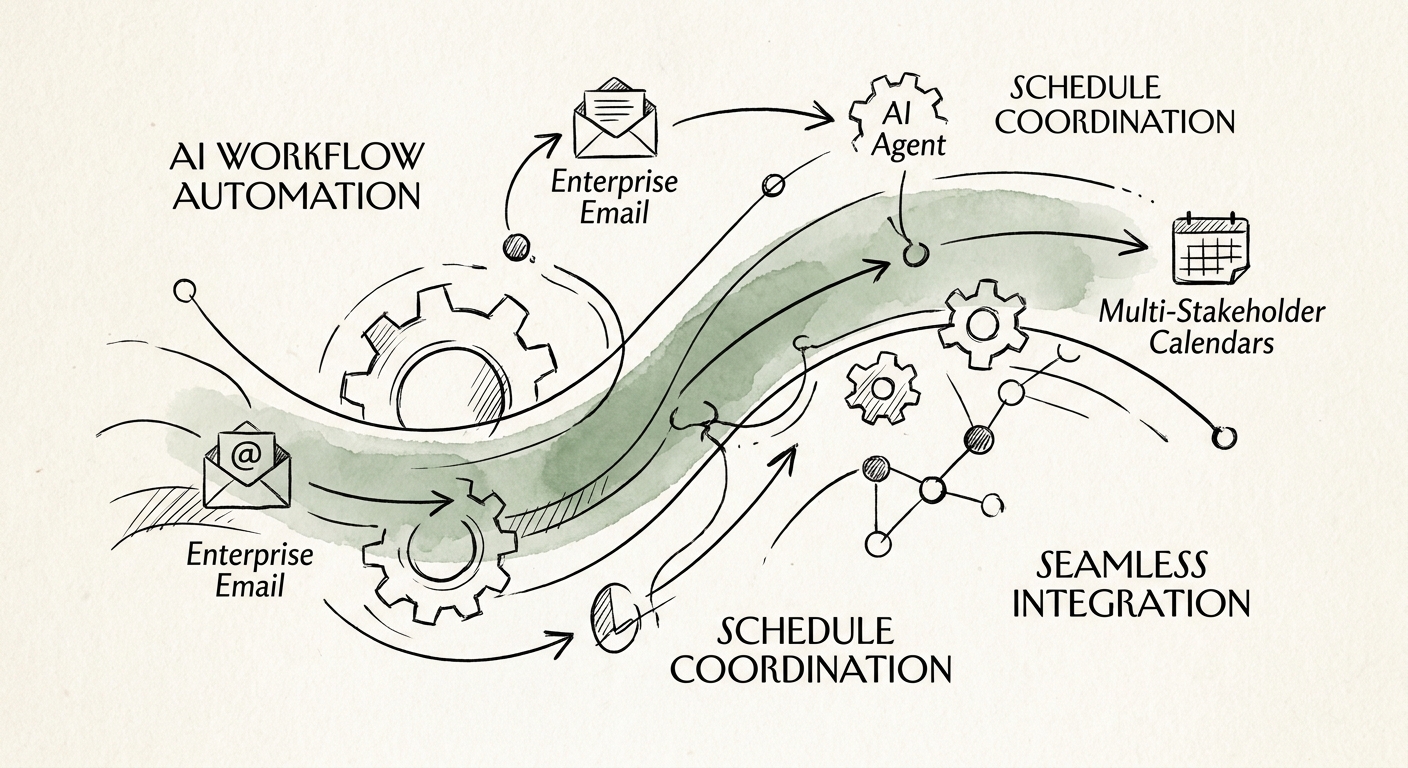
Five numbers that tell you if it's actually working
Coordination quality is measurable, and "the schedule feels calmer" is not a metric. Pick five and baseline them this week, before any tool touches the board: reschedule rate (how often a confirmed assignment gets changed), exception resolution time (how long the hard calls sit before someone decides), SLA breach count by account, manual touches per job, and adoption among coordinators — because a system your dispatchers route around at 7am is a system that failed. The IBM Institute for Business Value AI capabilities research is blunt about this: data, operating model, adoption, and outcomes move together. Win on the dashboard and lose on adoption and you've bought shelfware.
What you can do Monday: open a doc, write the four constraints for your three highest-stakes accounts, and name one exception owner. That alone surfaces every undocumented rule still living in someone's head — and tells you whether you're ready to automate or whether you're about to automate chaos.
When you want a structured read on readiness, run the AI Opportunity Score, and see how we sequence this work in Human Renaissance AI transformation services.
