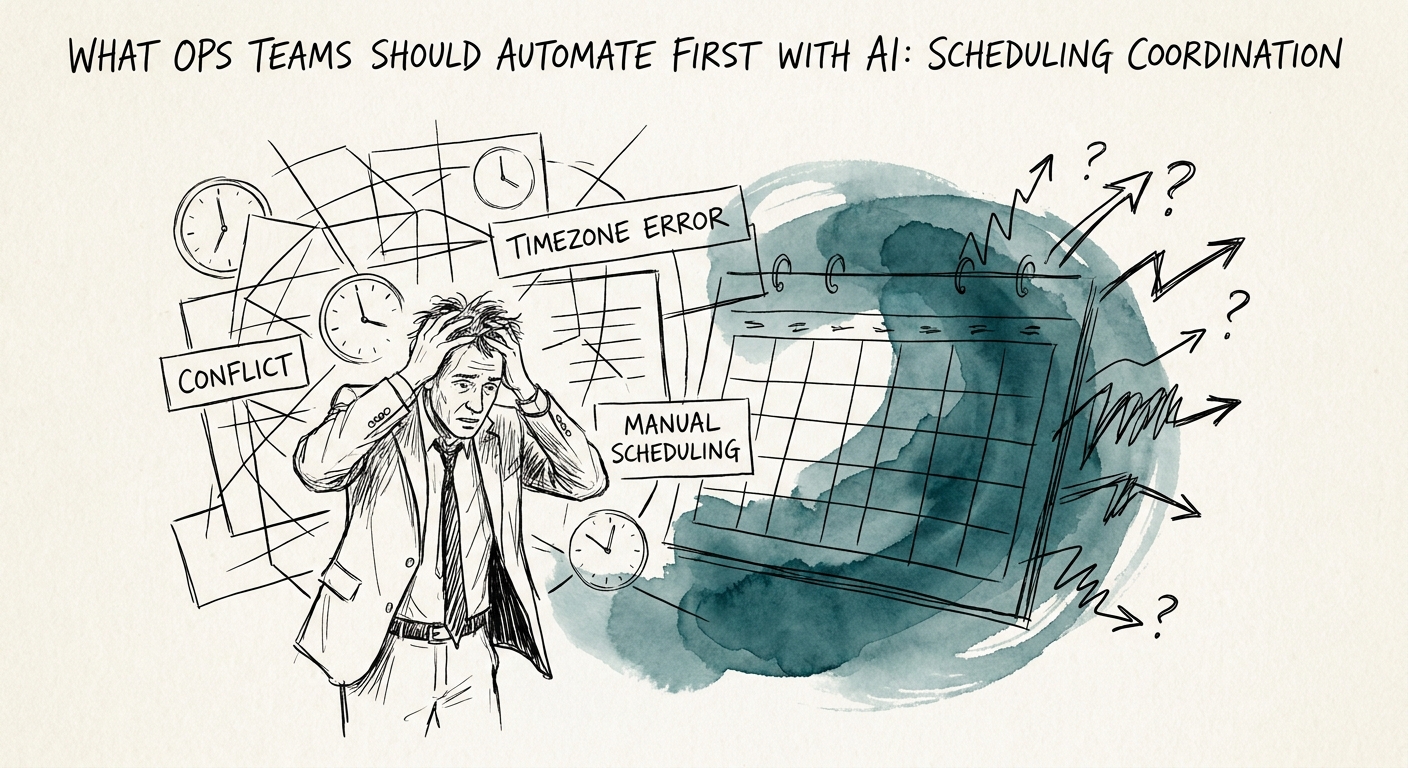
Count the emails it takes to book one client call
Say a 60-person B2B services firm runs a status review with a client every two weeks. The account manager proposes three times. The client's EA counters with two. Someone's traveling. A reschedule. By the time the invite lands, eleven emails have moved and two days have passed — for a meeting that nobody actually argued about. Multiply that by every active account and you have an operations function spending real hours producing zero billable value, all to agree on a thing everyone already wanted.
That is precisely why scheduling coordination is the right place to start with AI, and not because it's glamorous. It's recurring, the participants are known, the cost of delay is visible on a calendar, and a mistake is a slightly awkward "let me re-send that" rather than a compliance event. The Federal Reserve Bank of San Francisco small-business AI analysis makes the case that smaller firms need adoption paths they can actually walk; scheduling is walkable because you can pilot it on one meeting type without re-architecting anything.
So resist the urge to "automate the calendar." Pick a single motion: client status reviews, or post-demo follow-ups, or new-project kickoffs — whichever one your team complains about most. The OECD SME AI adoption report stresses matching adoption to capability, and one named meeting type is a scope a 60-person firm can actually supervise.
Write the rules before the assistant has a voice
An AI that emails your clients on your behalf is making operational commitments under your firm's name. Before it sends a single line, it needs four answers in writing: who it is allowed to contact, which meeting types it can propose, how long it may hold a tentative slot, and the exact trigger that makes it stop and hand the thread to a human. "The client asks to move the scope of work" is an escalation. "The client wants 2pm instead of 3pm" is not.
For a services firm, those calendar threads are full of client names, deal context, and who's-meeting-whom signals that a competitor would love. That makes the CISA AI data-security best practices directly relevant here — scheduling isn't a low-stakes sandbox just because it's "only the calendar." Decide what the assistant may read, what it may store, and what it must never put in an outbound message.
Then run the pilot for two weeks and measure the two numbers that matter: time-to-confirm and escalation rate. Messages sent is a vanity metric; a confirmed meeting in four hours instead of two days is the win, and a low escalation rate is what tells you the rules are tight enough to trust. Hold the result up against the framework in measuring AI ROI for scheduling coordination and make the case survive a finance conversation before you expand by a single meeting type.
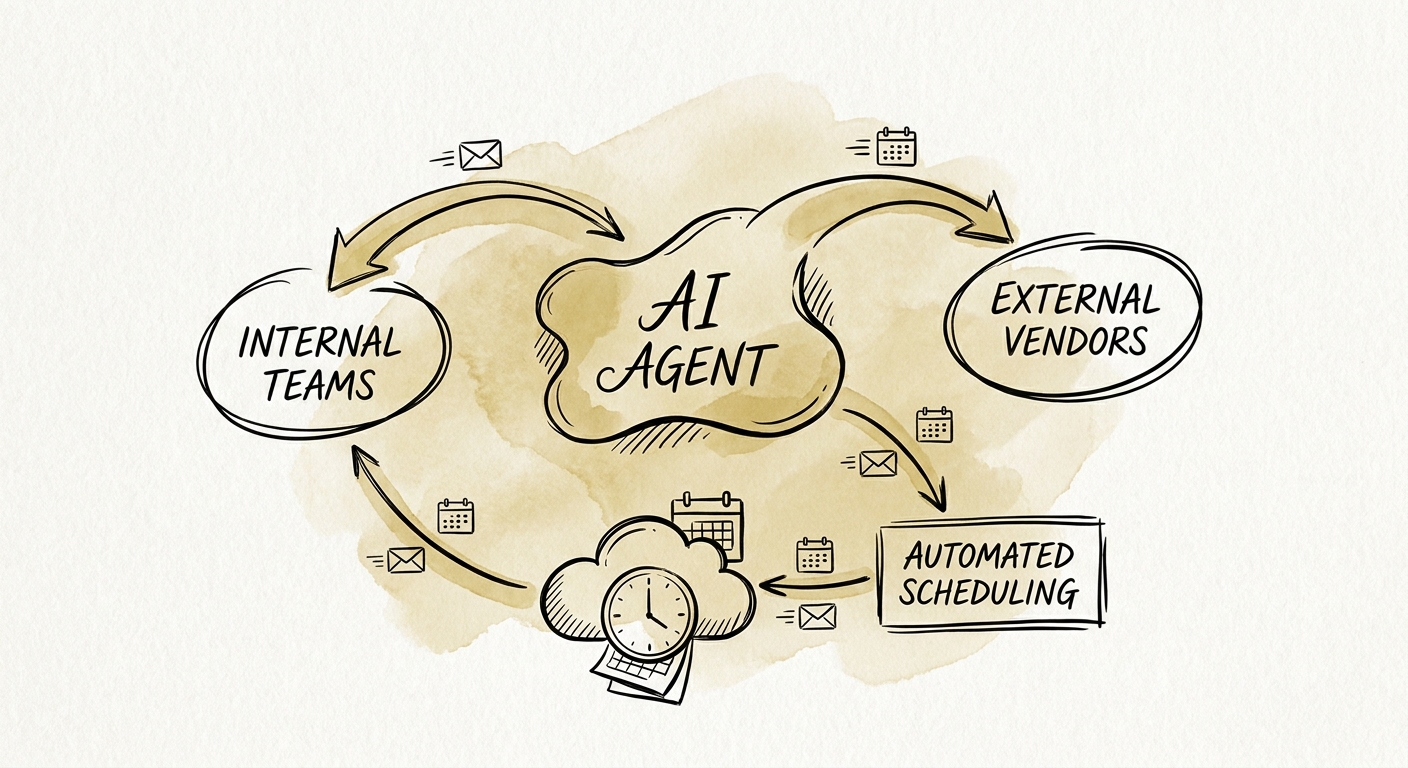
What you actually bought was a template for the next one
Once the scheduling motion is stable, the natural next moves are obvious: let it read CRM account priority so the strategic client gets the earlier slot, pull delivery status so it stops booking a kickoff for a project that's already slipping, and attach the handoff doc the meeting needs. But the real asset isn't the calendar booking. It's that your team just rehearsed the loop — pick a workflow, set hard boundaries, measure the outcome, expand under supervision — on something where the downside was trivial.
That loop is exactly the structure of the NIST AI Risk Management Framework: map the system, measure the risk, manage the controls, govern the ownership. You don't introduce that discipline on the workflow that touches invoices or contracts. You build the muscle on scheduling first, where a misfire costs an apology, then carry the same playbook into the work that does bleed.
Monday-morning version: name the one meeting type that wastes the most operations time, name the single person who owns the rules, write the four boundaries above on one page, and run a two-week pilot tracking time-to-confirm and escalations. If that case survives finance, you've earned the right to automate the next thing.