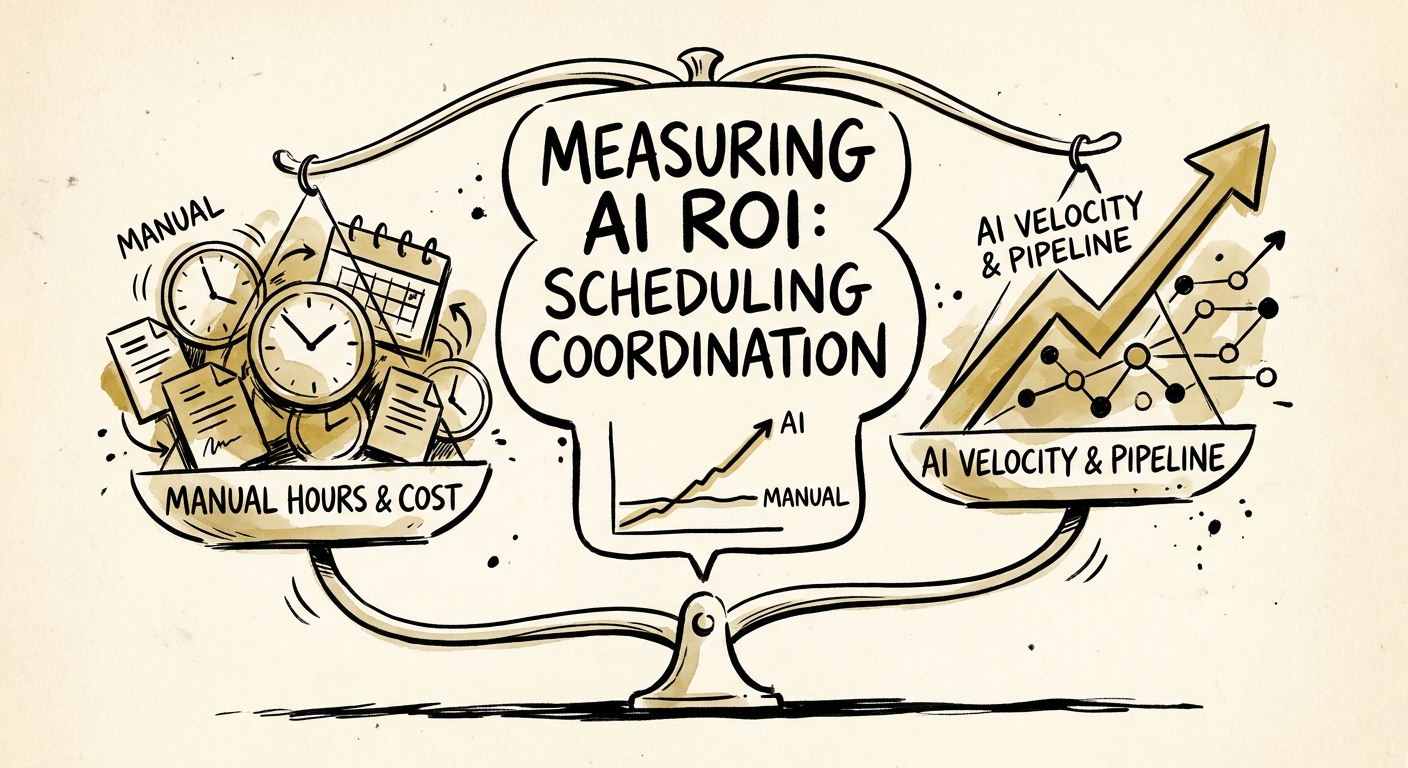
A booked slot is not a win. A billed hour is.
Picture a 60-person services firm where a senior consultant gets a client onboarding pushed from Tuesday to Thursday. The AI assistant found a slot, sent the invite, updated three calendars. By the dashboard, it worked. But that consultant now has a two-hour hole on Tuesday that nobody backfilled, and the client's preparation window collapsed because the rescheduled session lands the day before their board meeting. The tool "succeeded" and the firm lost money twice.
That is the trap with scheduling automation in a professional services context: the easy metric (slots booked, minutes saved per coordinator) has almost nothing to do with the metric that pays the rent (utilization on people who bill by the hour). The San Francisco Fed's research on AI and small businesses keeps surfacing the same gap: firms have the tools but not the implementation capacity or the trust to let automation make consequential calls. Scheduling is the sharpest version of that problem, because the consequential call is always "whose time gets protected and whose gets shuffled."
So before you measure anything, define what scheduling AI is actually deciding on your behalf: client urgency, which consultant has the right skill for this engagement phase, travel and onsite constraints, whether a no-show-prone account needs a confirmation loop, and whether a high-value rebooking should be escalated to a human coordinator instead of silently moved. If those judgments live in a senior coordinator's head, the AI cannot learn them and you cannot trust its numbers.
Wire the calendar to capacity, not just to availability
The difference between a scheduling toy and a scheduling system is whether the calendar knows what's happening in the rest of the business. A toy sees open time. A system sees that this consultant is at 94% utilization this week, that this client is in renewal motion, that the PSA shows this engagement is already over its staffing budget, and that the last two meetings with this account were no-shows.
Build the operating design around those connections: calendar permissions and priority rules, the CRM record that tells you a meeting is a renewal versus a kickoff, the PSA capacity and skill data that says who can actually staff it, no-show history, and handoff notes so the next person isn't starting cold. NIST's AI Risk Management Framework is worth keeping on the desk here because it forces you to write down the intended use and the quality bar before you turn anything loose — which is exactly the discipline scheduling pilots skip.
Then treat the calendar as the sensitive data it is. A services firm's calendar names clients, exposes when key people are unavailable, flags litigation prep or M&A meetings by their titles, and sometimes carries regulated context. CISA's guidance on securing data used to train and operate AI systems is the reason your design should minimize what the model sees, log every automated suggestion, and route ambiguous or high-value rebookings to a named owner instead of letting the system quietly reshuffle a managing partner's week.
The five numbers that decide whether you scale
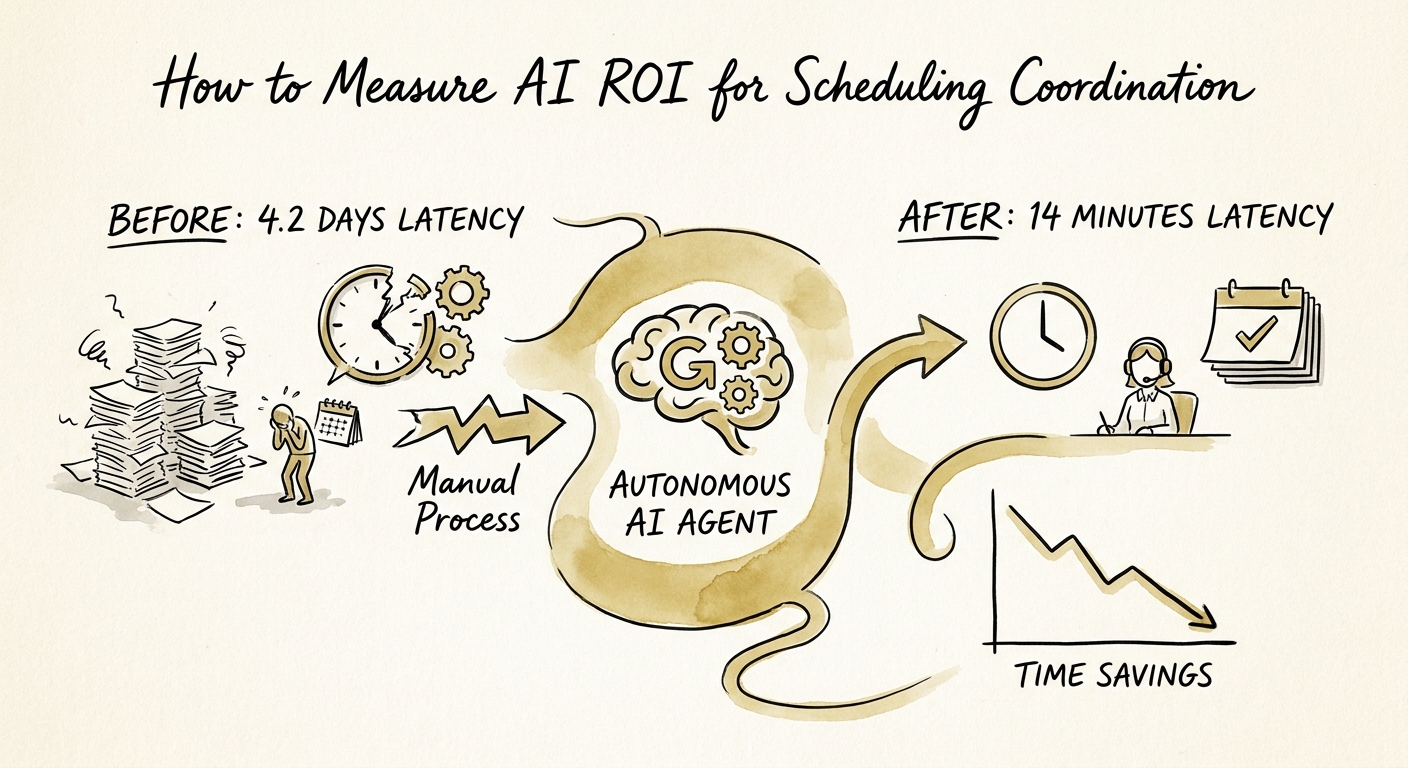
Pick one scheduling motion and one only. Client onboarding meetings, renewal reviews, implementation workshops, onsite field appointments, executive briefings — each has its own constraints and its own escalation rules, and mixing them muddies every measurement. Baseline that single motion before any AI touches it, then watch five numbers: time-to-schedule, reschedule rate, no-show rate, idle billable hours created by movement, and missed or late handoffs. Notice that "hours the coordinator saved" is deliberately not on that list. Coordinator time is real, but it's the cheapest hour in the building.
Run the pilot like a packet you'll hand to delivery, revenue, and ops leaders to argue over in your normal management cadence. Each entry should name the source record, show what the AI recommended, capture what a human changed, and connect the outcome to what happened after — did the consultant's week stay full, did the client show up prepared, did the next phase get a clean handoff. Keep the dataset narrow on purpose: calendar permissions, CRM context, PSA capacity, consultant skills, client priority, and who owns exceptions. Decide required fields, exclusions, and escalation triggers before you expand past the first team.
Scale when the evidence shows shorter time-to-schedule, utilization held steady or higher because handoffs stopped leaking, and fewer automated moves that ignored relationship priority. Hold if the calendar data is unreliable, if priority rules are political rather than written, or if no one owns the exceptions — adding automation on top of those problems just makes them faster. Monday's move is small: choose the one motion with the most visible pain, write down the rules that currently live in someone's head, and baseline it for two weeks before you let the AI decide anything. When the numbers hold up, fold the result into your 90-day implementation plan so scheduling becomes the first proven entry in a broader case, not a standalone experiment.