The warning was in the file the whole time
Picture the post-mortem after a $180K retainer client walks at renewal. Say you pull the history. There it is: a delivery lead wrote "client seems frustrated we keep re-scoping" in a March status note. A support ticket in April mentioned the new VP "doesn't see the value." A QBR summary in May had a line about "budget pressure on their side." Three signals, three systems, three different people. Nobody put them next to each other. The partner who owned the account found out at the renewal call.
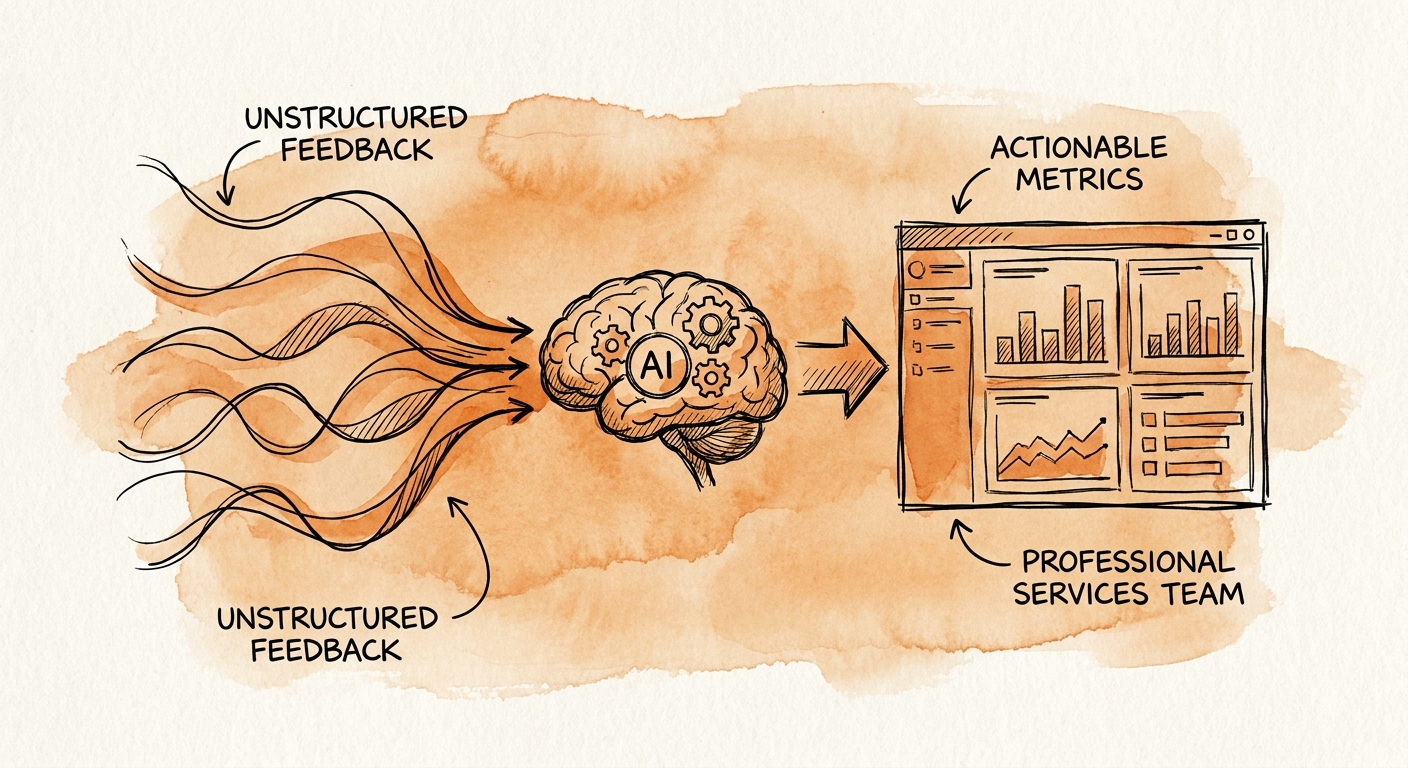
That is the actual problem in professional services feedback — not that you collect too little, but that it's scattered across surveys, call notes, support tickets, delivery reviews, and Slack threads, and no human reads all of it in time to act. AI is genuinely good at this specific job: reading everything, every week, and clustering it. But summarization is the booby prize. A prettier digest of the same comments changes nothing. The Salesforce State of Service research tracks how service organizations are increasingly judged on how fast they convert customer signals into action — and "fast" is exactly where firms with manual review lose.
Build the meeting first, then the model
The most common way this pilot fails: a firm wires up a clever classifier, generates a beautiful weekly report, and nobody does anything with it because there was never a forum that owned the output. The Deloitte State of AI in the Enterprise 2026 keeps landing on the same point — value shows up when an operating workflow actually changes, not when a model ships. So define the workflow first. For a professional services firm that means a standing 30-minute Monday review where engagement managers and the account partner look at flagged accounts and decide one thing per account: call them, re-scope, escalate to the partner, or leave it.
Then point the AI at the four signals that actually predict a professional services account leaving — and they're not the generic CSAT ones. Classify for scope drift (the client and the team disagree about what's in the engagement), stakeholder churn on their side (the champion who hired you left or got reorganized), delivery slippage language (missed dates, "still waiting," redone work), and value doubt ("not sure this is worth it," "what are we paying for"). Every flag must cite the exact note or ticket it came from and carry a confidence level a human can overrule. That design isn't optional polish — it's what makes the output contestable and auditable, which is the spine of the NIST AI Risk Management Framework. An engagement manager who can click into the source line trusts the flag. One who gets an unsourced "renewal risk: high" ignores it.
One hard rule for the first 90 days: the AI prepares the review packet, it does not write into account plans or trigger client outreach on its own. It routes attention. Humans take action.
The data boundary is where this gets you fired
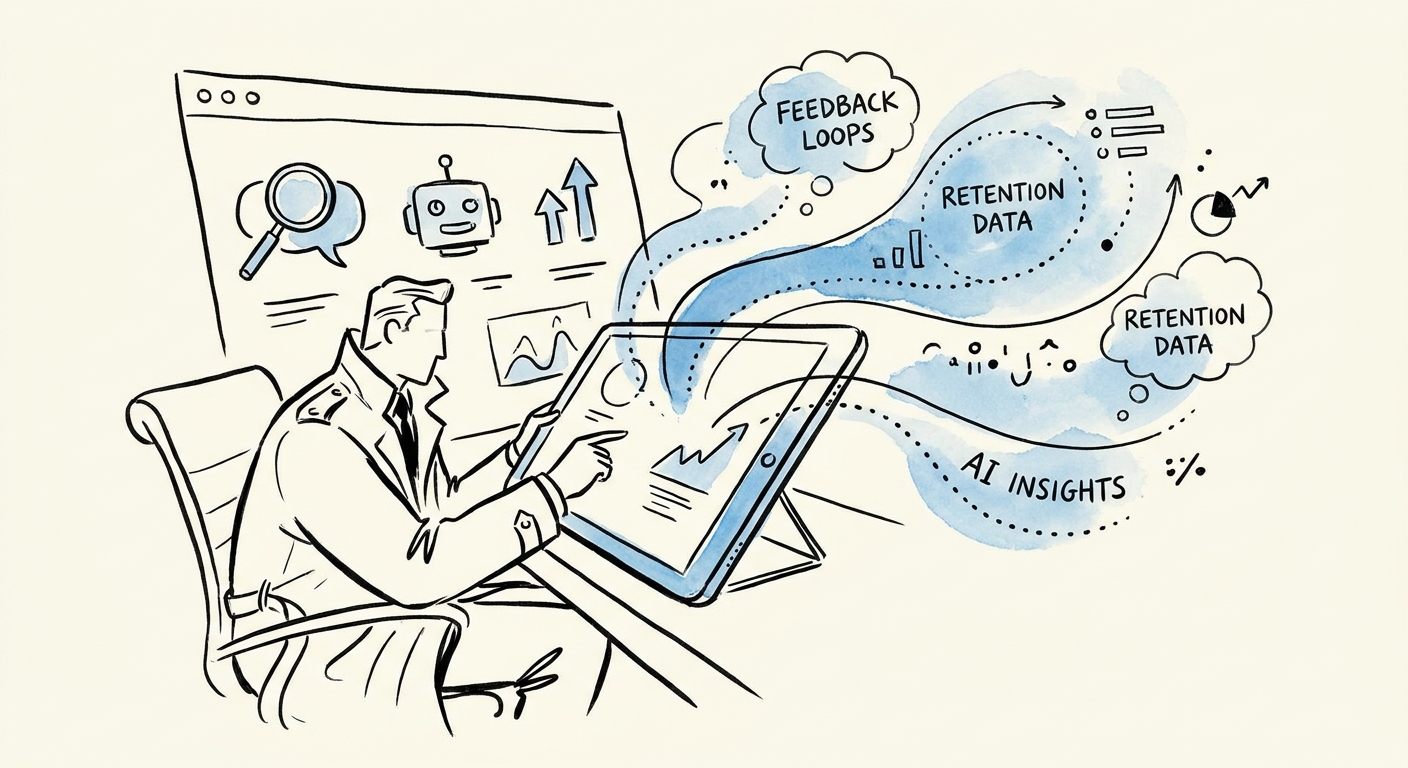
Professional services feedback is unusually sensitive. A single delivery review can name the client's executives, quote confidential commercial terms, reference a competitor displacement, and describe internal politics on the client side. The moment you pipe that into an AI workflow — especially one that also reaches your CRM and project system — you've created a path for one firm's confidential context to surface where it touches another client's account. The CISA AI data-security best practices should govern the boundary: where the data lives, what the model retains, and who can see cross-account patterns. Get this wrong and a leaked client note isn't a bug ticket, it's a reference call you'll never get to make.
Here's what to do Monday: pick your three largest at-risk accounts, manually pull every note, ticket, and review touching them from the last quarter, and read them as one stack. You will almost certainly find a signal that was sitting there for weeks. That manual exercise is your proof of concept — and your honest answer to whether this is worth automating. Measure the pilot on whether account conversations start earlier and renewal risks escalate to the partner sooner, never on how many comments got summarized. If you want a structured way to sequence the build, governance, and the team workflow around it, that's what the AI transformation blueprint is for.