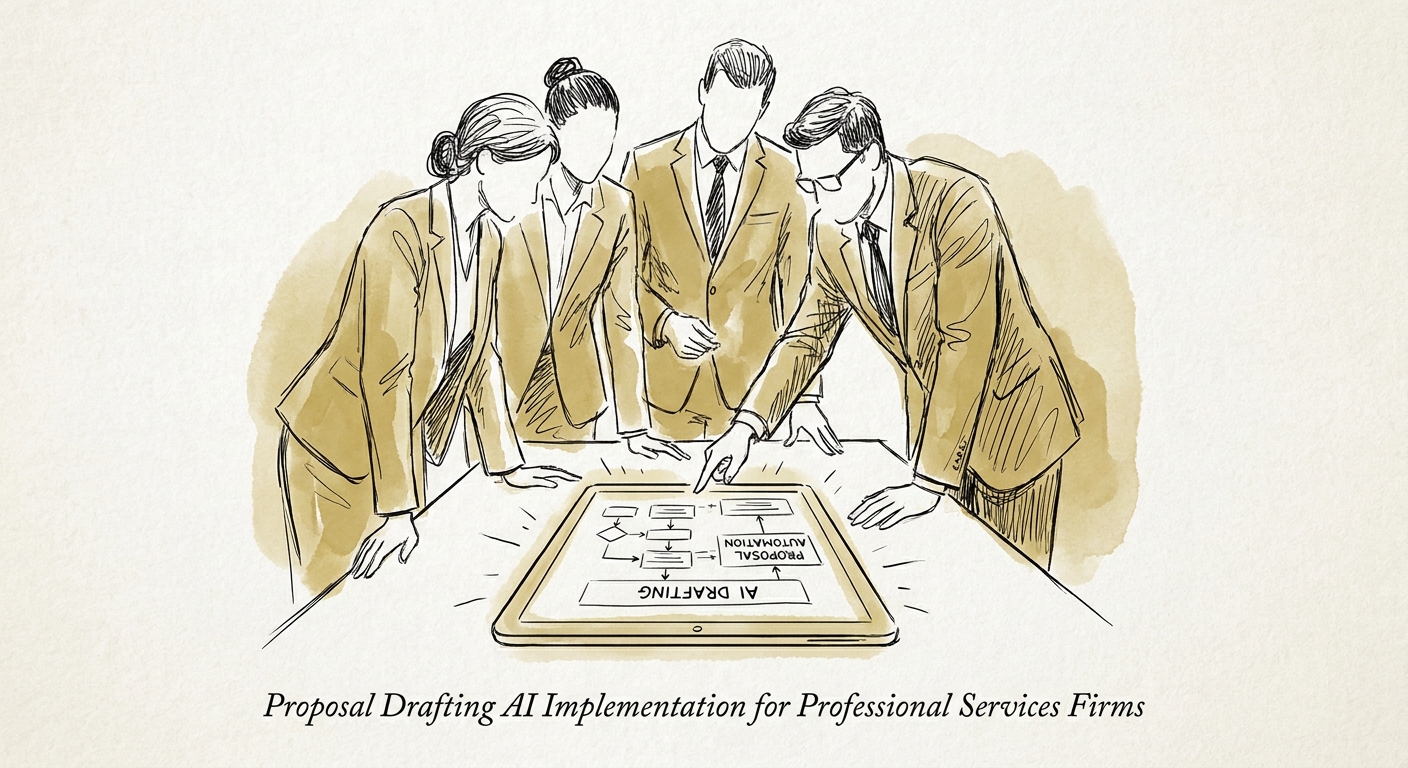
The RFP that's due Thursday and the partner who's on a plane
Here's the scene every professional services firm knows. A 60-page RFP lands Monday. Response is due Thursday at 5. The partner who owns the relationship is traveling, the proposal lead is stitching together three old responses in a Word doc, and someone is frantically Slacking "do we have a case study where we did this for a healthcare client?" By Wednesday night the draft is a Frankenstein of copy-pasted boilerplate, half of it answering a question from a different RFP.
This is exactly where AI helps — and exactly where firms point it at the wrong job. The temptation is to ask the model to "write the proposal." Don't. The work AI is genuinely good at on a proposal is the scavenger hunt: pulling the right past responses, surfacing the case study that matches the prospect's industry and deal size, restructuring a wall of requirements into a clean response outline, and flagging the three RFP questions you have no good answer for yet. That last one is worth more than the drafting.
The reason to be disciplined isn't ideology. The RSM middle-market AI survey and Deloitte's State of AI in the Enterprise 2026 both land on the same unglamorous point: the value shows up when AI sits inside a workflow with a named owner and a measurable outcome, not when it's a magic "generate" button. A proposal is a binding-ish document. The win theme, the price, the scope you'll actually commit to — that's sales judgment, and it stays with a human who can be held to it.
If your past responses live in fifteen people's Downloads folders, the model has nothing good to retrieve. Get the source material in order first; the proposal archive knowledge-system guide walks through building a reusable response library before you turn AI loose on it.
The failure mode is a confident, fabricated client claim
The specific risk in proposal drafting isn't a typo. It's the model writing "we delivered a 40% cost reduction for a similar Fortune 500 manufacturer" because that sentence pattern appears in your archive — when no such engagement exists, or the number was 14%, or it was a different sector entirely. In an internal memo a hallucination is embarrassing. In a signed proposal it's a misrepresentation you have to live with, and in regulated work (think a response that references your SOC 2 posture, a security questionnaire, or a healthcare data-handling commitment) it's the kind of claim a procurement team will later hold you to in writing.
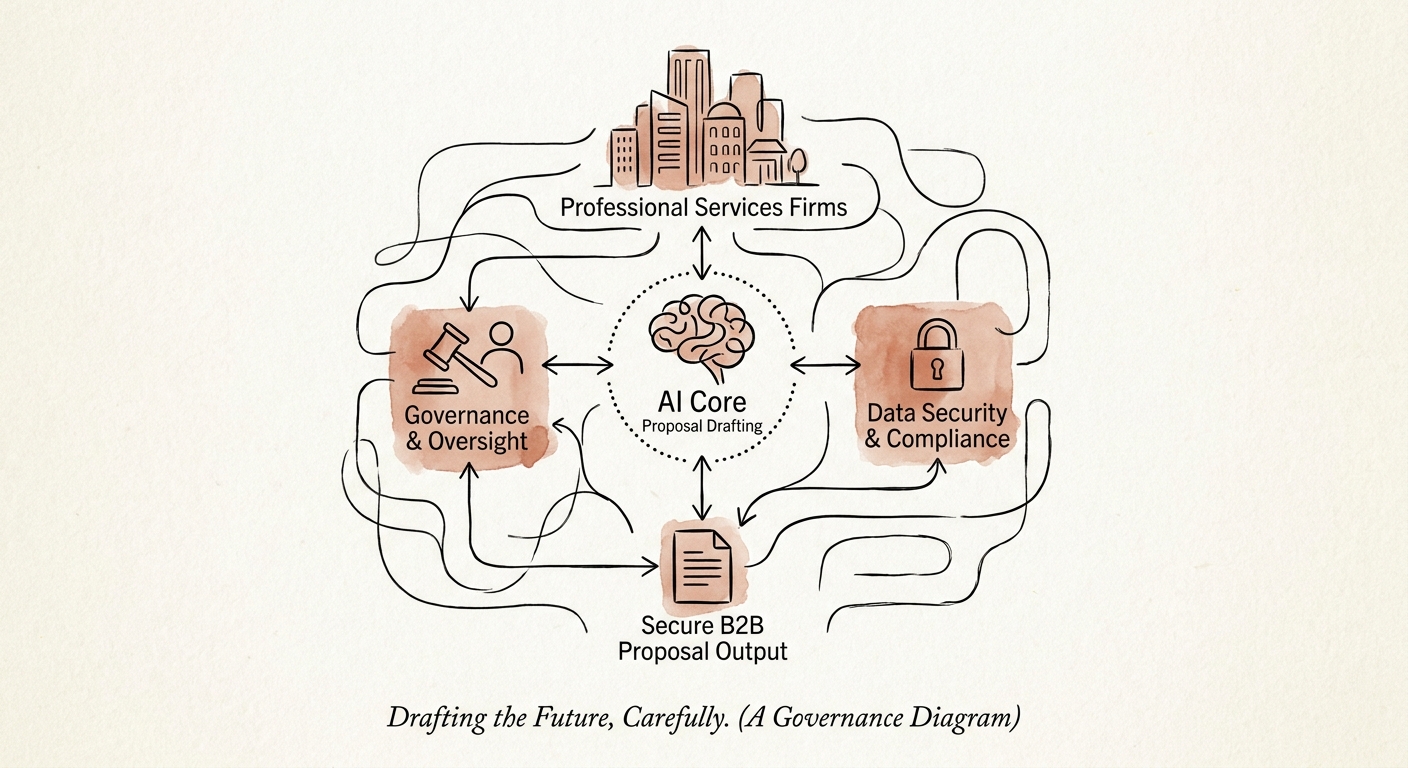
So the controls are not bureaucratic overhead — they're how you keep the speed without buying a liability. The NIST AI Risk Management Framework and CISA's AI Data Security Best Practices matter here because RFP workflows routinely touch a prospect's confidential requirements, your own pricing logic, and named-client evidence. Three concrete rails make the difference: (1) the model drafts only from an approved evidence library — vetted case studies, real metrics, current credentials — never from open invention; (2) any specific client name, dollar figure, or compliance claim in a draft gets visually flagged for human sign-off before it leaves the building; (3) you log what went in and what came out, so when a prospect asks "where did this number come from," you have an answer.
And know where your RFP text is actually going. A prospect's requirements may be under NDA. Before you paste a confidential RFP into any tool, confirm the administrative and data controls — OpenAI's Enterprise Privacy documentation is a good model for the questions to ask: is this content used for training, who in your org can see it, can you delete it. Your proposal team should be able to say in one sentence what data is allowed in, what's blocked, and who owns the exceptions. If they can't, you don't have a workflow yet — you have a habit. The intake side of this is its own discipline; document-intake AI implementation for professional services covers how the RFP itself comes in cleanly.
Track win rate and rework, not the hours you saved drafting
The seductive metric is "we cut proposal drafting from 12 hours to 4." Resist it as your headline number. A faster path to a proposal that still loses is not a win — it's a faster way to lose. The numbers that actually tell you whether this is working: did win rate on AI-assisted proposals hold or improve, did the rate of late-stage rewrites and partner red-lines go down, and — the quiet one — are your senior sellers now spending their reclaimed hours on deal strategy and prospect conversations instead of formatting? If the four hours you saved just became four hours of someone polishing the next boilerplate response, you optimized the wrong thing.
Build the win/loss loop in from day one. When a proposal wins, tag which retrieved evidence and which sections did the work. When one loses, note whether the AI-assembled draft missed the prospect's real concern. After ten cycles you'll know which case studies actually move deals — and that's a sales-strategy asset, not a drafting-speed stat. To keep the ROI story honest and resist the "look how many hours we saved" theater, run it through the discipline in AI ROI measurement without fake savings.
Start narrow enough that you can see the result clearly. Pick one proposal type — say, the response template for your most common service line — give it one accountable owner, one approved evidence library, and one review path before anything goes to a client. Run it for a quarter. If reuse goes up and the Thursday-night fire drills go down, expand to a second proposal type. If it doesn't, you've spent very little to learn that. When you're ready to map the broader rollout across the firm, build the AI roadmap from what the pilot actually proved.
