Where the margin actually leaks
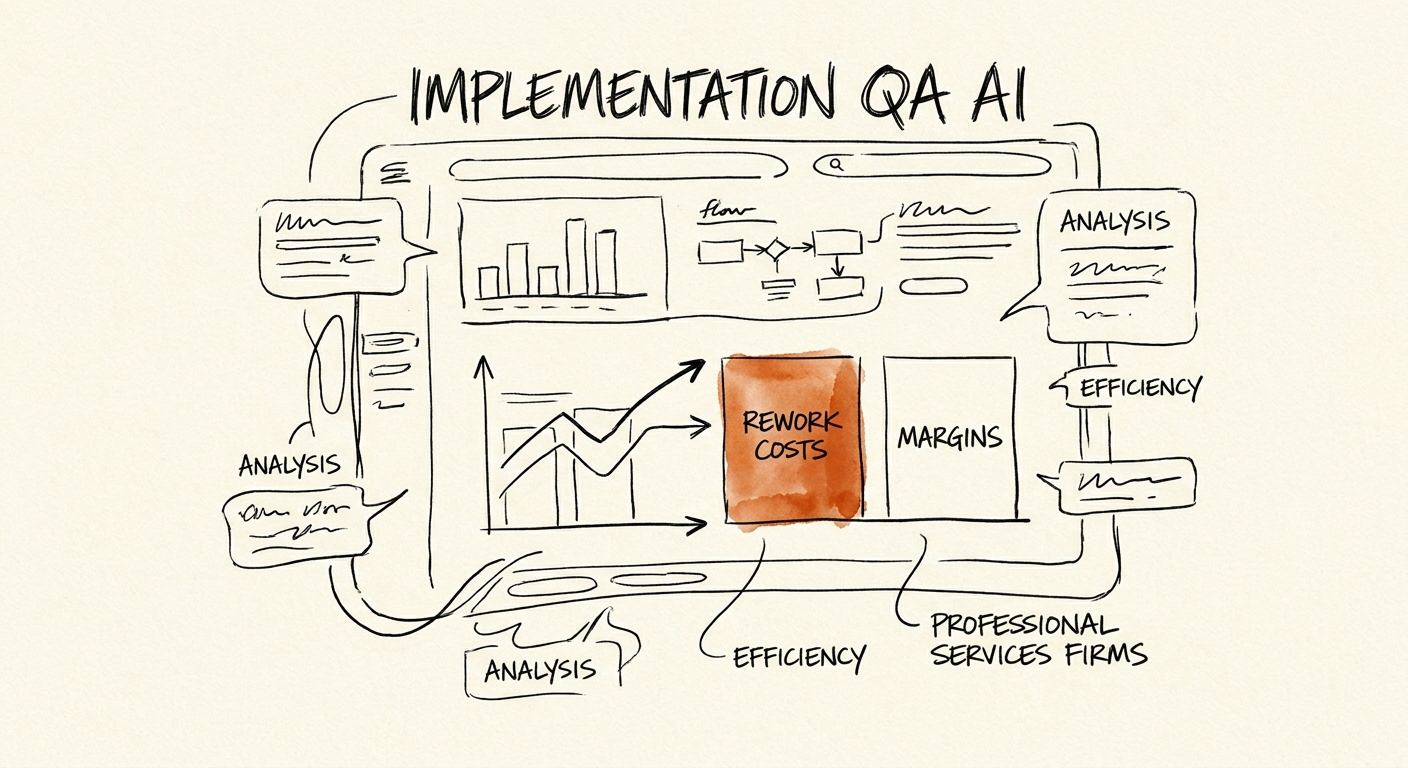
Picture a 60-person implementation shop—Salesforce, NetSuite, a workflow platform, doesn't matter. A project ships, the client signs off, and three weeks later a change request lands: "the approval routing skips finance on orders over $50K." That was in the SOW. Nobody coded it. Now a senior consultant spends two days reworking it, unbilled, while the next project slips. That two days never shows up in any system. It gets absorbed as "client relationship management" and the partner wonders why utilization looks fine but realization is bleeding.
That is the defect class AI-assisted QA should hunt first—and it is almost never the one teams reach for. The instinct is to point the model at code or configuration syntax. But in professional services, the expensive misses cluster around missing requirements, handoff gaps between discovery and build, and client-acceptance ambiguity—not malformed scripts. McKinsey's State of AI 2025 is blunt about why bolt-on tools disappoint: value comes from redesigning the workflow, not stapling a model to a review process that was already letting defects through. So before you buy anything, classify your last 20 projects' rework by reason. You will almost certainly find that "we built what we heard, not what they wrote" outweighs every technical defect combined.
Make the AI read the SOW, not just the ticket
Here is the design move most teams skip: the evidence an implementation defect leaves behind is scattered. The requirement lives in a signed SOW PDF. The decision to change it lives in a Slack thread. The acceptance criterion lives in a discovery deck. The actual build lives in a config export. A QA copilot that can only see the Jira ticket is reviewing one-fifth of the truth.
So the real architecture question is access, and that is where governance stops being a compliance box and starts being the feature. Microsoft's Copilot data-protection architecture matters precisely because delivery evidence sits across documents, drives, and collaboration spaces—and you cannot have an AI surfacing one client's design notes inside another client's review. Permission-aware retrieval and an audit trail of what the model looked at aren't nice-to-haves; in a shop billing multiple clients off shared tooling, they are the thing that lets you turn the AI on at all. Layer the NIST AI Risk Management Framework over it as the operating spine: map what the review covers, measure the failure modes (false "ready to ship" calls are far costlier than false alarms), manage the controls, and name who is accountable when the model green-lights work that wasn't ready. A useful QA assistant says "the SOW specifies finance approval over $50K; I see no routing rule for it"—and cites the line. That sentence, with a source, is worth more than any defect-density dashboard.
The 90-day proof, in the only numbers that matter
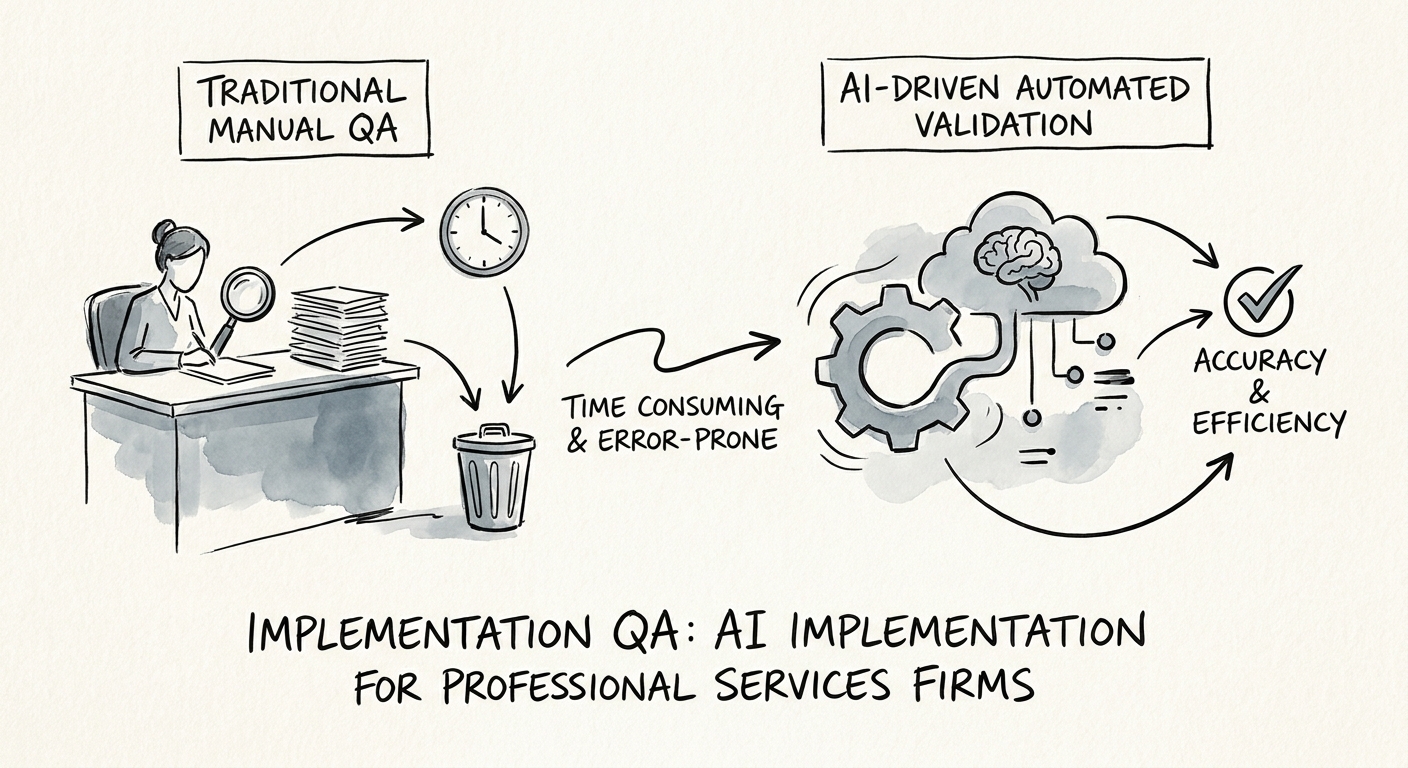
Don't try to QA the whole portfolio on day one. Take one baseline first: pull the current defect pattern, the review effort it consumes, the actual rework reasons, and a client-impact log across your recent projects. That single baseline is the thing the AI gets measured against—skip it and you'll never know if the tool helped or just added a status ritual. Atlassian's State of Teams 2025 is a good reminder here: quality follows coordination and work visibility, so the win is a tighter review cadence, not one more dashboard nobody opens.
Then run it for one quarter on a slice of live projects and compare four things to the baseline: review cycle time, defect-escape rate (the misses that reached the client), the mix of rework reasons, and whether your delivery team actually uses it. IBM's Institute for Business Value work is right that capability is the full stack—data quality, operating model, adoption, performance—not the model alone, so adoption is a real metric, not a footnote. If escapes drop and the senior people stop quietly fixing things on Saturdays, you've found the rework tax and started collecting it back as margin. The AI ROI Calculator turns those before/after numbers into a dollar figure your partners will recognize, and Human Renaissance AI transformation services can help you stand up the baseline and the controls. Monday's move: pull your last 20 closeouts and tag every rework hour by reason. The pattern will tell you exactly where to point the AI.