The Sunday-night packet is the cheapest win you're ignoring
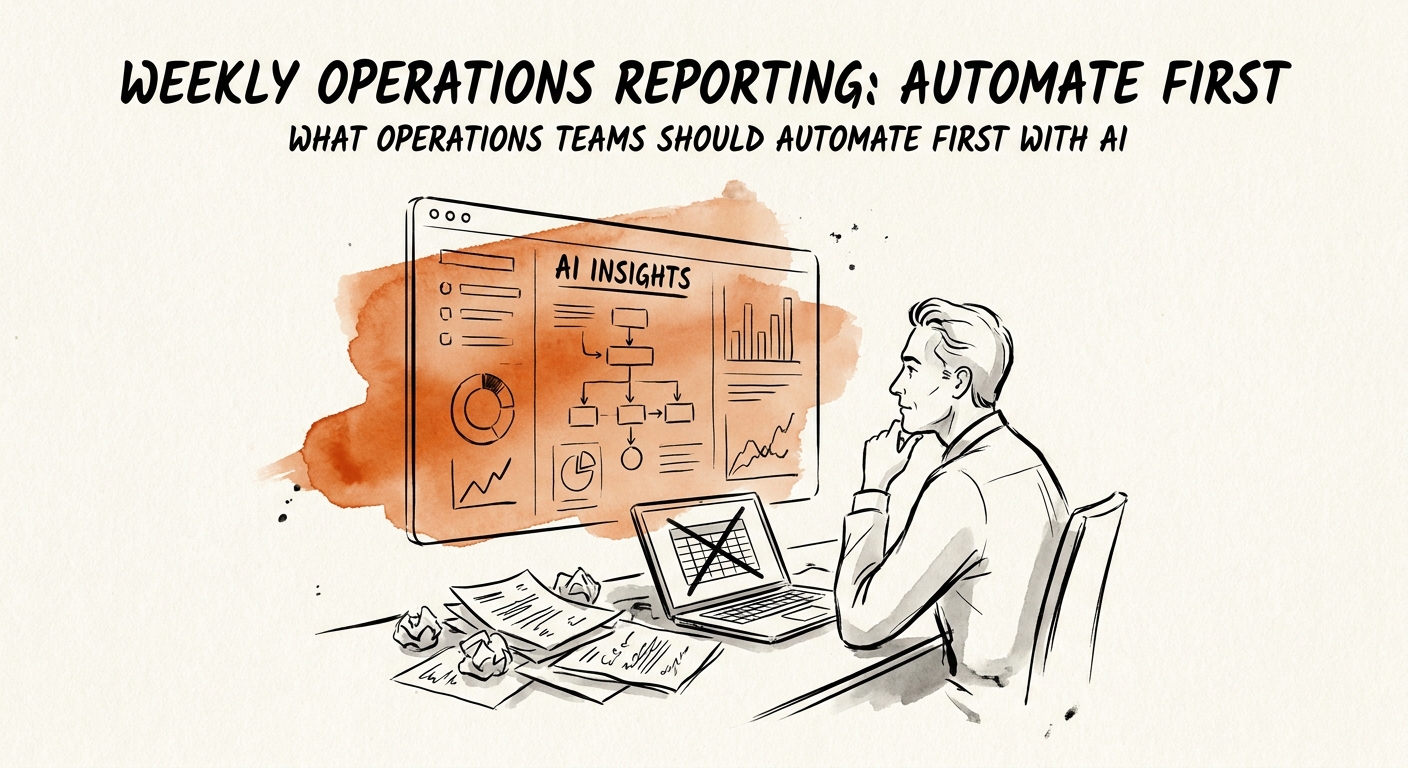
Picture the operations lead at a 90-person B2B services firm on a Sunday evening. They're in three browser tabs and a spreadsheet: pulling utilization off the PSA tool, copying churn-risk notes out of the CRM, chasing two project managers on Slack for blocker status, and pasting it all into the same deck they rebuilt last week. By Monday's operating review, 80% of the effort went into assembling the numbers and maybe 20% into deciding what to do about them. That ratio is backwards, and it's exactly why weekly operations reporting is the first workflow to hand to AI.
This isn't a guess about where AI helps. The U.S. Census Bureau's analysis of AI use in businesses shows adoption concentrating in routine information work, and the Federal Reserve Bank of San Francisco's small-business AI analysis points to the same place: the wins land where a person already does a repeatable, source-bound task on a fixed cadence. A weekly operating packet is the textbook case — same sources, same structure, same meeting, every Monday.
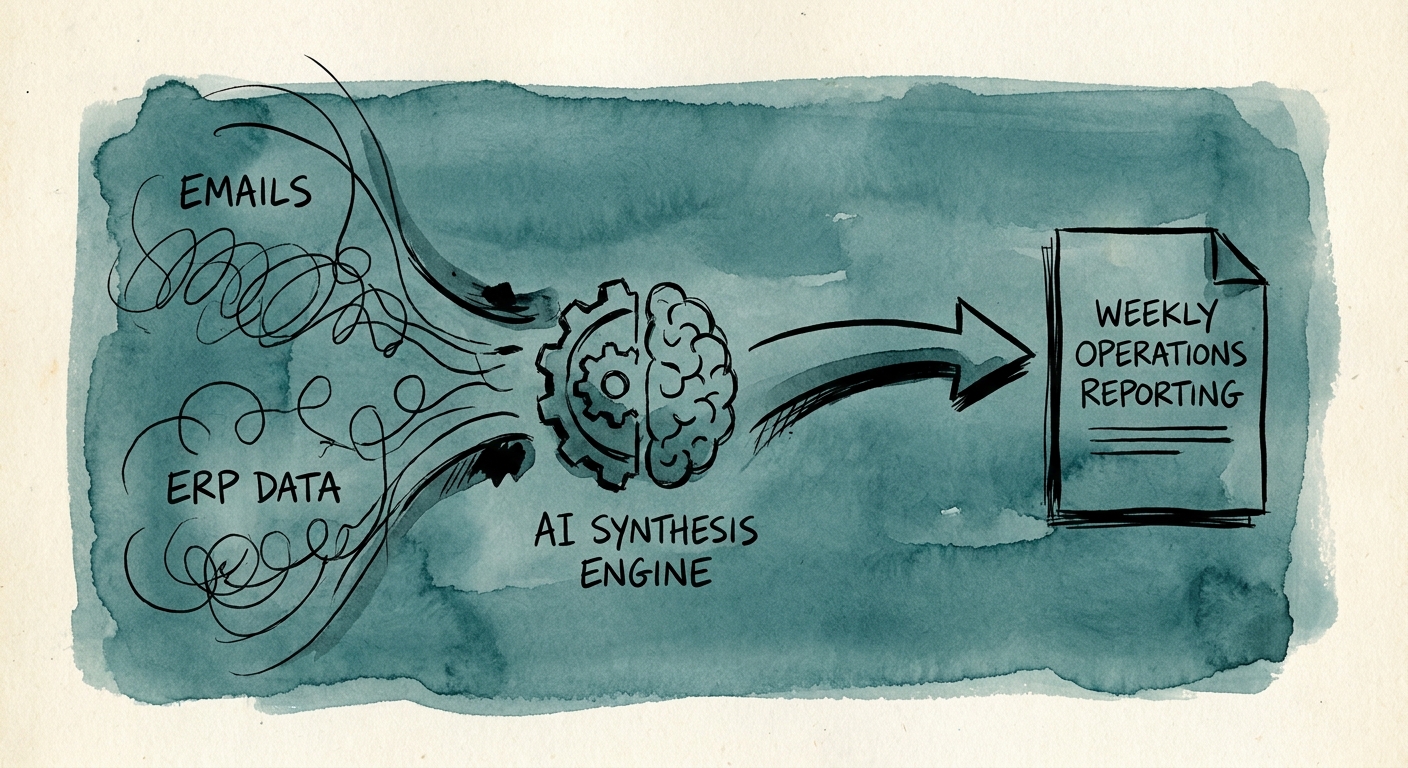
So scope the first pilot to one meeting: your weekly operating review. The AI assembles the draft packet — KPI values and period-over-period deltas, open blockers and their owners, customer-impact flags, and items it couldn't source. The ops lead reviews and corrects it before it becomes the official readout. You are not buying a prettier dashboard. You're moving the lead's Sunday night out of copy-paste and into the one thing AI can't do: deciding what the numbers mean.
The hard part: the AI assembles, the operator interprets
Here's where most teams quietly break it. They let the tool write sentences like "utilization dipped because the delivery team was onboarding two new accounts." Plausible. Confident. And completely unsourced — the AI inferred a cause the data never proved. In a services business where one mis-explained margin slip sends three people down the wrong rabbit hole on Monday, that's not a small error.
The fix is structural, not stylistic. Build the packet as columns, not prose: source system, KPI value, week-over-week delta, the linked blocker note, the named owner, a customer-impact flag, a confidence level, and a slot for the reviewer's correction. The AI fills the first seven from source systems and flags anything it can't trace. A human writes the eighth. The NIST AI Risk Management Framework gives you the spine for this — defining the context, measurement, and review steps so "why did this move" is answered by evidence or marked unknown, never invented.
Then measure the workflow itself, not just the business it reports on. Track packet prep time, the correction rate (how often the lead overrides the draft), how many KPIs came back flagged as unsourced, and how many of last week's blockers actually closed. Those numbers expose root causes the old deck hid. If the same KPI lacks a trusted source every single week, you don't have a reporting problem — you have a system-of-record gap to assign an owner to. If the lead rewrites the same narrative every Monday, your reporting rule is too vague. A smoother-sounding paragraph papers over both; a flagged, columnar draft forces them into the open.
Guard the room, then judge it by the meeting — not the deck
A B2B services operating packet is unusually sensitive because of what it pools in one place: at-risk client accounts, an underperforming PM, a vendor that missed an SLA, and a finance indicator that hints at a soft quarter. That mix does not belong in front of every audience. Before you point AI at any of it, set the access, retention, logging, and audience boundaries the CISA AI data-security best practices describe. Decide which sources feed the leadership packet and which stay in a narrower room. "The AI can see it" is not the same as "everyone in the meeting should."
Judge success by what happens in the review, not by how clean the slides look. The right signals are behavioral: the lead makes fewer manual edits each week, owners on late blockers get named and chased on the spot, customer-impact items get an actual decision instead of a "let's discuss," and last week's carryovers shrink. If the packet is gorgeous and the meeting still runs long with people reconciling whose number is right, the workflow hasn't earned its keep yet — tighten the source set or rethink the cadence before you trust it.
Put a number on the prize before you expand. Use the AI ROI Calculator to value the reporting hours you're reclaiming, and the AI Opportunity Score to honestly rank weekly reporting against the next candidates — document intake, quote turnaround, meeting follow-up. And resist the urge to wire AI into every dashboard at once. Prove that this one Monday review gets sharper — fewer edits, clearer owners, faster blocker decisions — and only then carry the pattern to the next reporting rhythm. The Monday you spend less time arguing about whose number is correct and more time deciding what to fix is the Monday this paid off.