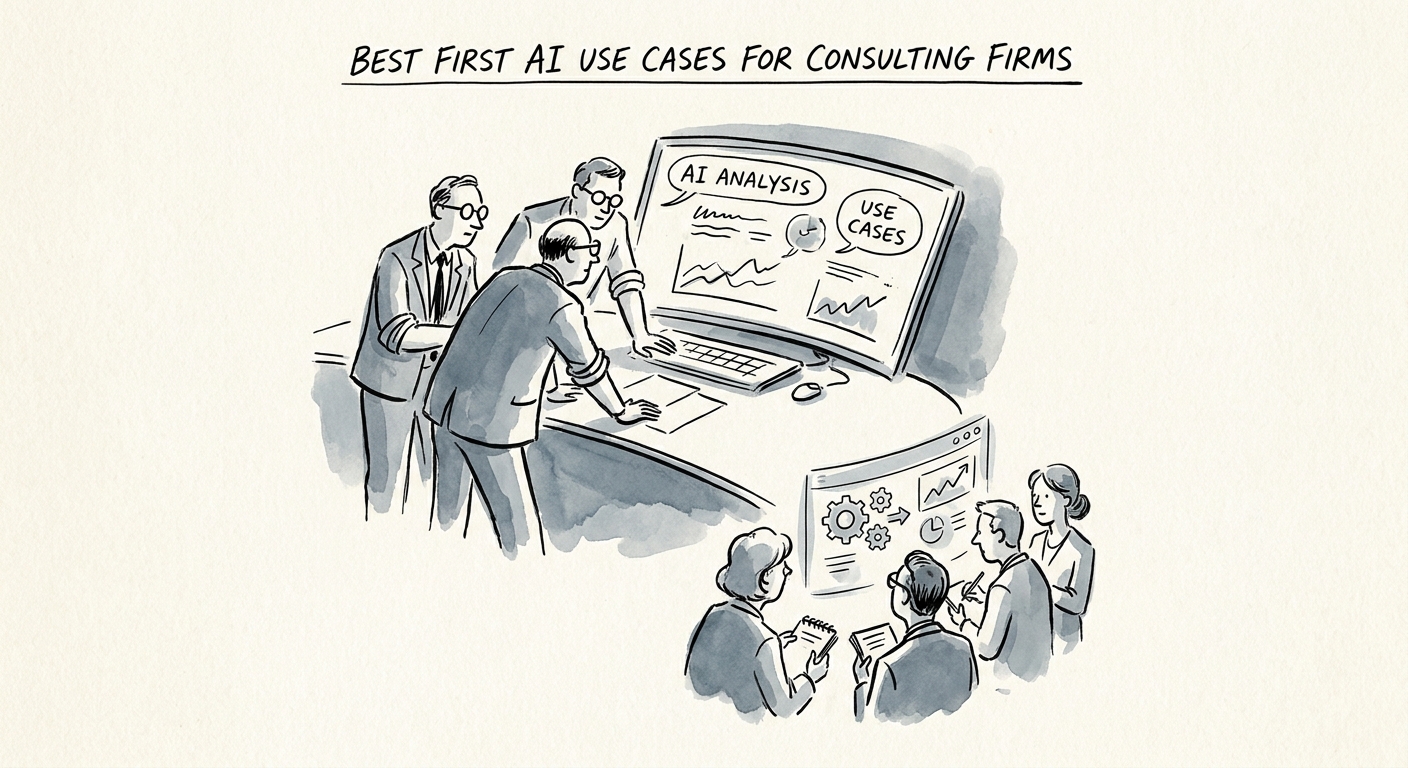
The hours you can't bill are the ones to attack first
A consulting firm sells two things: judgment and the time of people who have it. Everything else — the proposal a senior associate rebuilds from a half-remembered prior engagement, the kickoff deck assembled from four old SharePoint folders, the meeting recap typed at 9pm — is unbillable overhead that quietly eats your effective rate. That gap between hours worked and hours invoiced is the single most honest place to point AI first.
So when someone asks where to start, ignore the fantasy of an "AI consultant" that writes the recommendation. Start with the five workflows where the same shape of work repeats across every engagement: proposal support, document intake, knowledge retrieval, meeting follow-up, and project reporting. Each one has a clear before-state, a pile of source material, and a human who currently does the assembly by hand before any real thinking begins.
The pattern holds across the research. McKinsey's 2025 State of AI and the IBM Institute for Business Value both find that the firms getting durable value redesign a specific workflow rather than scatter a chatbot across the org — and Bain's 2025 agentic AI report says the same thing in blunter terms. The win isn't a smarter answer. It's a faster, better-sourced first pass that a consultant edits instead of builds.
Why a consulting firm can't run AI like an ecommerce shop
Here's what makes a firm different from the businesses your competitors are advising: your output is a billable opinion, and your raw material is confidential client context. Get the output wrong and you don't lose a sale — you lose a client and possibly a referral network. That changes how the first workflows have to be built.
Concretely, picture a 30-person strategy boutique. The proposal step shouldn't generate fees or scope from thin air; it should retrieve the actual scope language and assumptions from the three most comparable past engagements and flag where this client differs. Document intake should summarize the data room the client just dumped on you and, more usefully, name what is missing — the org chart that isn't there, the financials that stop at 2024. Knowledge retrieval should surface the firm's approved method, not a confident invention of one. And meeting follow-up should convert decisions into owner-assigned tasks that a manager approves, not auto-fired emails to a client partner.
The non-negotiable running through all of it: every AI output shows its sources, states its assumptions, and stops at a review gate before anything reaches the client. That isn't bureaucracy — it's the same discipline your senior people already apply, made visible. The NIST AI Risk Management Framework and PwC's 2025 Responsible AI survey both land on traceability and human review as the difference between a tool partners trust and one they quietly route around. If you want this built across delivery, knowledge, and client-service work at once, that's the core of AI for Professional Services.
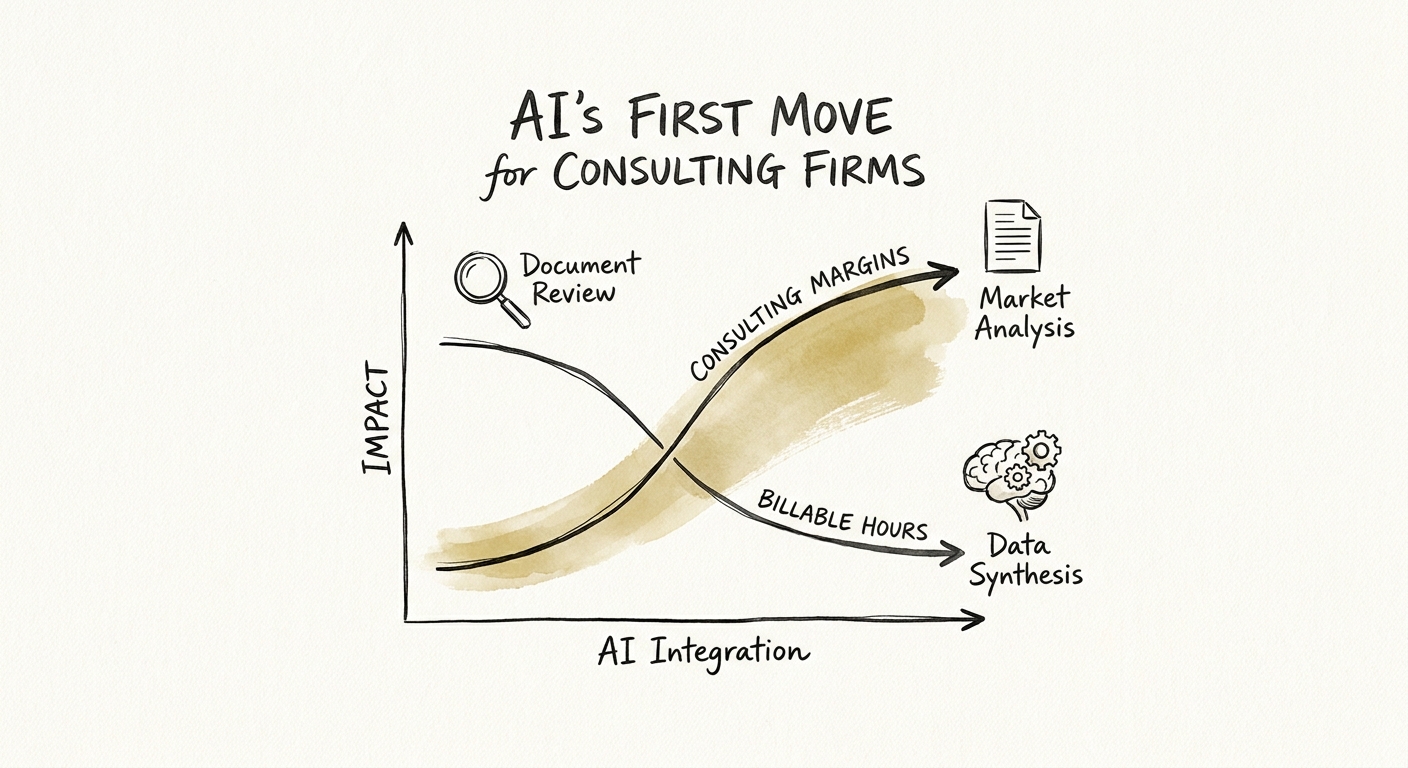
Pick one practice area, measure realization, then expand
Don't roll this firm-wide. Pick a single practice area — say, the team that runs the most repeatable engagement type — and instrument one workflow. The metrics that matter to a firm aren't "AI usage." They're proposal cycle time, intake completeness, how often the same question gets re-asked across teams, hours spent assembling versus reviewing, and rework after a client sends notes. If realization on that service line ticks up while quality holds, you have your proof. If partners stop trusting the source visibility, you've learned something cheap before betting the firm on it.
What a managing partner can do Monday: open the last five lost proposals and the last five won ones, and find the assembly hours that went in regardless of outcome. That's your starting workload and your baseline in one sitting. Then build the retrieval first — get the firm's real method and prior scope in front of the model — before automating anything client-facing.
For the retrieval backbone, AI Knowledge Systems and RAG is the right primitive for a firm whose value is locked in past deliverables. If you'd rather see which workflow scores highest before committing a practice area to it, run the AI Opportunity Score first.