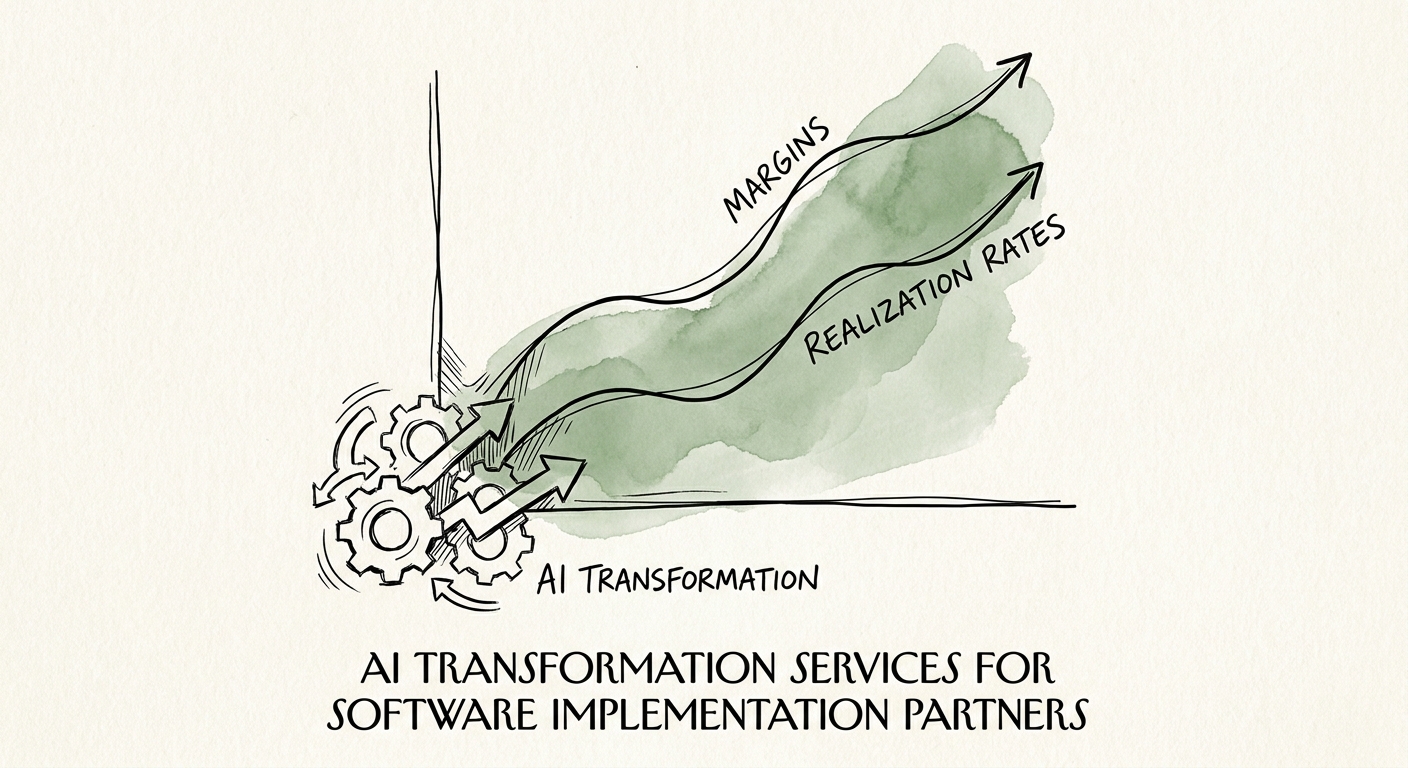
The phase-four surprise is where your margin goes
Picture a 60-person firm that implements an ERP or a CRM for mid-market clients. The deal was scoped at 400 hours. Somewhere around hour 520, the project manager is in a call explaining why a workflow the client "always assumed" was in scope isn't in the statement of work — and the firm eats it, because the alternative is a reference customer who churns. That gap didn't appear in week eleven. It was sitting in the SOW, the kickoff notes, and a Slack thread from week two, and nobody connected them until the client did.
That is the real economics of implementation delivery: the margin doesn't leak from the work you do, it leaks from the work you redo and the commitments you discover late. So when someone pitches AI to your firm, the temptation is to point it at the glamorous problem — "automate the consultant." Resist that. The first useful place for AI in an implementation shop is the boring connective tissue: reconciling what the SOW promised against what's actually configured, against what the client believes is coming. The middle-market firms moving fastest aren't replacing delivery judgment; the RSM middle-market AI survey shows adoption concentrating in exactly these document-heavy, repeatable operational seams.
Here's the precondition most firms skip. Your delivery truth is scattered across SOW language, configuration workbooks, ticket comments, the project plan, and a customer-success owner's expectations — and those five sources contradict each other constantly. If you can't say which one wins when they disagree, AI won't fix that. It will summarize the contradiction faster and more confidently, which is worse.
Pick the acceptance-criteria lane, not the chatbot
Score your candidate workflows the way you'd qualify a deal — by how often they recur, how trustworthy the source document is, whether a reviewer exists, and what a miss costs the client. Run that scoring honestly and an implementation firm almost always lands on the same first lane: a QA assistant that reads the SOW and acceptance criteria, reads the current configuration state, and flags where the two have drifted apart — before the acceptance meeting, while there's still time to act.
The discipline that makes this safe instead of dangerous is provenance. A useful flag doesn't say "this requirement may not be met." It says: here is the acceptance criterion (SOW section 4.2), here is the configuration record that contradicts it, here is the consultant who owns that module. The NIST AI Risk Management Framework gives you the vocabulary for this — defining who reviews, what counts as evidence, and how flags get retained — but the implementation translation is concrete: every assertion the assistant makes must point back to a specific delivery artifact, or it doesn't get surfaced.
Then there's the part implementation firms underrate, because you handle live client systems. You're holding production credentials, integration secrets, and open defect data that names the client's vulnerabilities. The CISA AI Data Security Best Practices should be read as a sorting rule for your sources: which artifacts can feed internal prep, which can appear in a client-facing status update, and which — credentials, security findings, another client's config — must never enter model context. Decide this before the pilot, not after a consultant pastes a connection string into a prompt. Build the whole first 90 days around one delivery lane: how a flagged drift gets routed, how a consultant's correction gets stored, and how a defect that keeps recurring becomes a checklist item in your delivery methodology.
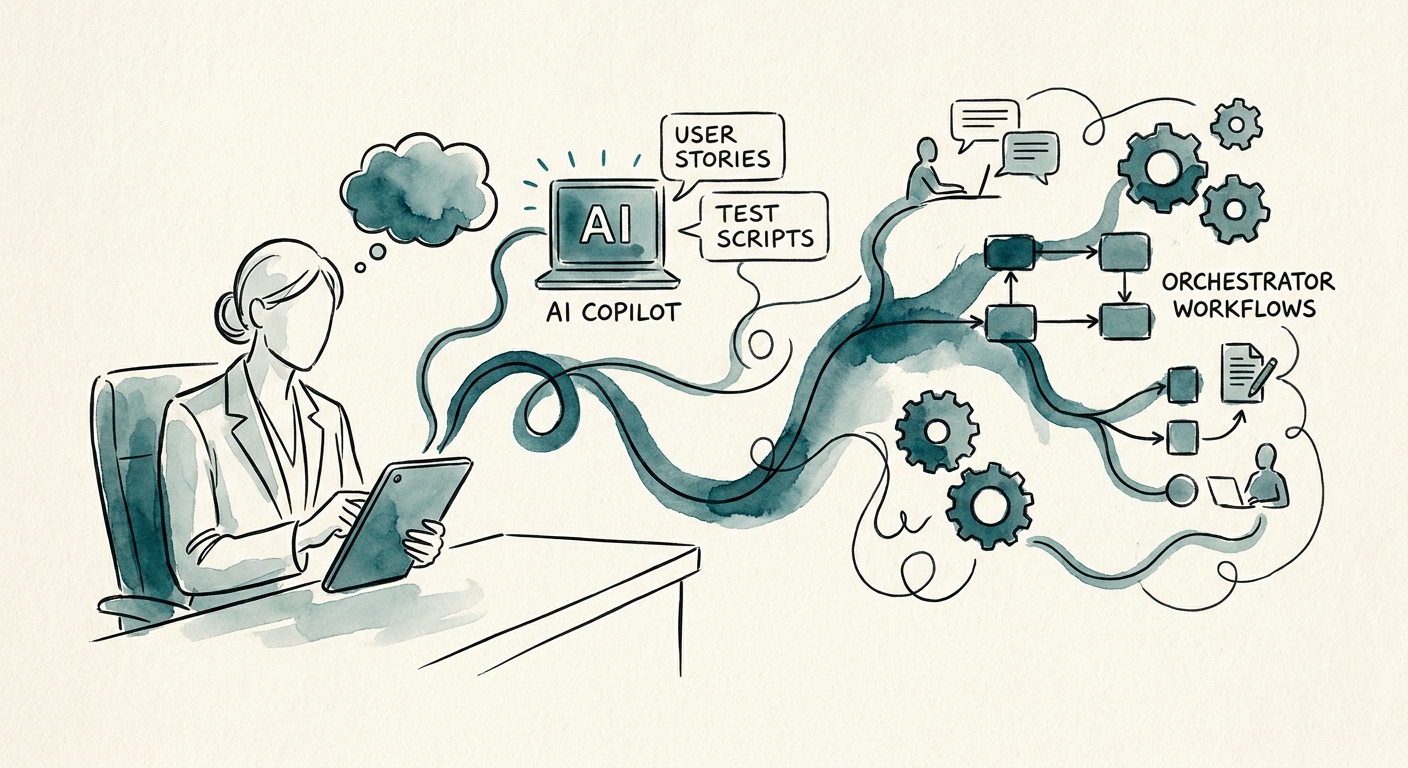
The number that proves it: rework hours, not "hours saved"
Most AI pilots report "hours saved," and for an implementation firm that metric is a trap — saving a consultant twenty minutes drafting a status email does nothing if the project still blows past scope in phase four. Measure the things a client actually feels and a partner can see in the utilization report: acceptance criteria missed at the first review, hours billed as rework versus planned work, the number of late-discovered scope gaps per project, and time-to-client-ready documentation. Watch consultant adoption alongside those — a QA assistant that adds a review step during a go-live crunch week will quietly get abandoned, and you won't hear about it until renewal.
And keep one rule absolute: when the SOW is genuinely ambiguous or the client's expectation was set on a call that nobody documented, the assistant assembles the packet and drafts the question — it does not decide what your firm is committed to deliver. That's still the project owner's call, because that's the call clients are paying a partner for. The same caution shows up across the OECD report on AI adoption by small and medium-sized enterprises: the firms that get value treat AI as an operating control, not a substitute for accountability.
Monday, do one thing: pull your last three projects that went over hours and trace where the overrun actually originated. If most of it was rework against drifted acceptance criteria, you've just found your first AI workflow and your baseline number in the same afternoon. Then make sure the pilot connects to margin and rework, not vanity time-savings — our guide to measuring AI ROI without fake savings walks the math, and when you're ready to sequence it, the AI Transformation Blueprint turns one proven lane into a roadmap.