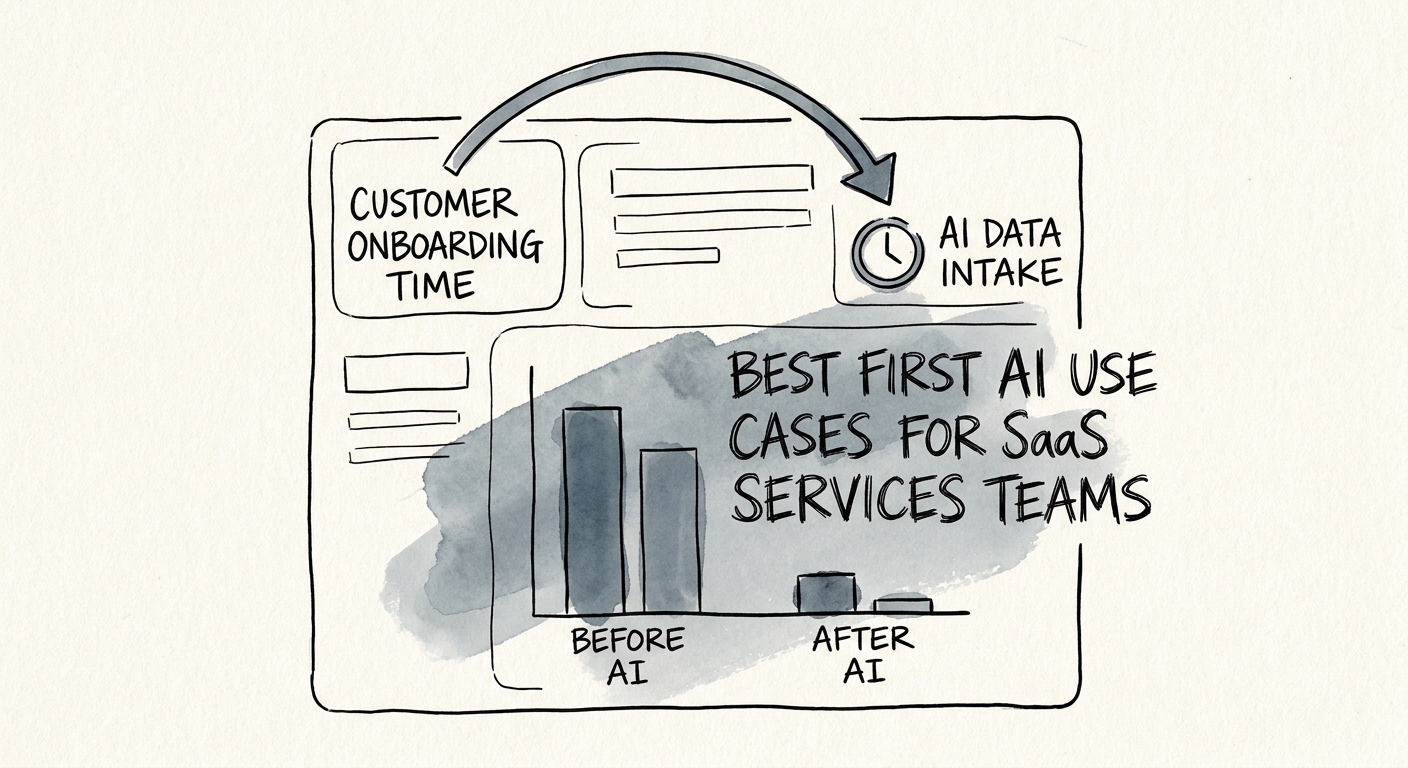
The Renewal Risk Was Born at Kickoff. You Found Out at Month Eleven.
Here is the failure mode that should pick your first AI use case for you. An implementation consultant closed out a project with a note that said the customer's data migration was "mostly clean, two edge cases flagged." Support inherited the account and never saw that note, so when those two edge cases generated tickets four months later they were treated as bugs, not known compromises. Customer success picked up the renewal conversation with a health score of green, walked in confident, and got blindsided by a customer who'd been quietly frustrated since week three. Nobody lied. Nobody was lazy. The context just never traveled across the seams between three people who each owned one stretch of the relationship.
That seam — implementation-to-support, support-to-CS, CS-to-renewal — is where SaaS services teams lose money, and it is exactly where a first AI workflow earns its keep. Not because the model is smart. Because the handoff is the one document every services manager already wishes existed and nobody has time to write. Salesforce's State of Service research and the OECD's report on AI adoption among small and mid-sized firms land on the same unglamorous point: AI sticks when it lives inside a motion the team already runs, not when it's bolted on as a separate assistant somebody has to remember to open.
So don't start with "summarize tickets" or "draft customer emails." Start with one seam. Pick the handoff that burns you most — for most SaaS services orgs it's implementation closing out to support — and build a workflow that pulls the implementation notes, the open commitments made during onboarding, the account owner, and the unresolved risk flags into a single packet. The consultant who's leaving the account approves it before it writes to the record. That's the whole first use case. One seam, one packet, one human signature.
Don't Measure How Many Summaries It Wrote. Measure Whether the Next Person Had to Ask.
A summary that reads well and a handoff that works are different things, and SaaS services teams confuse them constantly. The packet should carry the boring, load-bearing fields: onboarding status, the specific implementation decisions and their tradeoffs, support history to date, the current health signal, the renewal date, every open commitment somebody verbally made to the customer, and the named owner of the next action. The AI's most valuable job isn't writing prose — it's flagging the missing field. "Implementation note references a custom integration; no owner assigned for ongoing maintenance." That blank is the future ticket.
Then measure the thing that actually matters: how often the receiving person had to go reconstruct context the handoff should have carried. Track repeated customer questions, the missed-commitment rate, how fast ownership of the next action got assigned, and how much the reviewer had to correct the draft. If month two shows support is asking the same five questions of implementation across every account, your AI didn't fail — it just surfaced that your kickoff checklist never captured those five things in the first place. The NIST AI Risk Management Framework is worth reading here precisely because handoffs carry context risk: an incomplete summary can manufacture a falsely green renewal narrative or quietly bury a commitment your customer absolutely remembers you making.
When the same field goes missing across account after account, resist the urge to tune the model. Fix the source. Change the implementation close-out template, the support resolution notes, the cadence on health-score updates. The Deloitte State of AI in the Enterprise 2026 read on stalled pilots is consistent: the ones that fizzle are usually the ones that automated a broken process instead of exposing it. Your first workflow's real output isn't summaries. It's a map of every place your service delivery drops context on the floor.
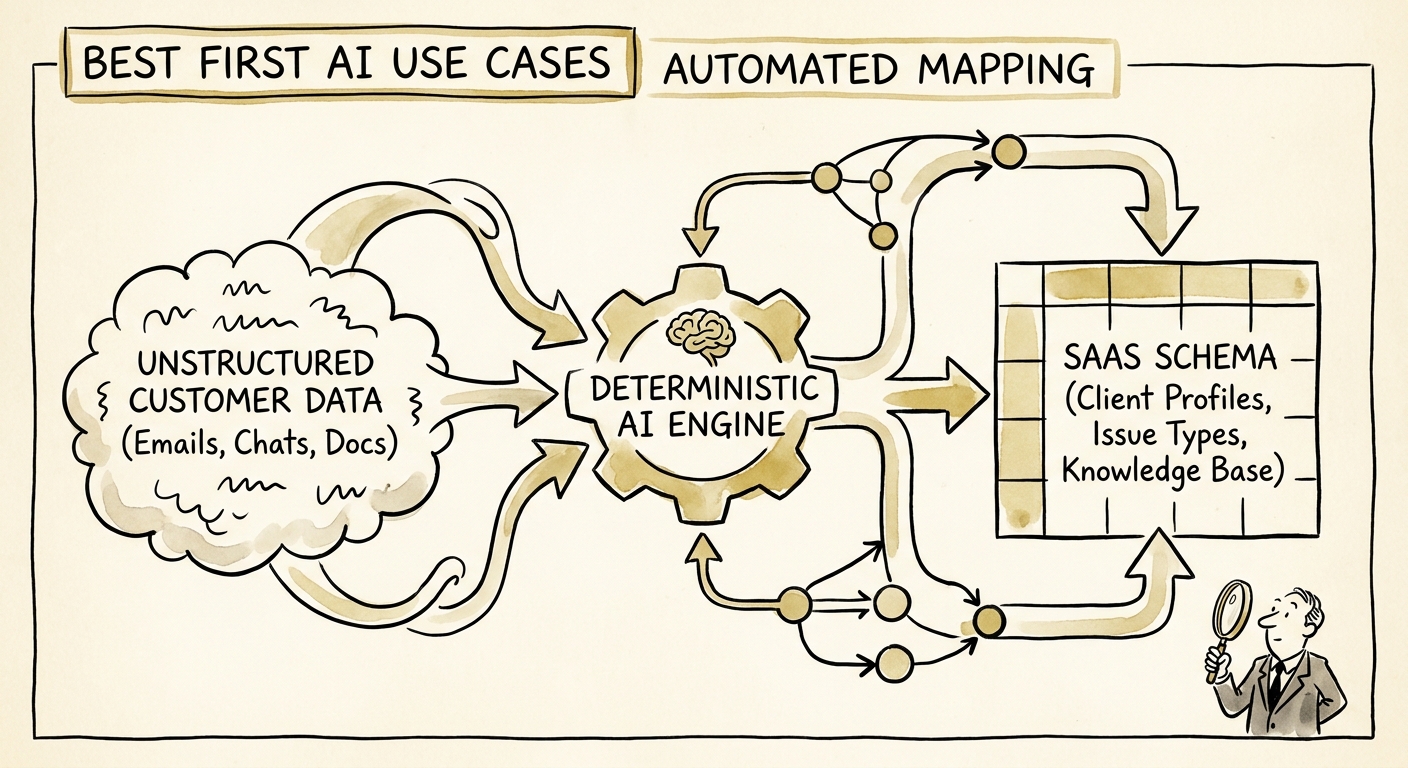
What to Actually Build This Quarter
Concrete version, runnable in 90 days. Week one: pick the single worst handoff seam and write down, by hand, the ten fields a perfect packet would contain — you'll learn more in this hour than in any vendor demo. Weeks two to four: stand up a workflow that drafts that packet from your existing tools and routes it to the departing owner for a yes/no/edit decision before anything writes back to CRM or your CS platform. Lock down what it can read first: account notes often contain commercially sensitive pricing context and customer escalations, so use the CISA AI data-security best practices to define which fields are in scope, what gets logged, and which summaries can never go customer-facing without a human approving them.
Then run the only test that counts. Take the AI-generated handoff and sit it next to the actual next customer conversation. Did support already know about the migration edge cases? Did CS walk into the renewal with the real health picture instead of the optimistic one? If the customer had to repeat their own history back to your team, the packet failed and you fix it before you expand. A handoff record that managers reach for in standups and renewal-risk reviews is a win. A handoff record that becomes one more note field nobody trusts is worse than nothing — it's false confidence with a timestamp.
The roadmap from here is obvious once the first seam works: expand to the next lifecycle moment, not to a broader "assistant." Use the AI Opportunity Score to compare which adjacent services workflow is the next-best target, and the AI ROI Calculator to put a number on the hours your team currently spends reconstructing account history that should have traveled with the account. The teams that win this don't deploy AI across delivery. They make one handoff trustworthy, prove it, and earn the right to the next one.
