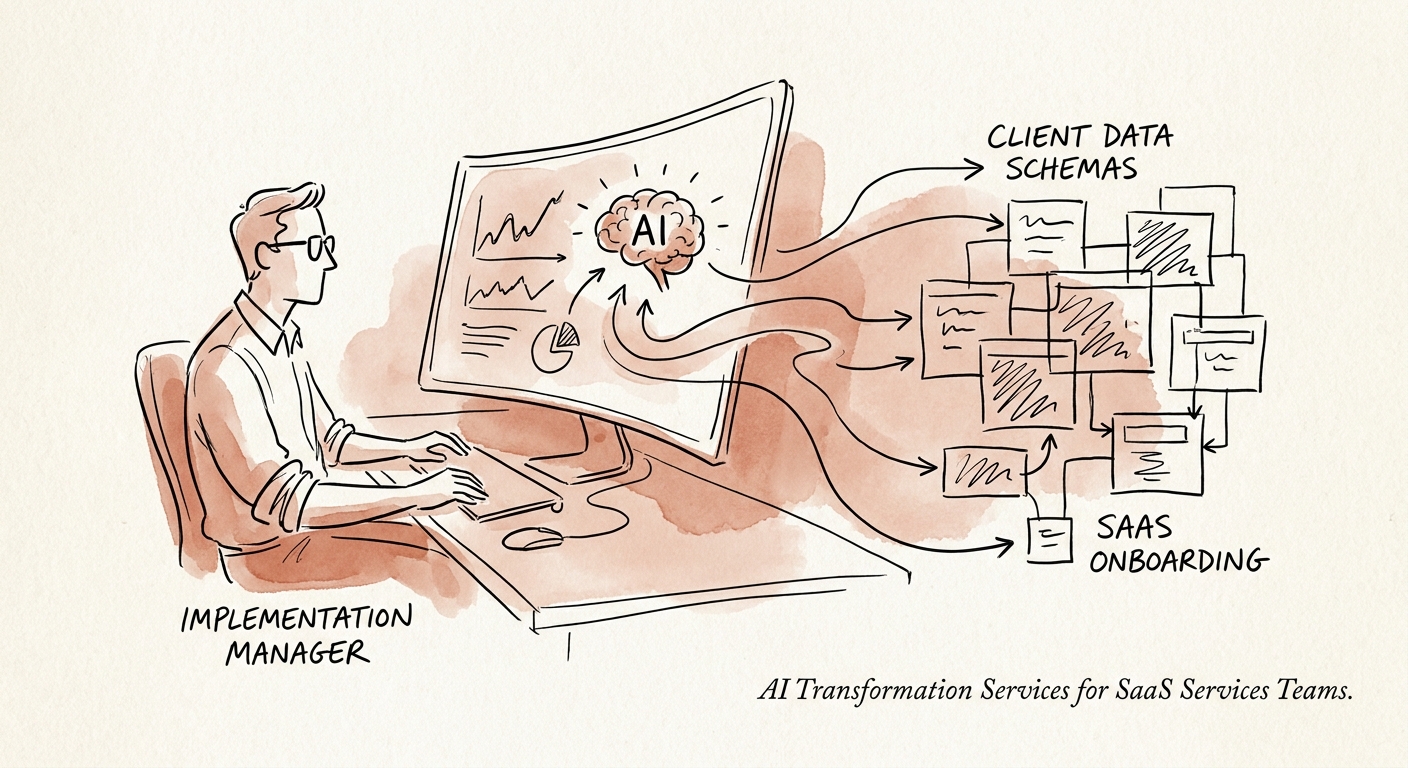
The renewal that died at a handoff
Picture a 60-person SaaS company. A customer signs, sales hands to onboarding, onboarding hands to a CSM, the CSM escalates a config issue to support, support loops in product. Five teams, five tools, and somewhere in that relay the context — what the customer was actually promised, what broke in week two, who owns the open risk — gets dropped. Eleven months later the renewal "comes as a surprise." It wasn't a surprise. It was a handoff nobody wrote down.
That is where AI belongs first in a SaaS services team — not generating more summaries, but reconstructing the account story across the seams. McKinsey's State of AI research and the IBM Institute for Business Value both land on the same point: value shows up when AI is wired into how the operation actually runs, not when it's bolted onto one screen. For services teams, "how it runs" is a chain of handoffs, and that is exactly where the leakage hides.
Map the handoffs, then govern the one that touches the customer
Draw your service lifecycle as a relay: sale to onboarding, onboarding to CSM, CSM to support, support to product, everyone to renewal. At each baton-pass, ask one question — what does the receiving person have to go dig for? Onboarding cycle time, implementation issues that age past their owner, tickets routed to the wrong queue, renewal prep that starts from a blank page: those are not separate problems, they're the same dropped baton showing up in different reports.
AI is genuinely good at the part everyone hates: reading the trail of notes, tickets, and product-usage signals and assembling a tight account packet for whoever picks up next. Let it draft that. But the moment output touches the customer — a renewal-risk note that becomes an outreach, a support reply that goes out the door — a human owner approves it. Salesforce's State of Service shows how much pressure these teams are already under, which is exactly why an unreviewed AI message to a paying account is the wrong place to save five minutes. The PwC Responsible AI survey and the NIST AI Risk Management Framework both give you the same discipline in writing: name the source systems, name the allowed data, name the approval step, name the escalation path — before a single automation faces a customer.
What to do Monday
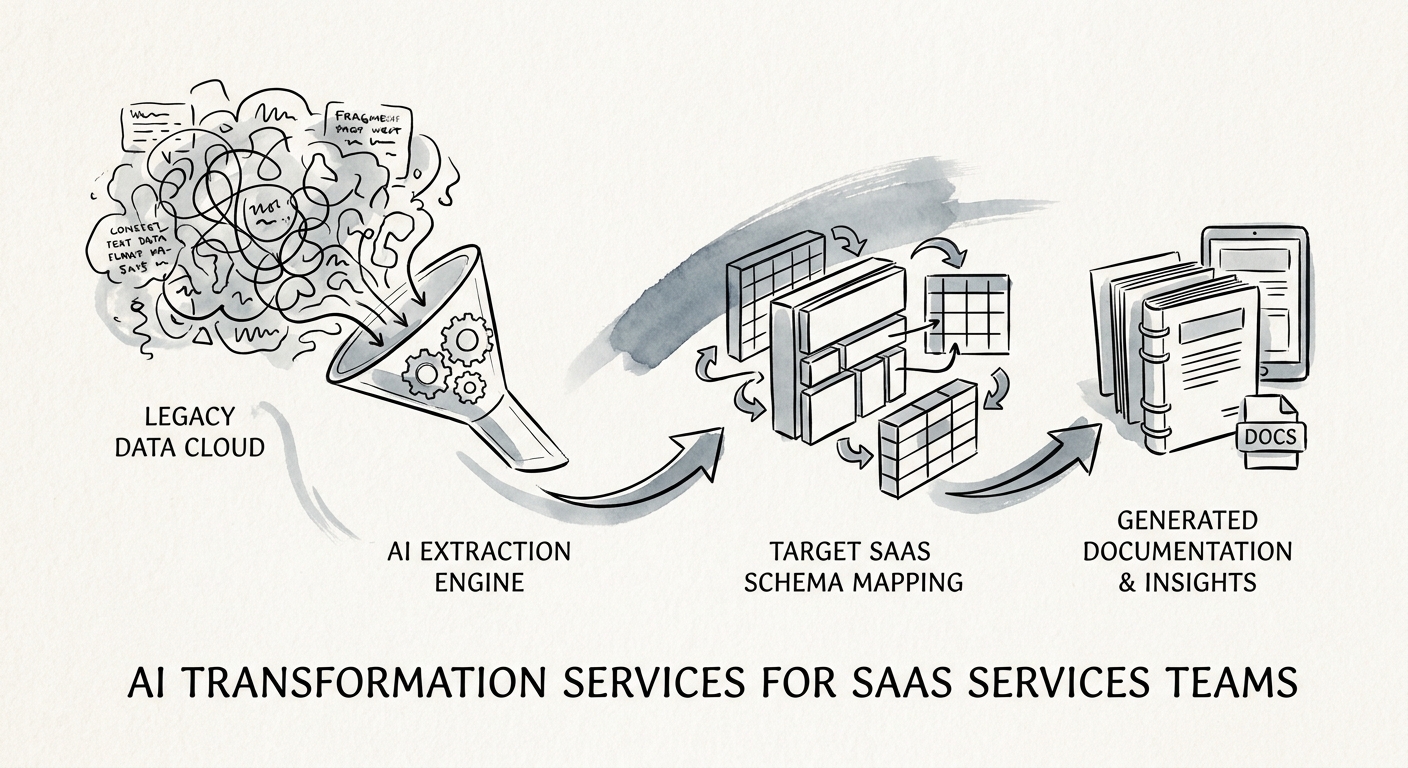
Pick your single worst handoff — the one your team complains about by name — and instrument it. Measure the gap today: how long context sits, how often the next owner re-asks the customer for something already answered, how much renewal prep is reconstructed from scratch. Then point AI at assembling that packet internally, with the receiving human approving anything customer-facing. Tie the scorecard to service margin and net retention, not to how many summaries the model produced; a faster handoff that loses accuracy is a worse handoff.
When you're ready to choose the first governed workflow, start with AI for customer service, AI knowledge systems, and workflow automation — and let the seam you instrumented tell you which one earns its place first.