The chatbot is the wrong first move
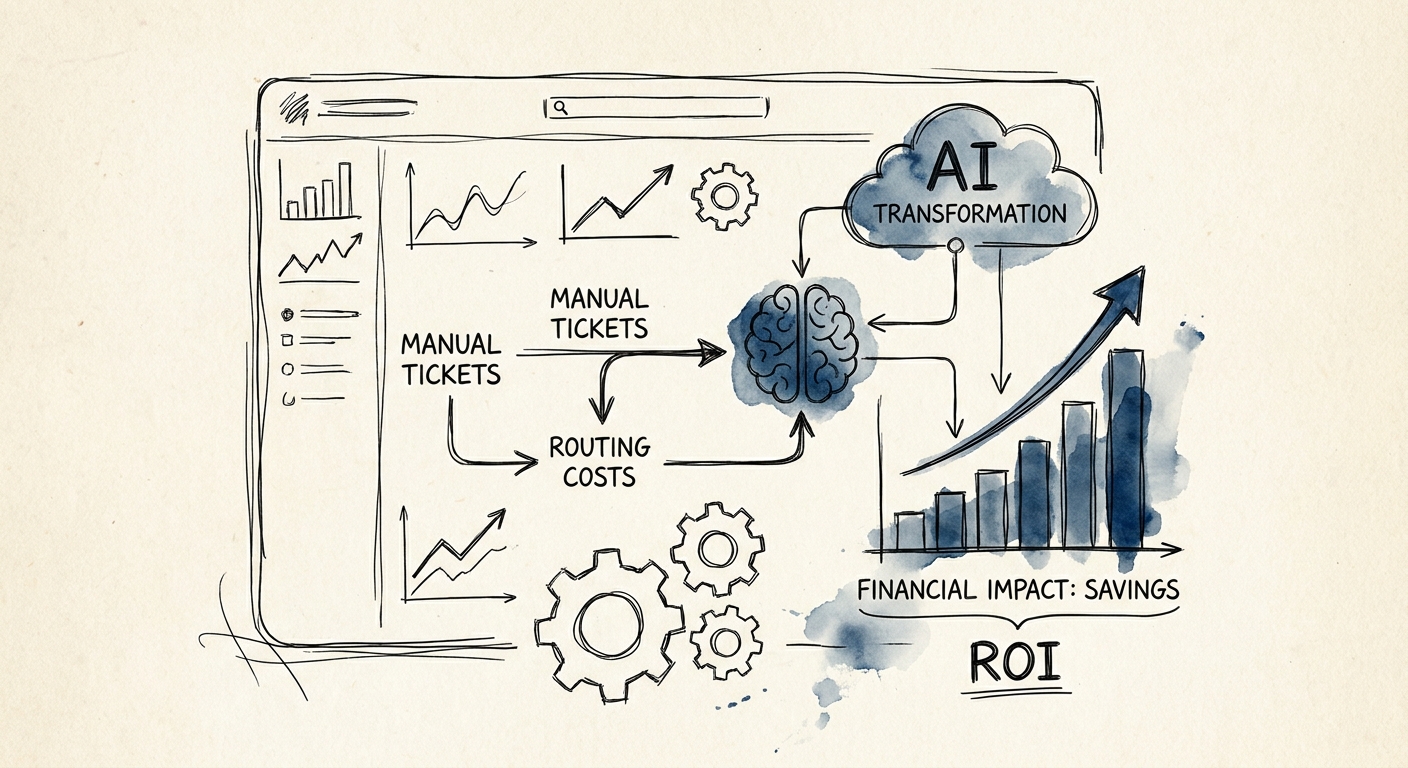
Here is the scene that drives the decision wrong. Volume spikes, the queue turns red, someone in a Monday standup says "we should put a bot on the website," and three months later you have a deflection widget that customers route around by typing "agent" — while the actual time sink never gets touched.
The actual time sink is invisible because it happens after the customer hits send. An agent reads a 14-message thread to reconstruct what's already been tried. A ticket about a failed charge lands in the general queue instead of billing and ages two days. A supervisor samples eight tickets out of four hundred for QA because that's all they have time for. New hires can't find the current refund policy, so they guess. None of that shows up on a customer-facing dashboard, which is exactly why it never gets fixed.
The RSM middle-market AI survey shows AI shifting from pilots toward standing operating use, and the San Francisco Fed analysis of AI and small businesses shows that pressure reaching smaller teams too. Read that as a reason to make the support workflow sharper, not as a reason to put a model between you and the person who's already annoyed enough to write in. Map one journey — issue arrives, agent works it, it resolves or escalates — and find the three steps where your team loses context. That's your first build: case summarization, smart routing, and knowledge search that agents see and customers don't.
Sort your ticket types by what happens when the answer is wrong
Customer operations has a tidy advantage over most functions: your work already arrives pre-tagged by category. Use that. Before any automation touches a ticket type, sort your categories by blast radius — what does it cost when the AI gets this one wrong?
"Where's my order, it says delivered" is low-blast: wrong answer, mild annoyance, easy recovery. "I'm cancelling and disputing the charge" is high-blast: a wrong or tone-deaf response can lose the account and trigger a chargeback. A regulated claim — a health, financial, or warranty assertion — is high enough that a bad summary becomes a compliance problem. The NIST AI Risk Management Framework gives you the language to make that sort defensible: classify by consequence and required oversight, then assign controls per tier instead of applying one blanket policy to the whole queue.
Two things gate whether you're even ready. First, readiness is not the same as tool access — the OECD report on AI adoption by small and medium-sized enterprises draws that line cleanly. A knowledge base where half the articles describe a workflow you retired last quarter will produce confident, wrong agent guidance; fix the source before you point a model at it. Second, customer history and account data are sensitive. The CISA AI Data Security Best Practices set the floor: permission what the tool can read, log what it retrieves, and confirm an agent assisting one customer can never surface another customer's record in a generated summary.
The 30-day pilot: measure the agent, not the customer
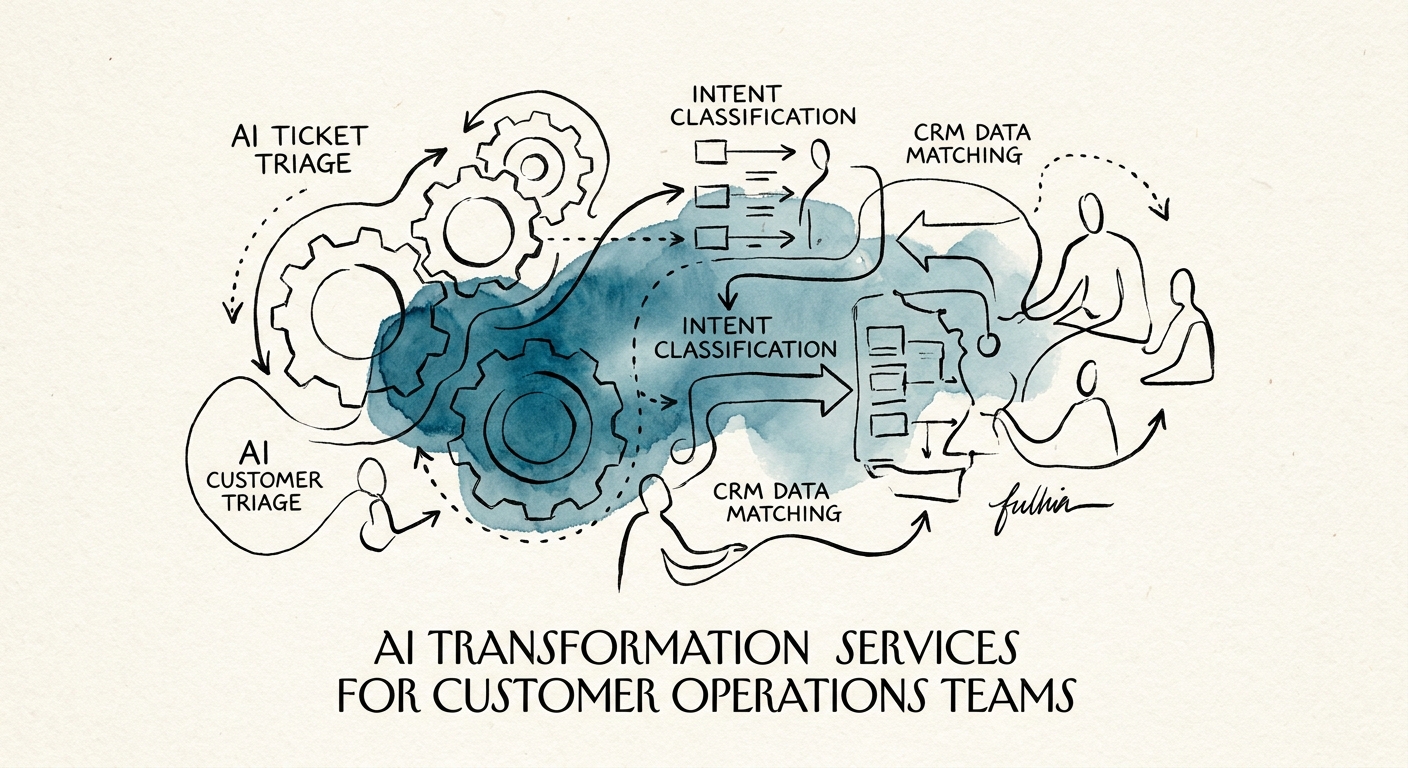
Pick one category — say, billing inquiries for a 40-agent team. For 30 days, the AI does three jobs and a human stays in the seat for every one: it drafts a case summary the agent edits before working the ticket, suggests a macro the agent can send or discard, and searches internal knowledge to surface the relevant policy. No customer ever talks to it directly. That's the whole pilot.
Then measure the handoff, not a vanity deflection rate. The Deloitte State of AI report keeps the question on whether the work actually changed, so track the numbers that prove it: first-contact resolution on that category, escalation accuracy (did billing tickets stop landing in the general queue), QA defects on AI-summarized tickets versus a control group, repeat-contact rate, and how much supervisor review time the summaries gave back. If summaries are getting edited 80% of the time, your knowledge base is the problem, not the model — and you've learned that for the cost of one queue instead of a full rollout.
Keep autonomy on a leash until those numbers hold. The Gartner agentic AI project forecast expects a large share of autonomous projects to get killed — usually because someone handed the model the customer before they trusted it on the agent's desk. Earn customer-facing deflection by first proving the assist makes agents measurably more accurate. When you're ready to design that governed support workflow, AI for Customer Service is where the build starts.