The status request is the tax you pay all day
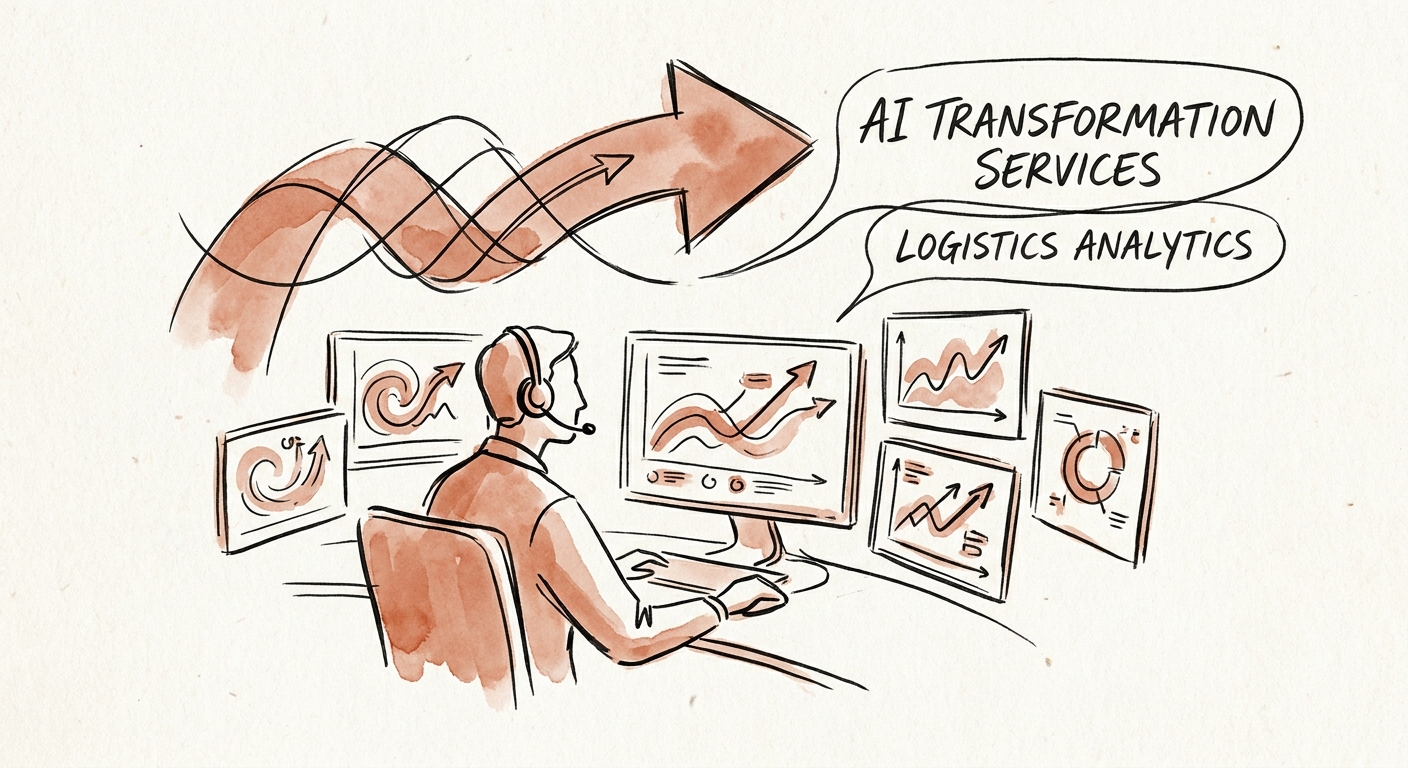
Picture a 60-truck regional carrier on a Tuesday afternoon. A broker emails: "Where's load 48291?" To answer, the dispatcher opens the TMS, checks the last ELD ping, scrolls a text thread with the driver, glances at the customer's appointment notes, and confirms whether the receiver still has a dock open. Ninety seconds, maybe two minutes. Multiply that by the forty "where's my freight" messages that hit the desk before 3pm and you've burned an hour and a half of skilled dispatcher time on lookups — not on covering loads, not on solving the detention problem brewing at the Memphis DC.
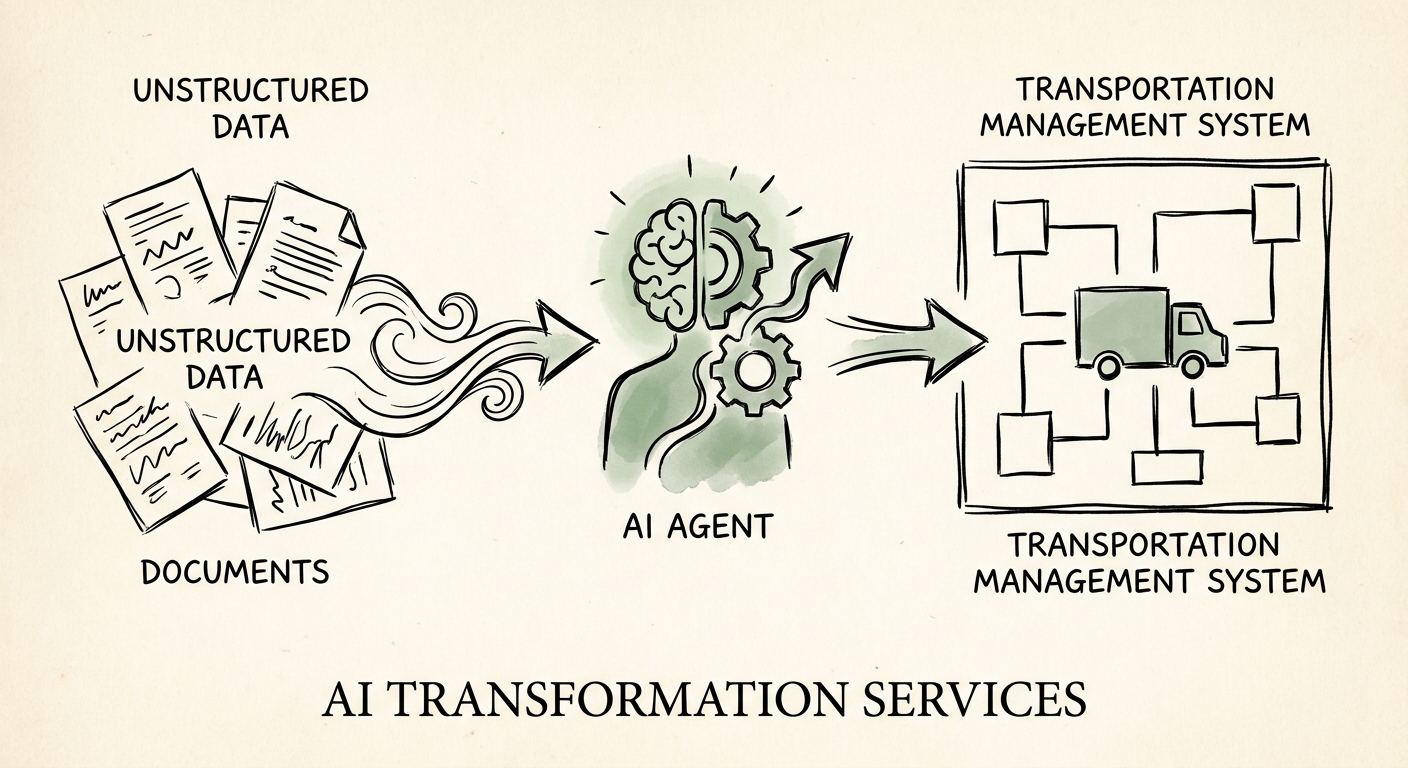
That is the real AI opportunity in logistics, and it is not autonomous routing. The raw material is already there — it's just scattered across the TMS, driver texts, carrier portals, rate confirmations, proof-of-delivery scans, and the accessorial notes nobody updated. The problem isn't missing data. It's the time it takes to reassemble the shipment's story when something goes sideways. The RSM middle-market AI survey shows mid-market operators are under pressure to move past pilots, and the San Francisco Fed's small-business AI analysis finds smaller operators experimenting too — usually without the guardrails a larger 3PL would insist on.
So I'd start where the bleeding is visible and aging is measurable: status-request triage, POD retrieval, detention and accessorial follow-up, and billing reconciliation against the rate con. Those four have hard numbers attached — response time, packet completeness, dispute rate, days-to-invoice — which means you can prove whether the AI helped or just made noise.
Nothing reaches a customer or carrier without a human seeing the sources
Here's the trap. It's trivial to get a model to draft "Load 48291 is on schedule, ETA 4:30pm." It's much harder to be sure that draft is grounded in the actual last ping, the receiver's real appointment window, and whether the driver already flagged a two-hour delay at the scale. Generating confident language and having trusted shipment context are different things — which is exactly the gap between tool access and operating maturity the OECD SME adoption report describes.
An AI that confidently tells a shipper an on-time ETA when the truck is sitting in detention doesn't save you a phone call — it costs you the account. So the first build keeps every customer- and carrier-facing message in a review queue. The dispatcher or account manager sees the proposed reply with its sources stitched in — the ELD timestamp, the appointment note, the driver's last text — and accepts, edits, or escalates when the answer hinges on context that isn't there. The human stays on the hook; the AI just does the ninety seconds of assembly.
Use the NIST AI Risk Management Framework to sort the work by stakes. A "we received your POD" confirmation is low-risk. A detention claim, a freight-damage response, or a rate dispute on a key account is not — those keep a supervisor in the loop. And because the system is reading rate cons, customer contacts, and signed PODs, set hard source boundaries per the CISA AI Data Security Best Practices so a tool retrieving shipment records can't reach into pricing or contract data it has no business touching.
What you measure on day one, before automation widens
The Deloitte State of AI report puts the value in changed workflow, not the model. For a freight operation that means tracking a specific scoreboard: average time to answer a status request, percentage of shipments with a complete document packet (BOL, POD, accessorial backup) at invoice, billing-dispute rate, days from delivery to clean invoice, and how often a supervisor had to step in on a high-value account. If those numbers don't move in 90 days, the project isn't working — and you'll know.
Why hold the line on review before scaling? The Gartner agentic AI forecast expects a large share of agentic projects to be cancelled — and in freight the failure mode is loud: an auto-sent ETA that's wrong, an auto-filed detention claim with the wrong timestamps, a customer who stops tendering loads. Earn the automation. Start with assisted summaries, missing-document flags, and approved reply drafts; widen only once the scoreboard shows quality held and cycle time dropped.
Monday, do this: pull last week's inbound messages and count how many were pure status lookups versus real problems. That ratio is your business case. Then take one workflow — status triage is usually the easiest win — and turn it into a governed cadence with a named owner, defined sources, a review path, and a value metric. That's the scope of an AI Workflow Automation engagement: one freight exception workflow, made fast and reviewable, before anything talks to a customer on its own.