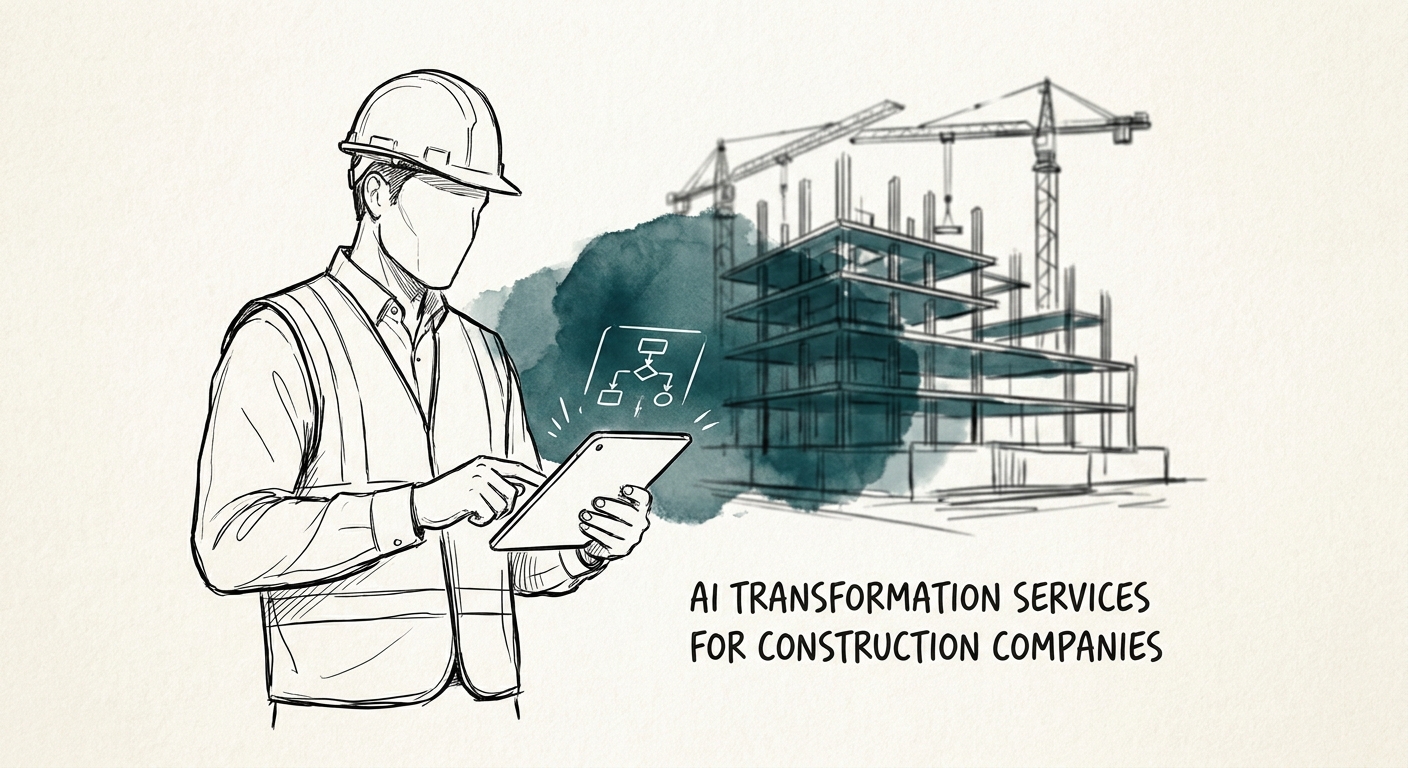
The change order nobody can substantiate
Picture a $14,000 change order that the GC bounces because the backup is incomplete: the field directive lives in a text thread, the photos are on a super's phone, the time-and-material tickets are in a binder in a truck, and the daily log that ties it all together was written from memory four days late. The work happened. The money is real. But by the time someone reconstructs the paper trail, the project is two draws past it and the owner has stopped answering the substantiation request. That is not a technology problem. That is a field-to-office handoff that leaks margin every single week.
Construction companies do not need another reality-capture demo or a dashboard that visualizes data they already distrust. They need the gap between what happened on site Tuesday and what the office can defend in writing on Friday to get smaller. RFIs, change-order substantiation, daily reports, subcontractor follow-up, schedule-slip notifications, lien-waiver collection, and job-cost variance — those are the seams where delay turns into write-offs.
This is exactly the band the RSM middle-market AI survey describes: companies with enough repeating project-control work to make automation worth it, but not the headcount to staff an enterprise AI program. The San Francisco Fed analysis of AI and small businesses shows smaller operators already experimenting — which makes picking the right first workflow more important than picking the right model, because messy job-site source data will break the wrong one fast.
Score the document path, because the data is always a mess
Here is the part construction leaders feel in their gut and most AI pitches ignore: your source data disagrees with itself. The plan set is on revision 4 but the field is building to revision 3. The schedule in the PM tool says the slab pours Monday; the super already moved it. The vendor quote in the email thread is $2,200 higher than the PO in the ERP. The OECD SME adoption report names data and skills gaps as the top adoption blockers — on a job site those gaps are not abstract, they are six conflicting versions of the truth scattered across phones, binders, and inboxes.
So score the document path before you score the model. Say a 60-person GC running 12 concurrent projects: rank candidate workflows by dollars of change-order value at risk, how often substantiation is missing when the GC asks, schedule-impact exposure, how many subs the workflow depends on, and — the criterion most teams skip — whether a PM can verify the output against a source record in under two minutes. If a project manager can't trace an AI summary back to the daily log, the photo, and the directive that produced it, it doesn't matter how good the prose is. Nobody will stake a draw request on it.
Wrap that in governance built for project context, not generic IT policy. The NIST AI Risk Management Framework answers the right questions: who owns the workflow, which systems it may read, what it's allowed to summarize, and which outputs need a PM signature before they leave the building. The CISA AI Data Security Best Practices add the discipline that matters when subcontractor pricing, owner contracts, and prevailing-wage records are in play — permission boundaries, source limits, and logs you can produce if a dispute goes to mediation.
Make it live inside the weekly project-control meeting
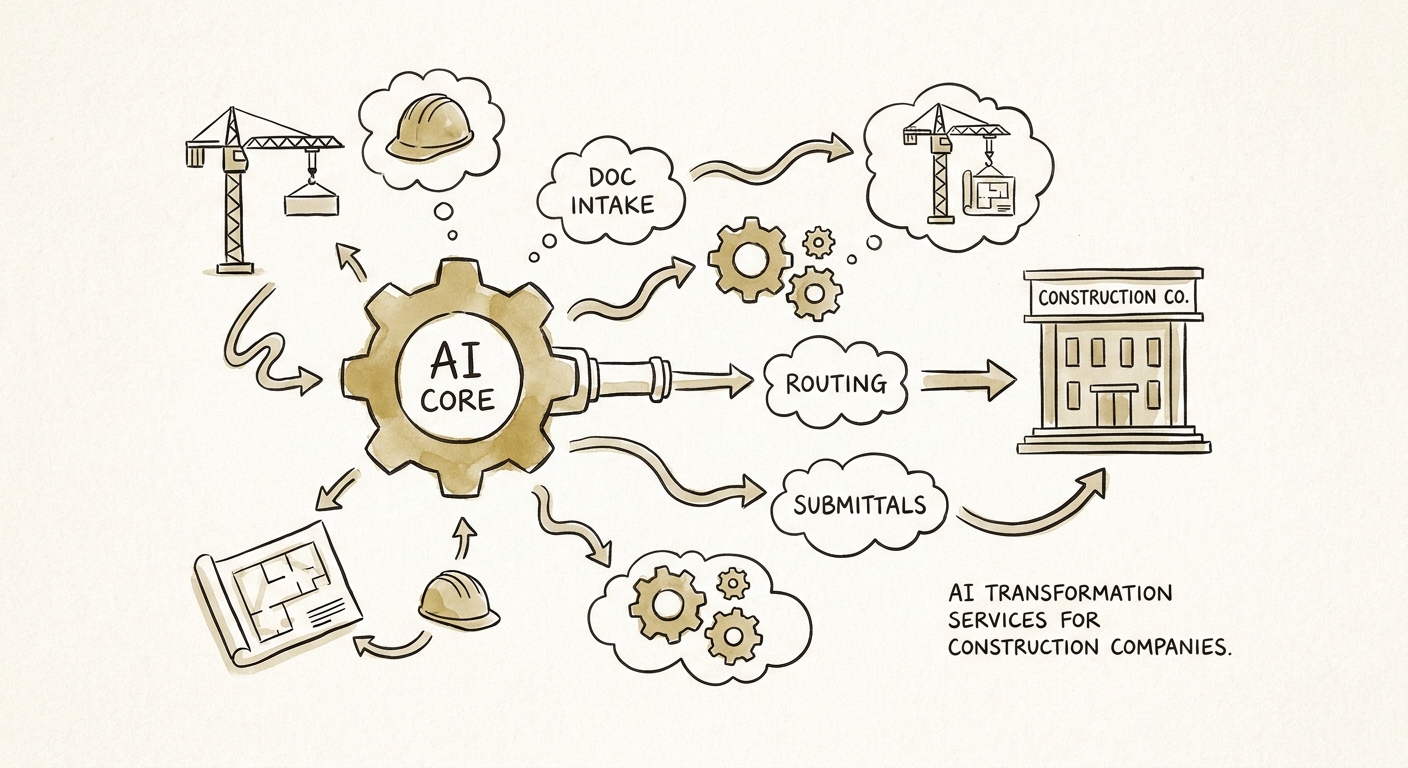
A construction AI pilot dies the moment it becomes a separate "innovation" initiative that competes with pouring concrete. The Deloitte State of AI report puts process redesign at the center of AI value, and on a job that has a concrete meaning: the assistant has to show up in the Monday project-control review, the OAC meeting, and the draw package — the rhythms that already exist — or it shows up nowhere. Pick one decision and make it faster: assemble change-order backup from the daily log, photos, and field directives the moment a directive is issued; or flag the three line items drifting toward a budget overage before the controller closes the period.
Keep it on a leash. The Gartner agentic AI project forecast is a useful cold shower on autonomy: start with PM-approved summaries, exception flags, and review queues. The day you let AI send an owner a change-order notice or alter a schedule baseline without a human signature is the day you trade a documentation problem for a contract dispute.
Monday move: walk one active job and time how long it takes to fully substantiate the most recent change order from scratch. That number — measured in hours and chased-down phone calls — is your first business case. Then pick the single workflow where faster source assembly and cleaner review buy that time back. AI Workflow Automation is the practical next step for turning that one workflow into a governed, repeatable part of project control.
