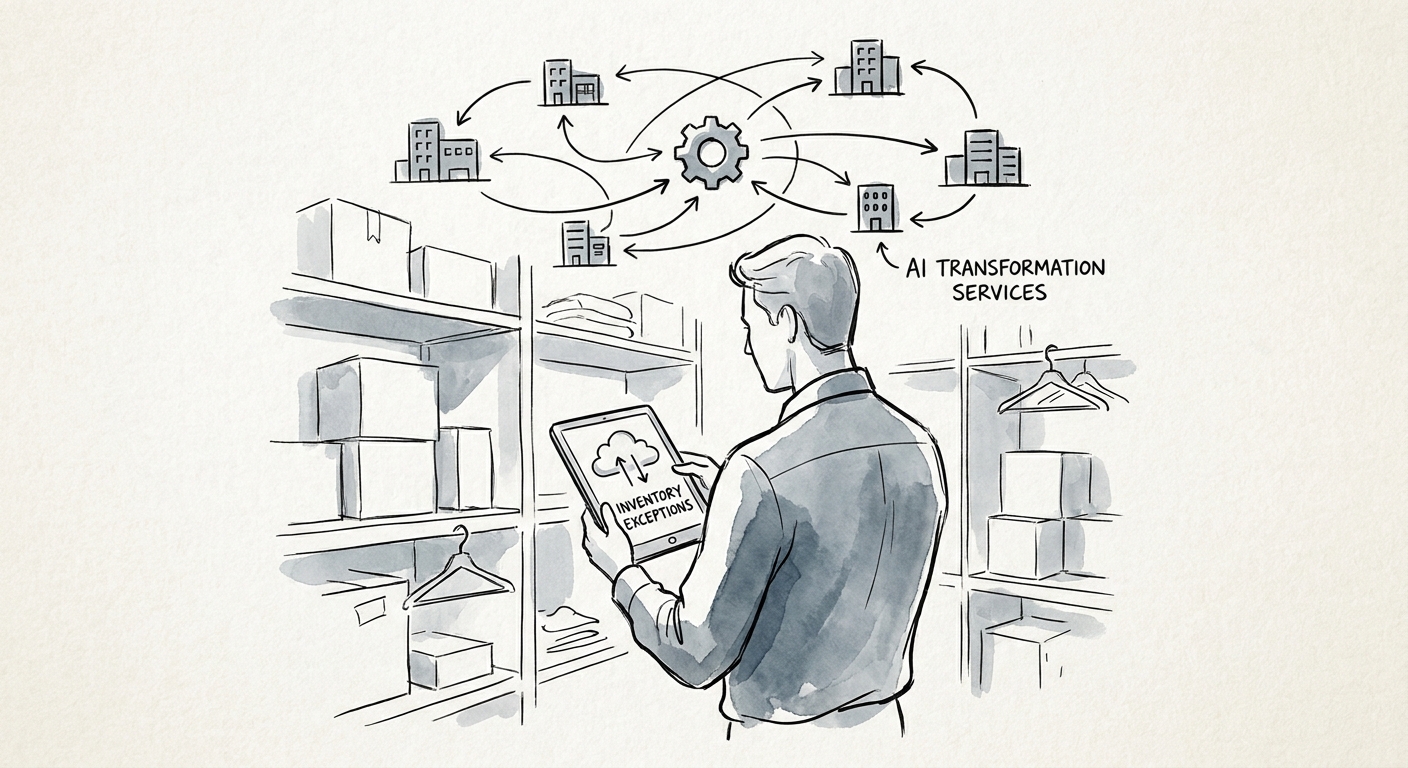
Two stores, same playbook, different P&L
Store 7 and Store 12 sell the same SKUs, run the same promotions, and staff to the same labor model. Yet Store 7 turns inventory faster, posts a lower shrink number, and somehow keeps a better attach rate on add-ons. The district manager has a theory. The merchandiser has a different theory. By the time anyone reconciles them at the quarterly review, the quarter is gone and the gap has compounded across the other 23 locations.
That delay is the real problem multi-location retail has, and it is not a data problem. The signals already exist: POS line items, inventory counts, labor schedules, store-visit notes, customer feedback, and the manager texts that never make it into a system. The RSM middle-market AI survey shows AI moving from experiment to operating priority for companies this size, and the San Francisco Fed analysis of AI and small businesses shows the same pressure reaching smaller operators. The trap is spending that momentum on a prettier dashboard. A prettier dashboard still arrives late and still leaves the district manager guessing.
Start with one recurring management question instead: why do two comparable stores produce different labor, inventory, or attach outcomes, and who can act on the answer this week? The first AI workflow should assemble the facts, line up the comparable locations, surface the outliers, and route the exception to the person with the authority to fix it. That is a different machine than a reporting layer, and it is the one that changes a number.
Get the internal loop right before AI touches a customer
The OECD SME adoption report is blunt about why these projects stall: data quality, scarce skills, unclear process ownership, and weak risk controls. Retail feels every one of those the moment store notes disagree with system counts, or when "follow the planogram" means three different things at three locations. Point AI at customer messaging before that internal loop is clean and you have automated the disagreement.
So map the first workflow before you build it. The NIST AI Risk Management Framework gives you the four questions worth answering on paper first: what store-level decision is this serving, which data sources are allowed in, who reviews the output, and what is the risk category if it's wrong. When that source set includes customer feedback, employee scheduling data, or location-level performance, the CISA AI Data Security Best Practices tell you how to handle it without leaking it into a model you don't control.
The strong first candidates all live inside the four walls and headquarters: an inventory-exception summary that explains why a store is over or under on a category, a labor-variance note that ties scheduling to actual traffic, store-visit note synthesis so a district manager walks in already briefed, policy-question routing so a new shift lead gets the right answer instead of a guess, promotion-performance comparison across comparable stores, and a manager follow-up queue that doesn't depend on memory. Pick the one that, fixed, a district manager would notice by Friday. Keep it internal and reviewed until the outputs are reliably accurate.
Make it a weekly rhythm, not a launch
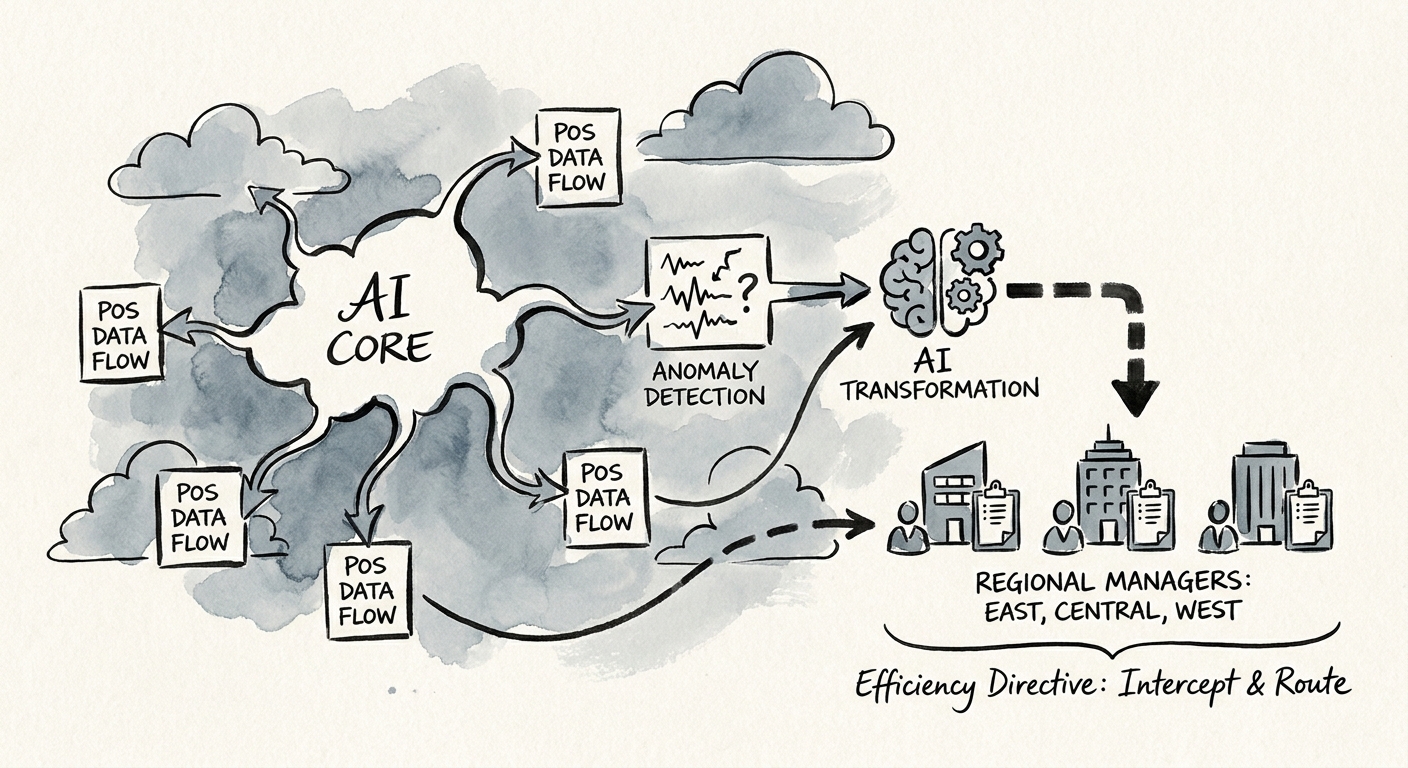
The Deloitte State of AI report ties realized value to process change, not tool count, and in multi-location retail the process change has a specific shape: a weekly exception review where the system compares like stores, flags the outliers, assigns an owner, and tracks whether last week's flag actually got resolved. The win isn't the AI summary. The win is that Store 12's attach-rate gap has an owner and a deadline instead of a theory.
Stage the rollout deliberately. The Gartner agentic AI project forecast warns that a large share of agentic projects get canceled, and the ones that survive are the ones that earned trust on small, reviewable decisions first. Keep AI on internal recommendations with store-manager review and HQ sign-off well before it ever touches live pricing, customer messaging, or a staffing instruction that changes who shows up tomorrow.
This Monday, name the two comparable stores whose gap you can't currently explain, write down the one decision that gap should drive, and list the data sources you'd trust to explain it. That single mapped loop is the scope for AI Workflow Automation and the fastest way to prove the store-to-HQ signal is worth automating before you scale it across every location.