The use case is hiding in your shared inbox, not your TMS
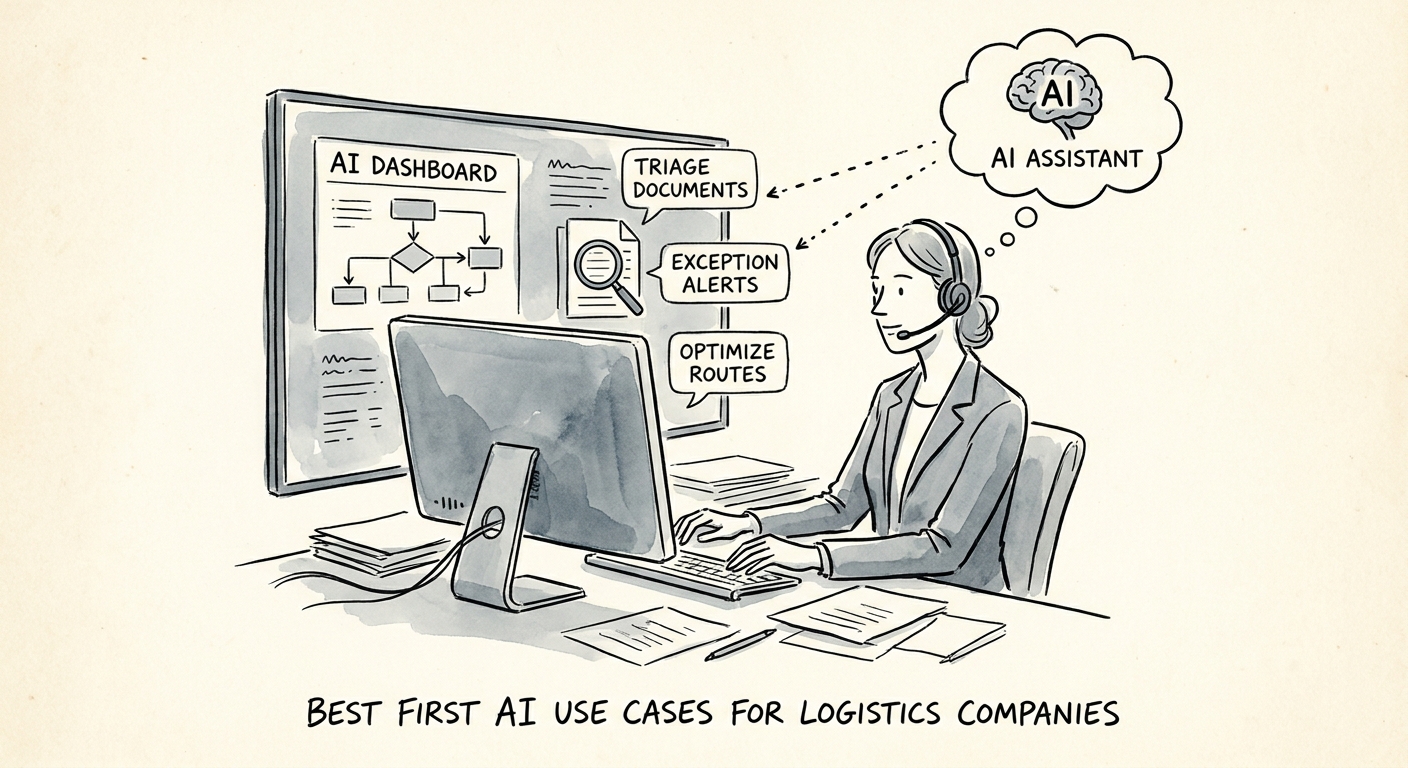
Walk into the operations room of a 60-truck regional carrier or a mid-market freight brokerage and you will not find people waiting on a routing algorithm. You will find a coordinator with four browser tabs open, copying a delivery exception out of a carrier portal, cross-referencing it against a shipment in the TMS, and retyping the whole thing into an email to a customer who is already on hold. That is the work AI should touch first. Not the dispatch board. The inbox.
The pull toward AI is real and it is reaching firms your size. The RSM middle-market AI survey shows mid-market leaders moving past pilots into broader use, and the San Francisco Fed analysis of AI and small businesses shows the same pressure landing on smaller operators who do not have a data science team. The mistake is letting that pressure aim you at the loudest use case. Autonomous re-booking and dynamic routing sound like the future, but they put a model in charge of margin, capacity commitments, and carrier relationships on day one. That is the last thing to automate, not the first.
The first thing is the repeated coordination work where a human still makes the call but spends most of their time gathering and re-typing context. In a logistics shop that is a short, concrete list: intake of shipping documents, triage of delay and damage exceptions, and the assembly of a rate quote. Each has a clear input, a known reviewer, and a cycle time you can already feel.
Rank them: documents, then exceptions, then quotes
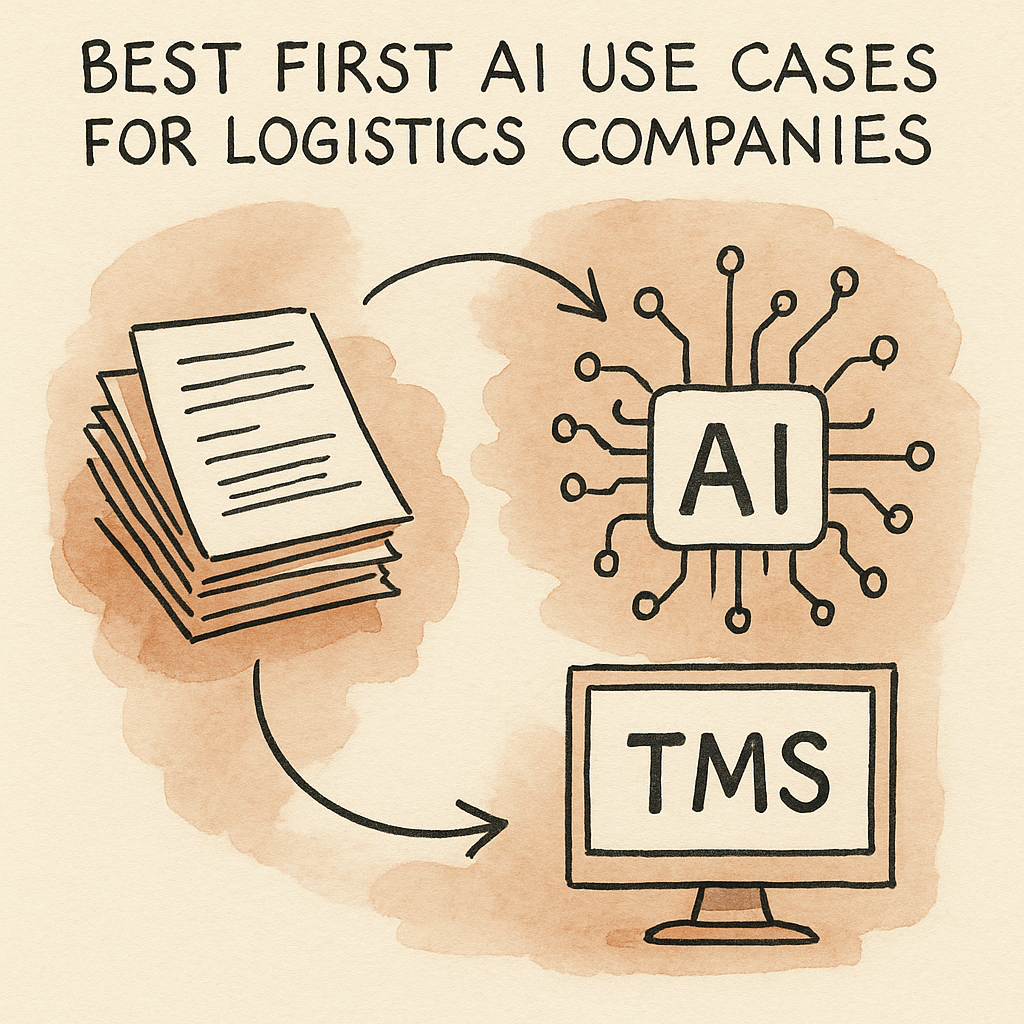
Start with document intake because it is the most contained and the easiest to measure. A freight operation runs on a stack of structured-but-messy paper: bills of lading, commercial invoices, proof-of-delivery scans, customs paperwork, carrier rate confirmations, and customer RFQs that arrive as a PDF attached to a one-line email. The OECD report on AI adoption by small and medium-sized enterprises draws the line that matters here: having the tool is not the same as adopting it. AI reads a BOL well only after you have decided which fields it must pull, where they land in the TMS, and who eyeballs the low-confidence ones. Define that path and you have turned a 90-second manual keying task into a 10-second review.
Exception triage is the second move, and it is where the daily pain actually lives. A carrier sends a delay notice. Today a coordinator hunts down the matching shipment, figures out which customer is affected, decides whether it breaks a delivery promise, and writes the email. An assistant can do the first three steps and hand the coordinator a drafted status update to approve, edit, or kill. Notice what it is not doing: it is not re-booking the load, not authorizing an accessorial charge, not making the delivery promise. Drafting context is safe. Committing freight and money is not. The NIST AI Risk Management Framework gives you the discipline for that line: govern the workflow, map the data it touches, measure the risk, manage the controls.
Rate-quote prep is third. AI can pull the lane, gather historical rates, and assemble a draft for a human to price. Keep the pricing decision human. When you check whether any of this paid off, be honest about the math. Count the avoided rework, the shorter quote turnaround, the exceptions that stopped slipping through. Do not bank a saved minute as cash unless a coordinator's day actually changed shape because of it.
Ship one inbox, run it for a quarter, then expand
Pick the single highest-volume document stream or shared inbox and put exactly one workflow into production. Name the coordinator who owns it. Write down the approved data sources so the assistant is not reading the open web. Require human review on every customer-facing output. Then run a weekly check on whether the cycle time actually moved. The Deloitte State of AI report keeps landing on the same point: the value comes from changing the process, not from buying access to the tool. A model that drafts a status update no one trusts enough to send has changed nothing.
Resist the urge to jump straight to agentic orchestration that books loads and adjusts plans on its own. The Gartner agentic AI project forecast expects a large share of those projects to be cancelled, and in logistics the reason is obvious: when an agent gets a customer commitment or an accessorial charge wrong, the cost shows up in real freight and real relationships. Earn the right to expand by proving the assistant works inside one operating cadence first.
The practical next step is to turn this from a list into a dated plan: one production workflow, a named owner, defined controls, a training pass for the coordinators who use it, a measurement check, and a rollback rule if it underperforms. That is the build the AI roadmap is for.