The denied claim that was missing one box
Picture a 14-provider gastroenterology group. A prior authorization for a colonoscopy gets kicked back by the payer because the referral packet didn't carry the prior endoscopy date the plan requires for that CPT code. A medical assistant spends forty minutes chasing the outside GP's office for a record that was sitting in the EHR the whole time. The patient's procedure slips two weeks. Multiply that by a few dozen prior auths a week and you have the real operating tax on a specialty practice — not clinical decisions, but the document plumbing around them.
That is exactly where your first AI use case belongs. The work is administrative, the source is a record that already exists, and a human reviews the output before anything moves. OECD research on AI adoption in smaller organizations keeps landing on the same point: practical readiness beats ambition. In a specialty practice, readiness has a hard edge most industries don't carry — the moment a tool drifts from "checking whether the packet is complete" to "deciding what the packet should say," you are standing on a clinical judgment line you cannot let software cross.
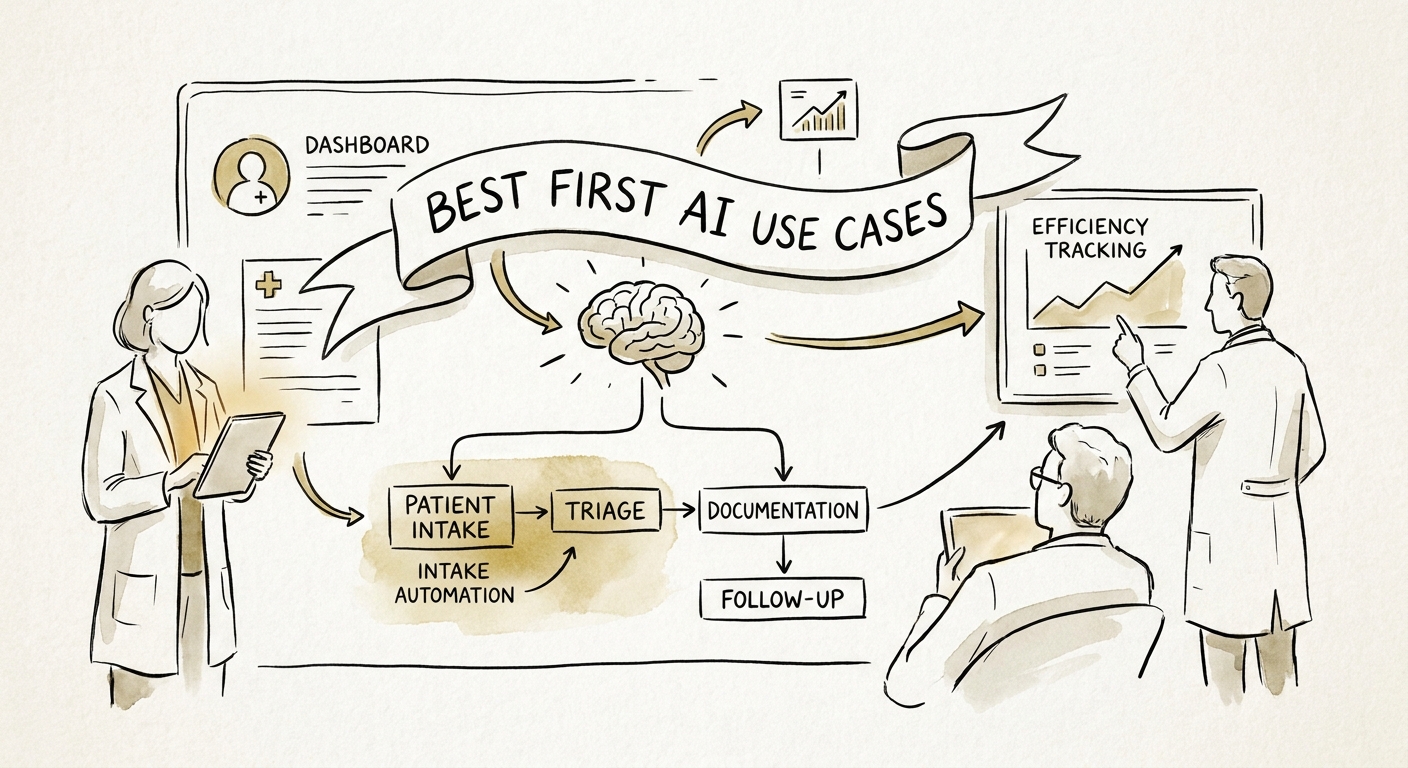
So the framing isn't "what's the most impressive thing AI can do for medicine." It's narrower and more honest: which repetitive, source-backed tasks bleed the most staff hours, and which of those can be done without an algorithm ever touching a care decision? For a specialty group, the answer clusters in five places — prior auth support, referral packet checks, missing-intake-field prompts, benefits-question routing, and staff-facing policy lookup.
Two questions a payer audit will ask you anyway
Before you pick the use case, draw the map most practices skip: which records are authoritative for the task. Prior auth pulls from EHR clinical data, the referral document, and the payer's coverage rules for that specific code — and payer rules expire. A benefits answer that was right in January can be wrong by the plan year flip. So every payer-derived source needs an effective date attached, or the AI will confidently route last year's policy.
Then run two questions that a HIPAA audit will eventually ask you regardless of whether AI is involved: where does protected health information travel, and who can see it. HealthIT.gov's security risk assessment resources exist precisely because PHI exposure, vendor access, and safeguards have to be evaluated before any workflow automation touches a chart. If your candidate vendor can't sign a BAA, can't show role-based access, and can't produce an audit log of who queried what, the use case is dead before the pilot — no matter how clean the demo looked.
This is also where the staff-versus-patient distinction earns its keep. A tool that summarizes a referral packet for a nurse to verify is a different risk animal than one that answers a patient's question directly. Lead with staff-facing summarization. NIST's AI Risk Management Framework gives you the spine for the escalation rules: what the tool may surface, what it must hand off, and who the named non-clinical owner is when an exception lands. Decide all of that before go-live, not after the first surprise.
The first tranche, and the gate that stops you
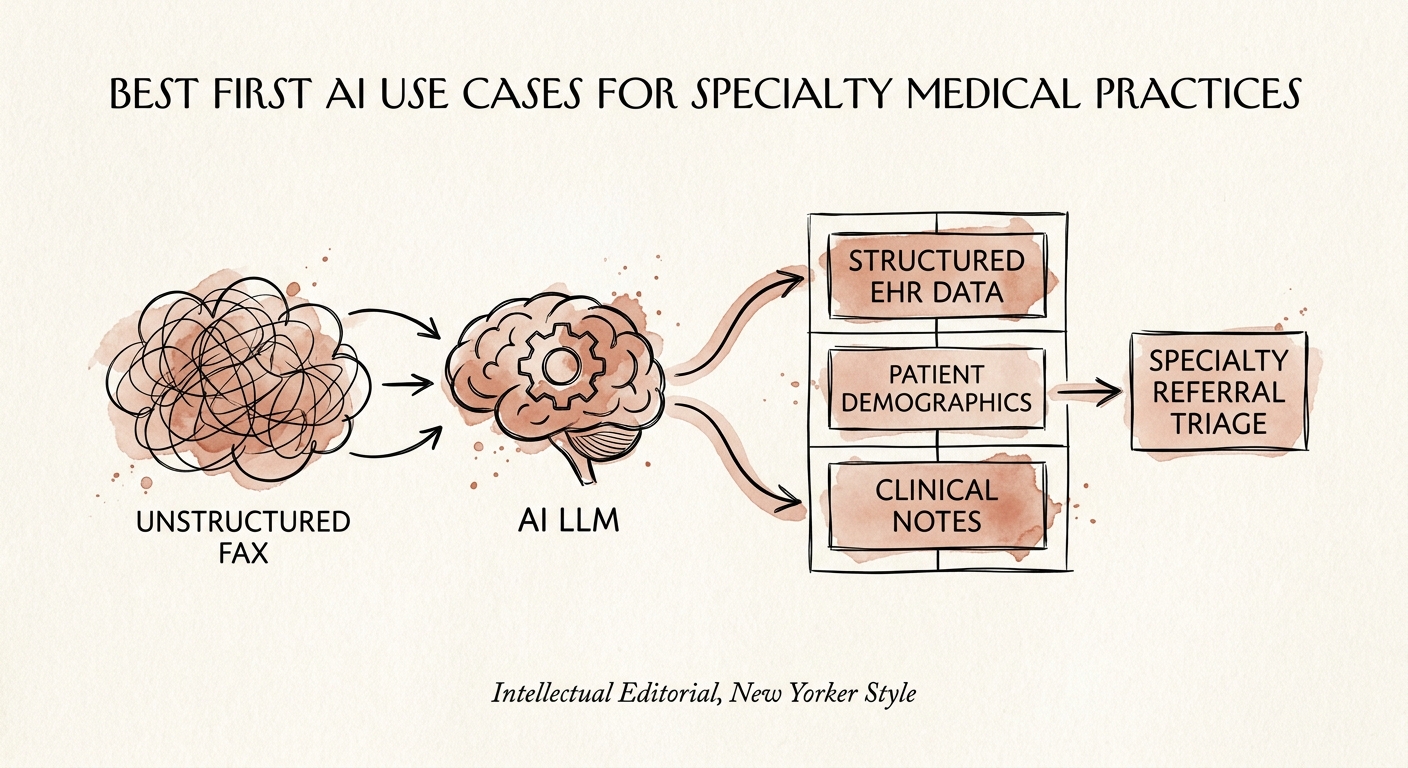
Here is a concrete first tranche a specialty practice can stand up Monday: a referral-packet completeness check that flags missing fields against the payer's documented requirements, a prior-auth prep step that assembles the supporting record for a human to confirm, benefits-question routing to the right desk, scheduling preparation, and a staff-facing lookup for internal policy. Every item reduces administrative drag while leaving clinical authority untouched. None of them answers a patient-specific medical question, produces a diagnostic summary, or looks like a care recommendation — that's the bright line.
Measure in numbers your office manager already tracks: incomplete referrals per week, intake completion time, scheduling handoffs per case, benefits rework, and staff interruptions for routine policy questions. Pick one and baseline it before the pilot. If after a few weeks the tool can't move a single one of those while passing the privacy and security review, you don't scale it — you fix the source quality, the permissions, or the owner, then try again. A pilot that improves cycle time but quietly widens PHI exposure has failed, even if the dashboard looks green.
If you want a structured starting point, begin with an AI opportunity score to rank candidates by effort and return, then run a healthcare-specific pass of manual-work triage to find the task that's both painful and safe. The packet you hand clinical leadership should name the source record, show what the AI assembled, capture the human edit, and tie the result to what happened after the work left the queue. Hold the dataset deliberately narrow — intake records, referral packets, scheduling rules, dated payer notes, EHR boundaries, approved staff guidance — and decide the exclusion rules and escalation triggers before the pilot ever leaves the first team.
