Your prior-auth coordinator is your real pilot site
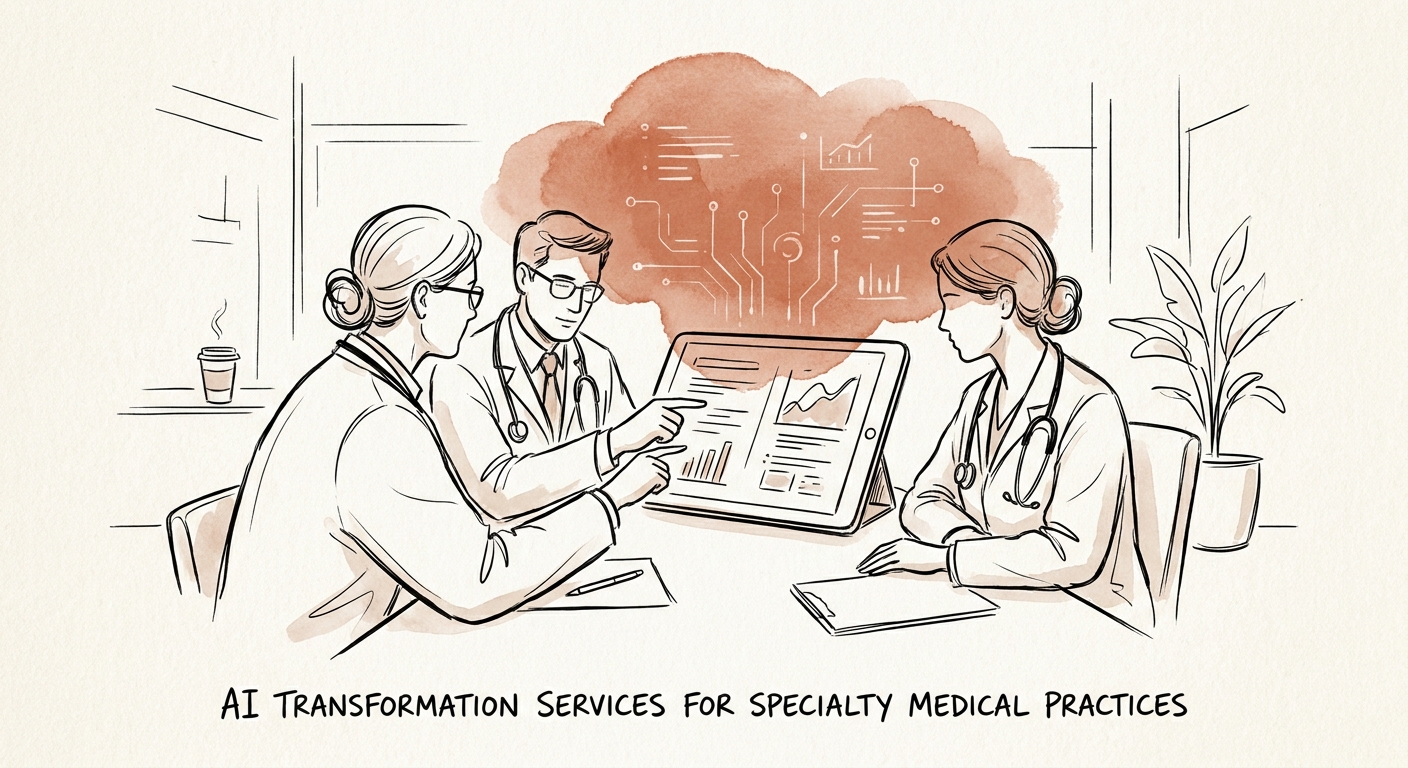
Walk into a cardiology, GI, orthopedics, or dermatology practice on a Tuesday and the bottleneck is rarely the exam room. It's the desk where one person assembles prior-authorization packets — pulling the office note, the imaging report, the relevant labs, and the payer's specific medical-necessity criteria into a submission that won't bounce. A denied auth means a delayed procedure, a frustrated patient, and a coordinator re-keying the same chart for the third time. That desk is where AI should go first, not the patient portal.
The pressure to adopt is real. The San Francisco Fed analysis of AI and small businesses shows the technology moving steadily into small-business back offices, and the OECD report on AI adoption by small and medium-sized enterprises is blunt that whether it sticks depends on data readiness, staff skills, and who owns the workflow. In a specialty practice those aren't abstractions — they're the difference between a tool your coordinator trusts and one she quietly stops opening.
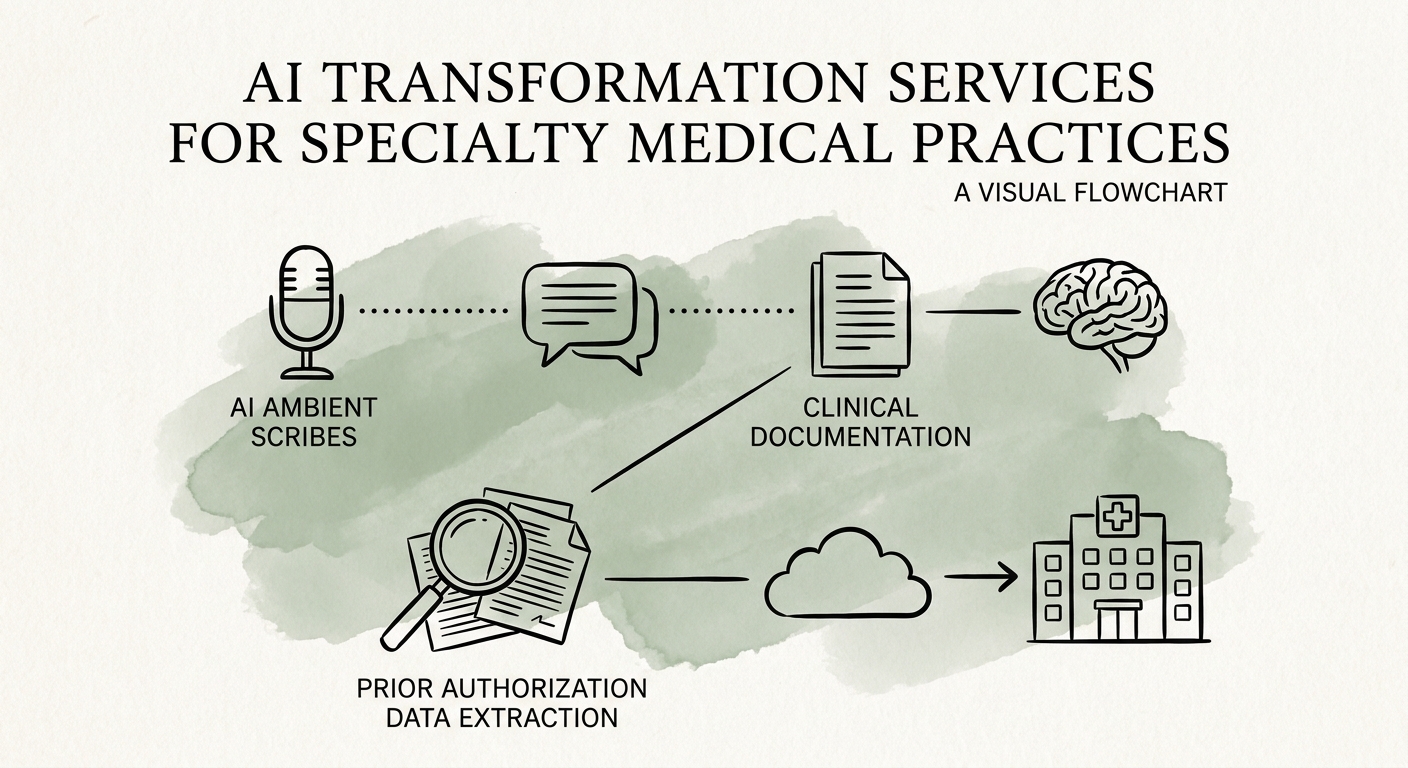
The honest first list is administrative and bounded: drafting prior-auth packets from approved chart sections, summarizing inbound referrals so triage knows urgency at a glance, turning a visit's approved records into a pre-visit summary, drafting patient-message responses for a human to approve, and pulling the management numbers leadership keeps asking for. Every one of these has a clear input, a clear output, and a human who signs before anything leaves the building. Use what to automate first in a small business as the filter: approved inputs, a named reviewer, an exception path, and a measure tied to denial rate, referral-to-appointment time, or coordinator hours reclaimed.
The line you do not cross — and how to build it into the tool
The reason a specialty practice can't copy a marketing agency's AI playbook is PHI. The moment a tool touches a chart, it inherits the HHS HIPAA Security Rule guidance: you need a signed business associate agreement, access controls, audit logging, retention rules, and a vendor review that actually answers where the data goes and whether it trains a model. "It worked great in the free trial" is not a compliance posture. The NIST AI Risk Management Framework gives you the structure to make those decisions legible: name the context, measure the risk, manage the controls, and put accountability on someone by name.
Then there's the clinical line, which matters more than any feature list. AI can draft a prior-auth justification, extract the LVEF value from an echo report, summarize a referral, or propose a triage category. It must not diagnose, decide whether care is medically necessary, override a clinician's judgment, or send a message to a patient that no one read first. A useful test: if the output influences a clinical decision or reaches a patient, a credentialed human approves it, every time. Design that approval step into the workflow on day one — don't bolt it on after someone catches a hallucinated dosage in a draft.
And when you tally the win, count the real one. Run it through disciplined AI ROI measurement rather than multiplying "minutes saved" by salaries. The value a practice can bank is concrete: fewer auth denials and resubmissions, referrals routed before they age out, a shorter loop between a patient calling and getting an answer, and coordinator hours leadership can genuinely redirect — not a spreadsheet of theoretical savings that never shows up in the schedule.
Ship one workflow, prove it, then earn the next
The Deloitte State of AI report keeps landing on the same finding: the value comes from changing the process, not buying the model. So pick the single workflow that hurts most — for most specialty practices it's prior-auth packet preparation or referral-intake summarization — and run it end to end with a reviewer, a logged audit trail, and a weekly number you watch. Say a 12-provider orthopedics group drafts auth packets through a governed assistant for one payer and one procedure type, and tracks first-pass approval rate. That's a pilot you can defend to a compliance officer and a managing partner in the same meeting.
Resist the pull toward autonomous agents that handle the whole queue. The Gartner agentic AI project forecast warns that a large share of agentic projects get scrapped — usually because someone skipped the cost, data, and control clarity that a single governed workflow forces you to earn. In a practice handling PHI, that shortcut isn't just wasted budget; it's a breach waiting for an audit.
The move from here is a 90-day AI implementation plan built around that one workflow: the use case, the named reviewer, the privacy and BAA controls, the staff training, and the weekly metric you'll defend. When it holds for a quarter, you've earned the right to expand — and you'll know exactly what "working" looks like before you do.
