The expensive AI idea is a trap; the boring one pays
Walk a shop floor and ask leadership about AI, and you'll hear about predictive maintenance on the CNCs, machine-vision defect detection, maybe a digital twin. All real, all eventually worth doing. None of them is your first project. Your first project is the corrective action report that's been open for eight days because the quality engineer keeps getting pulled to the floor, and the customer's supplier scorecard is about to ding you for late closeout.
That's the pattern in manufacturing: the highest-value early AI work isn't on the machines, it's in the document trail wrapped around them. The RSM middle-market AI survey shows mid-sized firms moving from curiosity to real deployment, but the OECD report on AI adoption by small and medium-sized enterprises is blunt about why so many smaller manufacturers stall: without clear process ownership, clean source data, and people who can review output, the tool just adds a new thing to ignore.
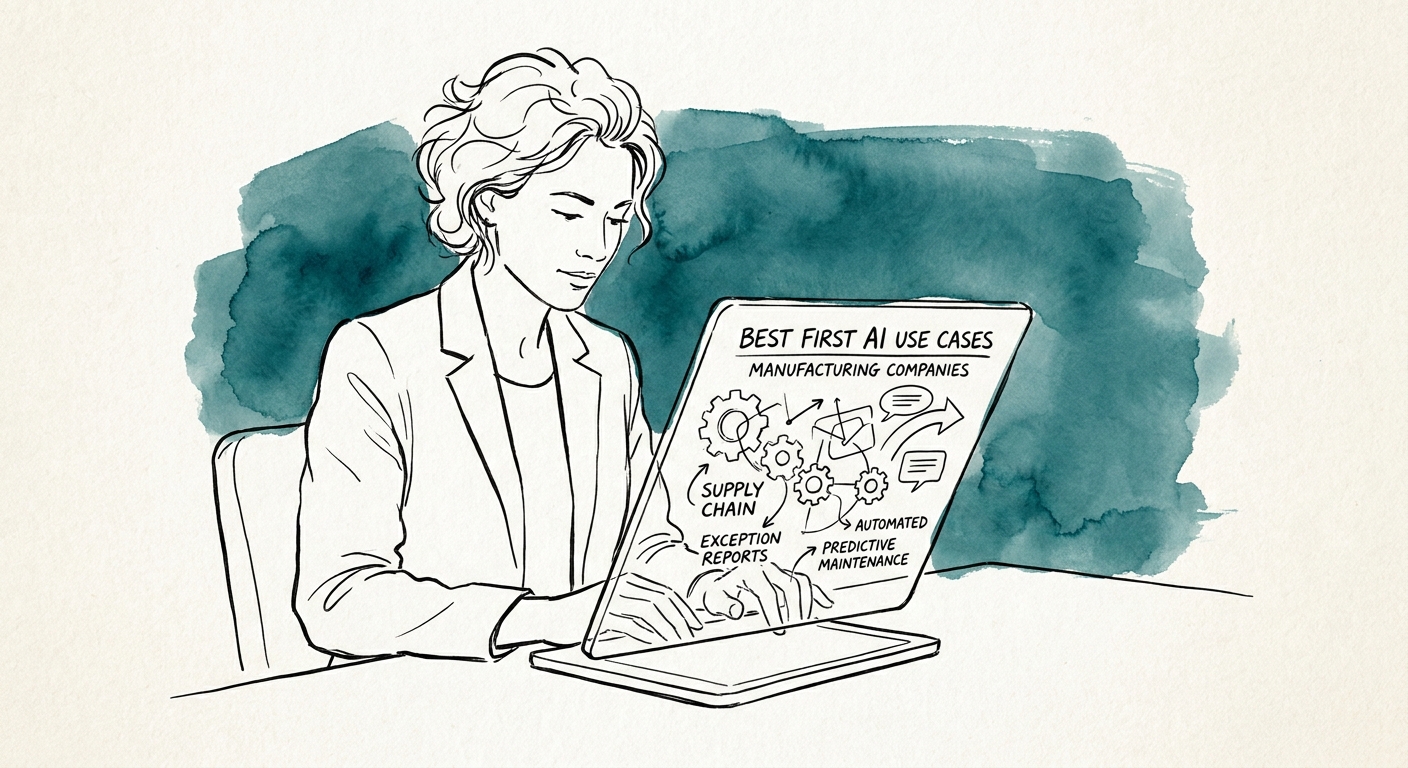
So flip the question. Don't ask "where could AI be impressive." Ask "where does a salaried engineer, planner, or supervisor spend an hour a day turning messy text into a document someone else needs." On most floors that's nonconformance write-ups, maintenance work-order notes, quote and BOM prep, and the Monday production summary. Before you score any of it against a vendor's demo, run it through a use-case scoring model: business value, source-data quality, human-review effort, build complexity, and downside risk. The candidates that survive are rarely the ones in the trade-show booth.
Pick the workflow with one source and one signature
Here's the filter that separates a first project that ships from one that drags: the work should pull from a narrow, known source and end at a single human signature. That's why a CAPA assistant is a near-perfect starting point. The inputs are bounded — the 8D worksheet, the inspection records, the disposition notes — and a quality engineer already owns the sign-off. The assistant drafts the root-cause summary and the containment narrative from approved records; the engineer edits and approves. You haven't changed who's accountable. You've cut the blank-page time that turns a two-hour write-up into a two-day one.
Maintenance triage works the same way. A tech scrawls "spindle making noise, bearing maybe, lubed it, monitor" into the CMMS, and a supervisor later has to decide: PM, repair, or escalate. An assistant that reads the free-text note, proposes a category, and flags the recurring offenders gives the supervisor a faster decision — without ever touching the work order's approval. Quoting is the third candidate: extract specs, materials, and tolerances from a customer RFQ into a structured draft for estimating to price. The estimator still owns the number.
The line you cannot cross is captured cleanly by the NIST AI Risk Management Framework: define context, controls, measurement, and governance up front. In factory terms that means the AI may draft, summarize, classify, and route — but a human approves anything that becomes quality language, a supplier commitment, a production change, or a customer price. Get the business case wrong and you'll dress up busywork as savings; pressure-test it against an honest ROI model built on faster closeout, fewer dropped handoffs, and less supervisor rework — not headcount fantasies.
One workflow, one owner, a rollback — then expand
The Deloitte State of AI report keeps landing on the same finding: the value comes from changing the process, not buying the model. For a manufacturer the first release should be almost dull on purpose — one workflow (say, CAPA drafting), a named owner (the quality lead, not "IT"), approved source records, a review checklist, an hour of training for the people using it, a weekly metric, and a rollback path you can pull if the output drifts.
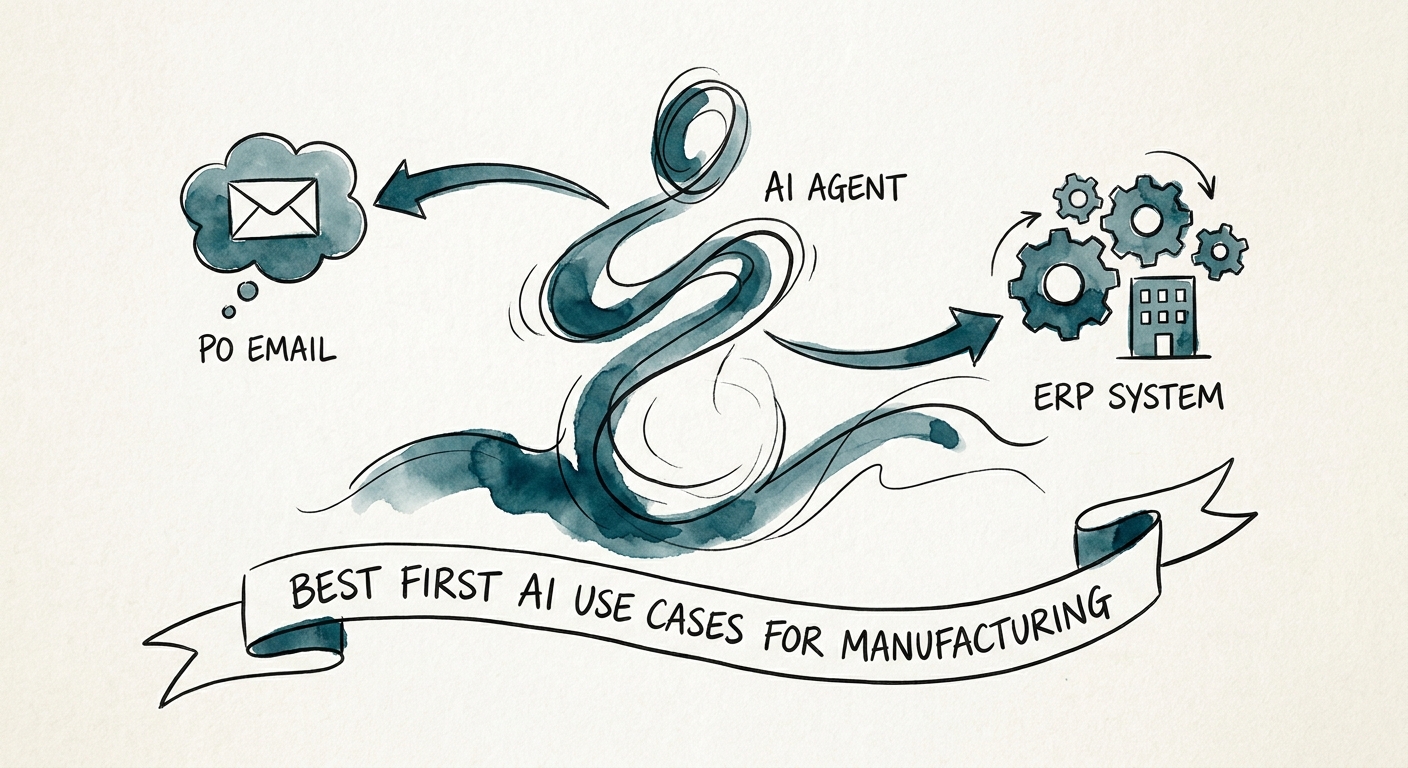
Resist the agentic upsell. The Gartner agentic AI project forecast expects over 40% of agentic projects to be scrapped by 2027, and manufacturers are squarely in the crosshairs: they're being pitched systems that auto-approve supplier substitutions or re-route production before the company has basic workflow controls in place. Assistant workflows earn the right to autonomy; they don't start there. Let AI propose the substitution; keep the human who signs for it.
Concretely, this week: list the four document workflows above, time-box each one (how many engineer-hours a week does it eat), and pick the single one with the cleanest source and the most obvious reviewer. Then turn that one candidate into a scoped release using the 90-day implementation plan — a working workflow with measured closeout times, not another AI workshop with sticky notes. If you want help shaping the sequence, build the AI roadmap around the workflow that already hurts most.