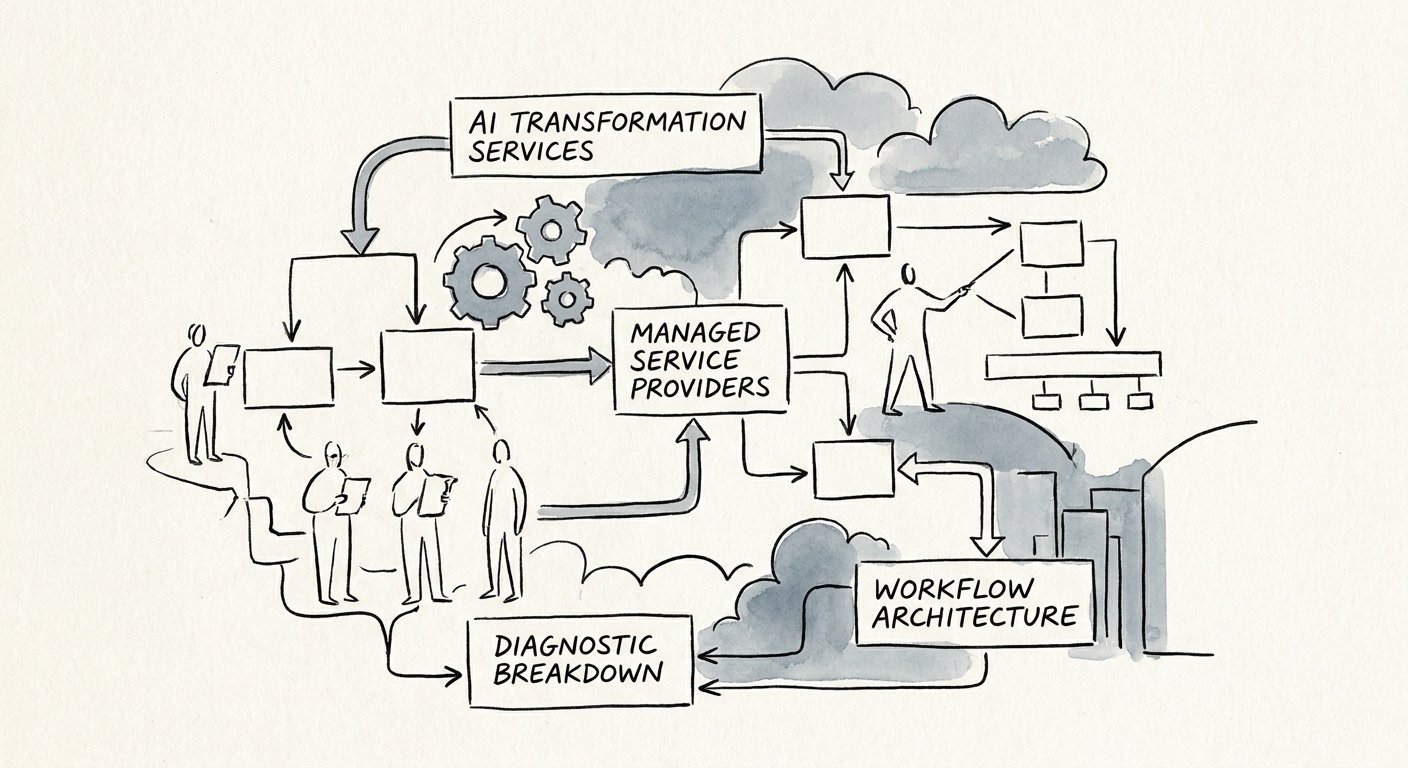
Your AI pilot should live in the queue your techs hate
An MSP is a shared service desk wearing many clients' badges at once. On a Tuesday a single L1 tech might touch a dental practice's RMM alert, a law firm's locked-out partner, and a manufacturer's failed backup — three tenants, three credential sets, three sets of expectations, all in the same hour. That is exactly why generic "AI transformation" advice misfires here. You don't need a chatbot on your website. You need the next 200 tickets to route correctly and arrive at the bench with context already attached.
So skip the broad experimentation. Pick one motion with high volume and a quality signal you already track. Triage is the usual winner: an incoming ticket gets classified, tagged to the right client and queue, and pre-loaded with the device, the affected user, the last related ticket, and the likely known fix. The wins are measurable on day one — reroute rate, time-to-first-touch, and how often a tech opens a ticket and immediately has to ask the client for information that should already be there. The RSM middle-market AI survey and the OECD report on AI adoption by small and medium-sized enterprises land on the same unglamorous point: for firms your size, the payoff comes from tightening an existing operating motion, not from chasing a flashy use case.
If you want a running start, the ticket triage guide and the service desk escalation guide walk through the two motions worth proving first.
The thing that ends MSP AI projects: one client's data in another's ticket
Here is the failure mode unique to your business, and it is not a hypothetical. An AI assistant trained or grounded on your whole ticket history starts surfacing "a similar fix we used" — and that fix references another client's hostname, VPN config, or admin account. Now you have leaked Client A's environment into Client B's resolution notes. In any other industry that's embarrassing. For an MSP it's a contract breach and, increasingly, the question on your next client security questionnaire. CISA's AI Data Security Best Practices matters more for you than almost anyone because your workflows cross tenants, credentials, device telemetry, and live incident detail by design.
The fix is boring and non-negotiable: tenant isolation in whatever the model can retrieve from. Knowledge the assistant pulls from should be client-scoped or genuinely client-agnostic (vendor KBs, your internal runbooks), never a flat pool of everyone's tickets. Set output retention before you scale, not after. And decide where the line sits — a model can suggest a known fix to a technician, but the technician owns what goes into the client-facing reply. Salesforce's State of Service research shows why the pressure to automate replies is real, but speed that blurs which client you're talking to, or hides why a change was made, costs you the trust that lets you bill recurring revenue. Start AI behind the glass — internal reviewer workflows — and earn your way into client-facing channels.
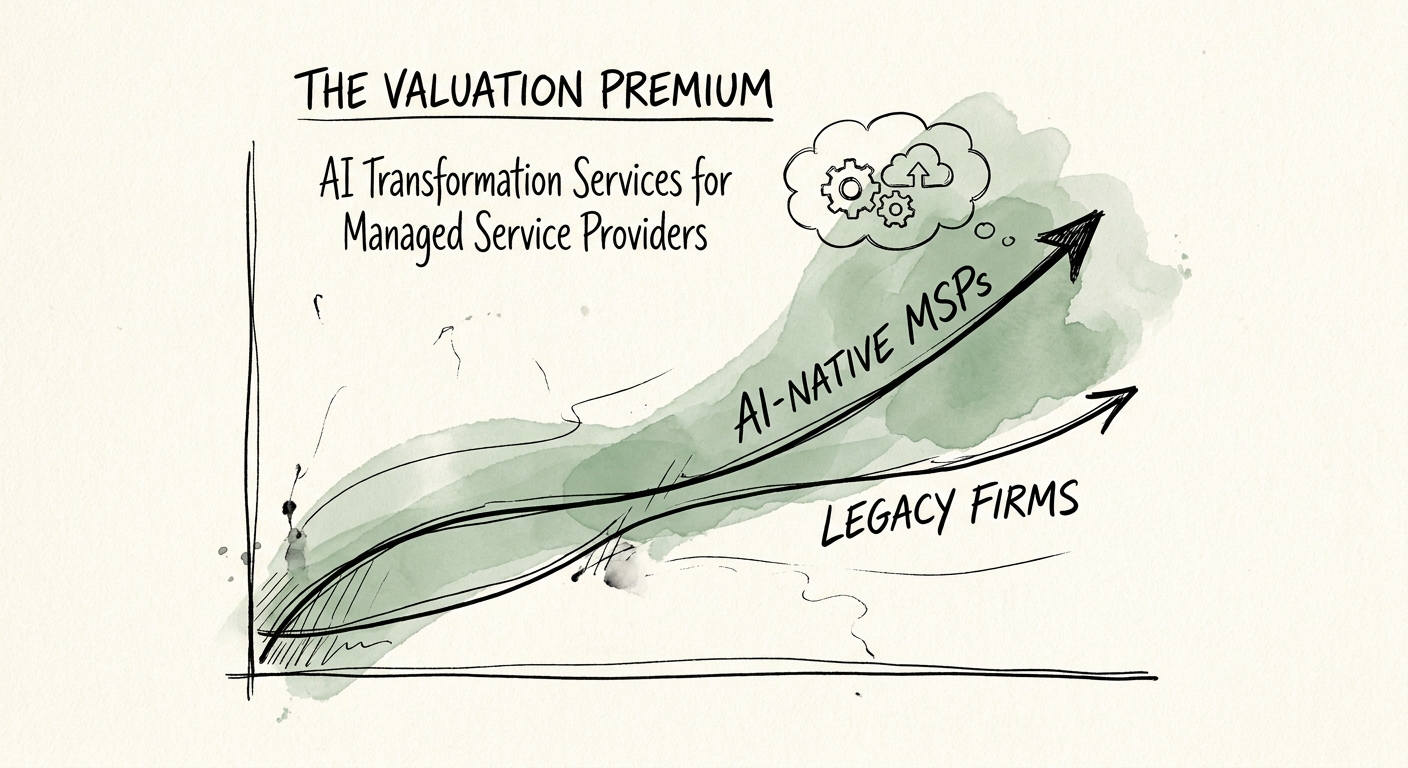
Prove it on the SLA, not on the screenshot
Three months in, the honest test is simple: did your service system get better, or did you just generate prettier ticket summaries inside the same backlog? Those are very different outcomes, and an MSP can fool itself with the second one for a long time. NIST's AI Risk Management Framework gives you the governance loop to run a workflow in production responsibly; what you measure inside that loop should be your own operating numbers.
For a 40-tech MSP, the dashboard that tells the truth: reroute rate (down), time-to-first-touch on triaged tickets (down), escalation quality from L1 to L2 (fewer bounces back for missing context), technician rework, how often a known-fix suggestion was actually used, and SLA attainment per client. If those don't move after one workflow and 90 days, the pilot failed — kill it and pick a different motion rather than papering over it. Monday's first step is small: open your last 100 escalated tickets and tag the ones that bounced because L1 sent them up without the basics. That stack is your first AI use case, already sized.
When you're ready to sequence the assessment, the first workflow, the governance rails, and scale-up into one plan, build the AI roadmap.