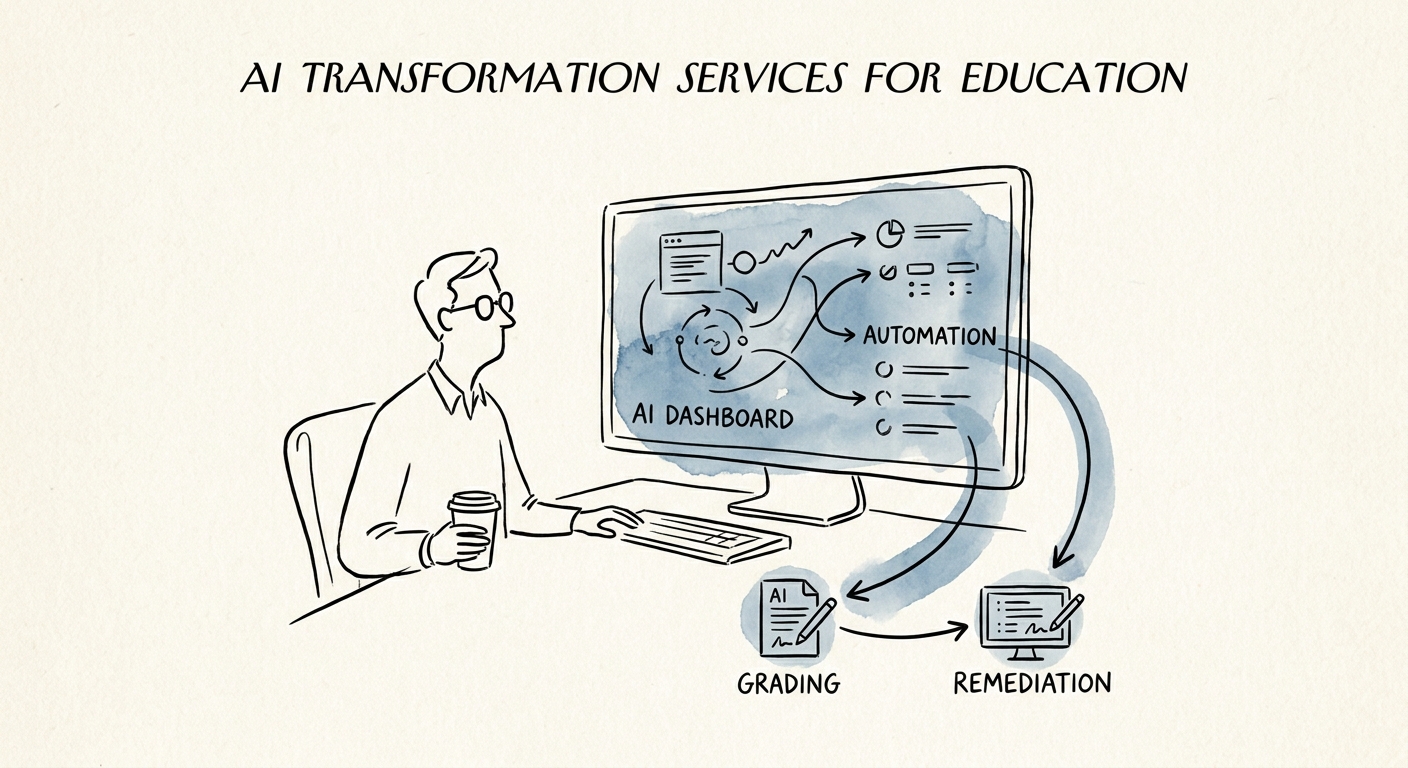
The August inbox is where AI earns its keep
Picture the two weeks before a term starts at a 60-person training provider or a regional tutoring network. The enrollment inbox has 400 messages. Half are the same six questions — payment plans, start dates, prerequisite waivers, "did you get my transcript?" A financial-aid coordinator is hand-checking packets for missing signatures. An advisor is reading through last term's notes to prep for tomorrow's intake calls. None of that work touches a grade, a credential, or a student's record of who they are. All of it is drowning your staff.
That is exactly where AI transformation should begin for an education services provider — and exactly the opposite of where most pilots start, which is some flashy "AI tutor" demo that wanders straight into student judgment. The U.S. Department of Education AI report is blunt about why: education AI needs human judgment, transparency, and real attention to equity and privacy. Read that as a routing rule, not a warning label. Work with clean source records and an obvious human reviewer — admissions document intake, enrollment-question triage, financial-aid packet completeness checks, knowledge-base lookup, advising-call prep — is fair game because the AI produces a draft or a queue, and a person still decides. Anything that grades, sorts, or characterizes a learner waits.
What "govern the data" actually means when the data is a 17-year-old's file
Here is the part education providers underestimate. Your records aren't generic CRM rows. They're a minor's family income, a student's disability accommodation, a counselor's note about a rough semester. The moment AI touches that, "we'll figure out privacy later" becomes a liability you can't unwind. So you decide it first.
The NIST AI Risk Management Framework and the PwC Responsible AI survey converge on a pattern that translates cleanly to a school setting: name the use, name who's affected, measure quality and risk, keep an accountable human in the loop. In practice, that's a one-page standard per workflow, written before anything goes live. For the financial-aid checker: it may read the packet and flag missing fields — it may not see income figures it doesn't need, and it never tells a family whether they qualify. For advising prep: it may summarize prior session notes for the advisor's eyes — it may not draft anything the student sees, and the summary dies when the meeting ends. Spell out the source systems, what data is allowed in, how long it's retained, who can approve the output, and the escalation path when the model is unsure. A vendor's polished demo answers none of those questions. Your standard has to, or you don't have a system — you have an exposure.
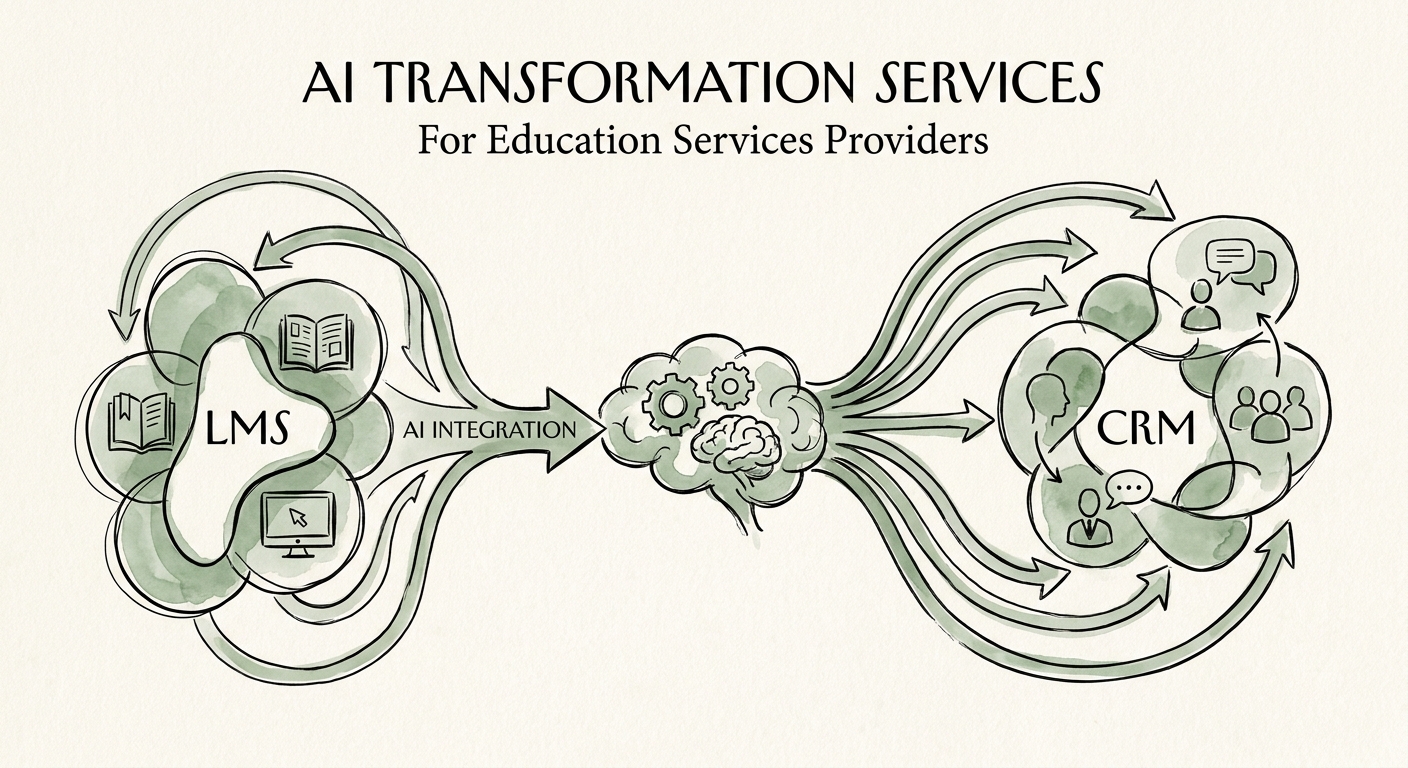
Measure the wait, not the wow
Three weeks in, someone will ask if the AI is "good." Wrong question. Both McKinsey's State of AI research and the IBM Institute for Business Value work land in the same place: value shows up through adoption and redesigned operations, not model novelty. For an education provider the scorecard is mundane and exactly right — how fast does an enrollment question get answered, how many aid packets clear on the first pass, how much rework do coordinators redo, how long do unresolved cases sit, and did the human reviewer agree with the AI's draft or quietly rewrite it every time. If staff are silently rewriting the output, you don't have adoption; you have a second job.
So here's Monday. Pick the single ugliest queue — usually enrollment triage or aid-packet review. Write its one-page standard. Stand up governed retrieval over your real policies and FAQs with AI knowledge systems so answers come from your documents, not a model's guess. Run it for one cycle with a human approving every output and tracking the numbers above. Only after that earns trust do you bring in AI governance and training and consider anything closer to the learner. Front desk first. Gradebook never, until everything else is boring and reliable.