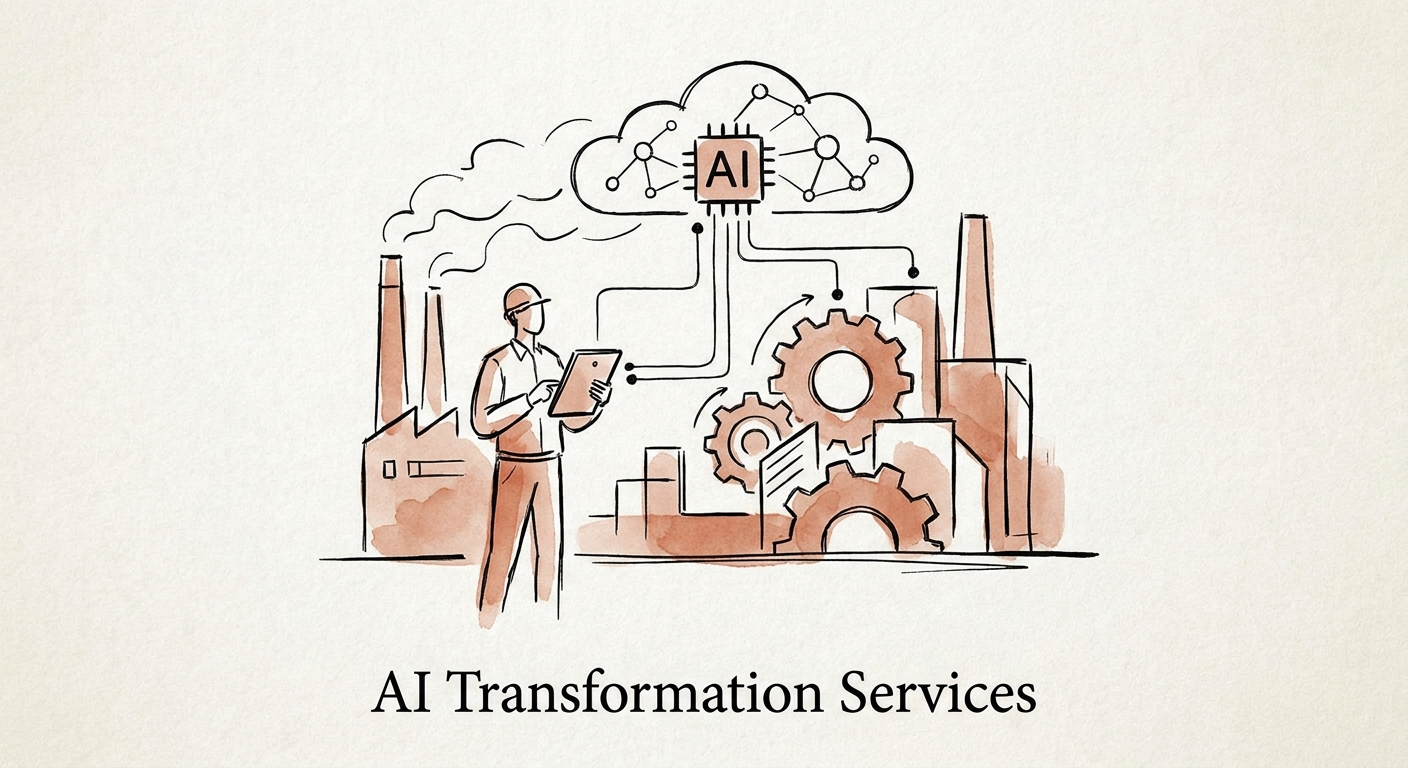
The exception nobody read until the shift ended
Picture a 120-person fabrication shop. At 6:40 a.m. a CNC cell trips a tolerance flag, the operator notes it in a paper log, and the quality engineer who needs to see it is still two hours from his desk. By the time anyone connects the flag to a customer order shipping Thursday, you've run 300 parts that may need re-inspection. Nothing here was a model problem. It was a routing-and-context problem: the signal existed, it just didn't reach the right person fast enough with enough around it to act.
That is where AI belongs in a plant first — not generating marketing copy, not a chatbot on the website, but compressing the distance between an exception firing and an accountable human knowing what it means. The honest starting question isn't "which model." It's "which recurring decision on this floor is slow because the context arrives late, scattered, or in someone's head?"
Across McKinsey's 2025 State of AI, the IBM Institute for Business Value, and PwC's 2025 Responsible AI survey, the pattern is consistent: the value comes from redesigning the workflow and assigning ownership, not from buying access to a smarter model. In a shop, that's doubly true — your constraints are physical, your tolerances are real, and a wrong "recommendation" can scrap a batch.
Four documents your plant already generates — and what to do with them
Manufacturers don't lack data; they lack readable, connected, timely data. Most of it is sitting in four artifacts you produce every day:
- The exception / downtime log. AI is good at reading a free-text operator note ("spindle vibration, flagged op 40") and tying it to the work order, the part family, and which orders that part touches. The output is a ranked queue: this exception affects a Thursday ship, this one doesn't.
- The quality review packet. First-article reports, CMM outputs, NCR write-ups — these get assembled by hand. Summarizing the evidence and surfacing the open questions for the quality lead turns a 40-minute packet into a 5-minute review.
- Maintenance notes. Years of "replaced bearing, same chatter as March" live in unsearchable logs. Making that history retrievable means the tech walking up to a down machine sees what happened last three times, not a blank work order.
- Planning variance. When the schedule slips, someone reconstructs why. AI can draft the explanation — late supplier release, a rework loop, a labor gap — for the planner to confirm.
The non-negotiable for every one of these: the first version produces a reviewable queue, not an automatic action. A planner, quality lead, or maintenance supervisor sees the source evidence, the suggested next step, and the open questions before anything changes a schedule or a customer promise. Deterministic rules govern what can even be recommended; the human owns the call. The NIST AI Risk Management Framework is a sane reference for drawing those approval lines, and Bain's 2025 work on agentic AI is blunt that autonomy without a review gate is where pilots go to die. Start here: AI for Manufacturing and Distribution.
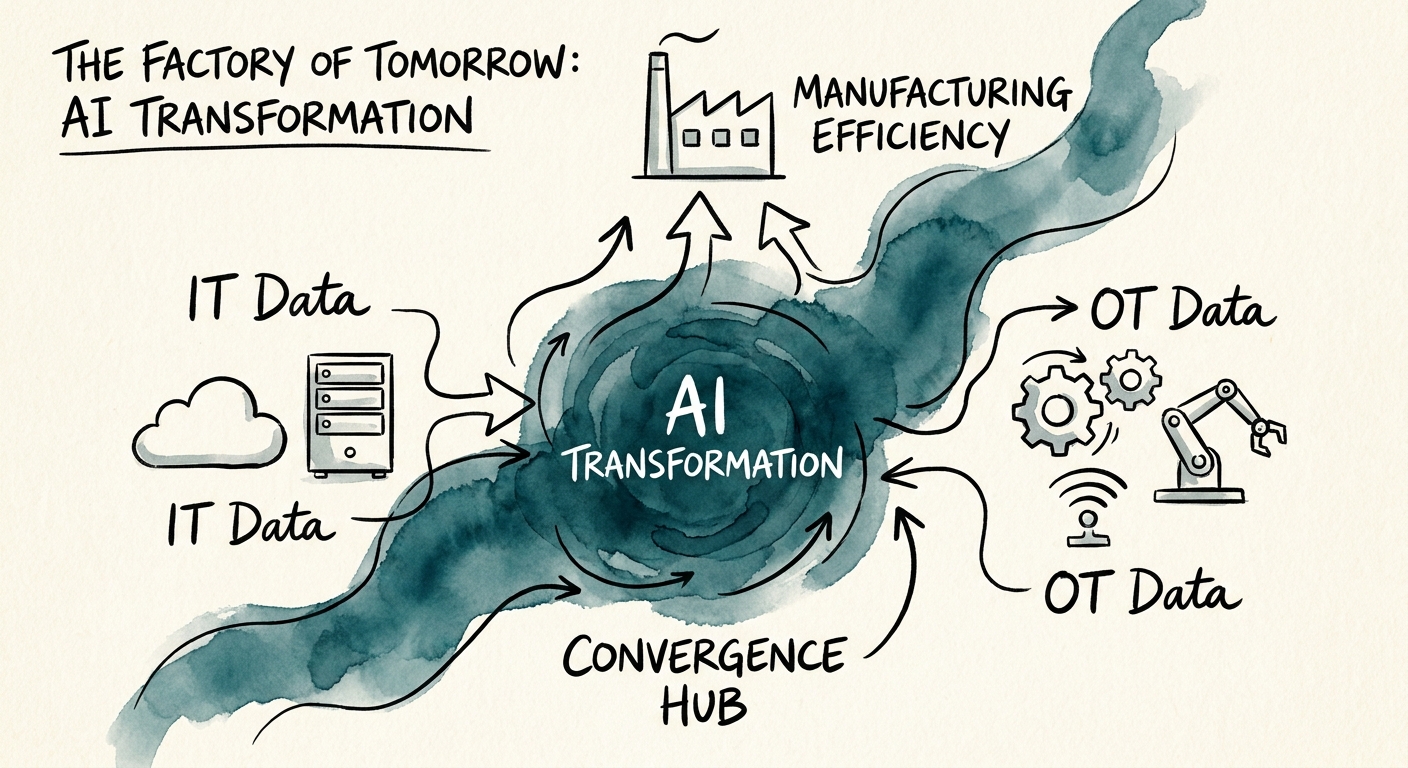
Pick one cell, measure decision speed, then earn the next one
Don't "transform the plant." Pick one exception category on one product family — say, tolerance flags on your highest-volume machined part — and instrument it. The scorecard isn't "alerts generated." It's: how long from exception to the right owner seeing it; how often the suggested next step was correct; rework parts caught before they ran; escalations avoided; and whether the customer-facing ship date held. If those numbers move, you've improved the operating system around the line. If they don't, you've built another dashboard nobody opens — and you'll know in weeks, not quarters.
The reason to scope it this tight is trust. The first time the queue flags an exception the quality lead would have missed, adoption takes care of itself. The first time it cries wolf on a part that was fine, you lose the floor. One cell lets you tune the rules before the stakes get bigger, then the exact same pattern — evidence trail, suggested step, human gate — extends to the next cell, the next exception type, then into supplier follow-up and supply-chain calls.
Two concrete moves for Monday: run the AI Opportunity Score against your top three exception categories to see which one has the clearest owner and the cleanest source data, then take the winner into a governed build via AI for Operations and Finance. The goal is never a smarter plant in the abstract — it's a shorter gap between a flag and the right person, on one cell, this quarter.
