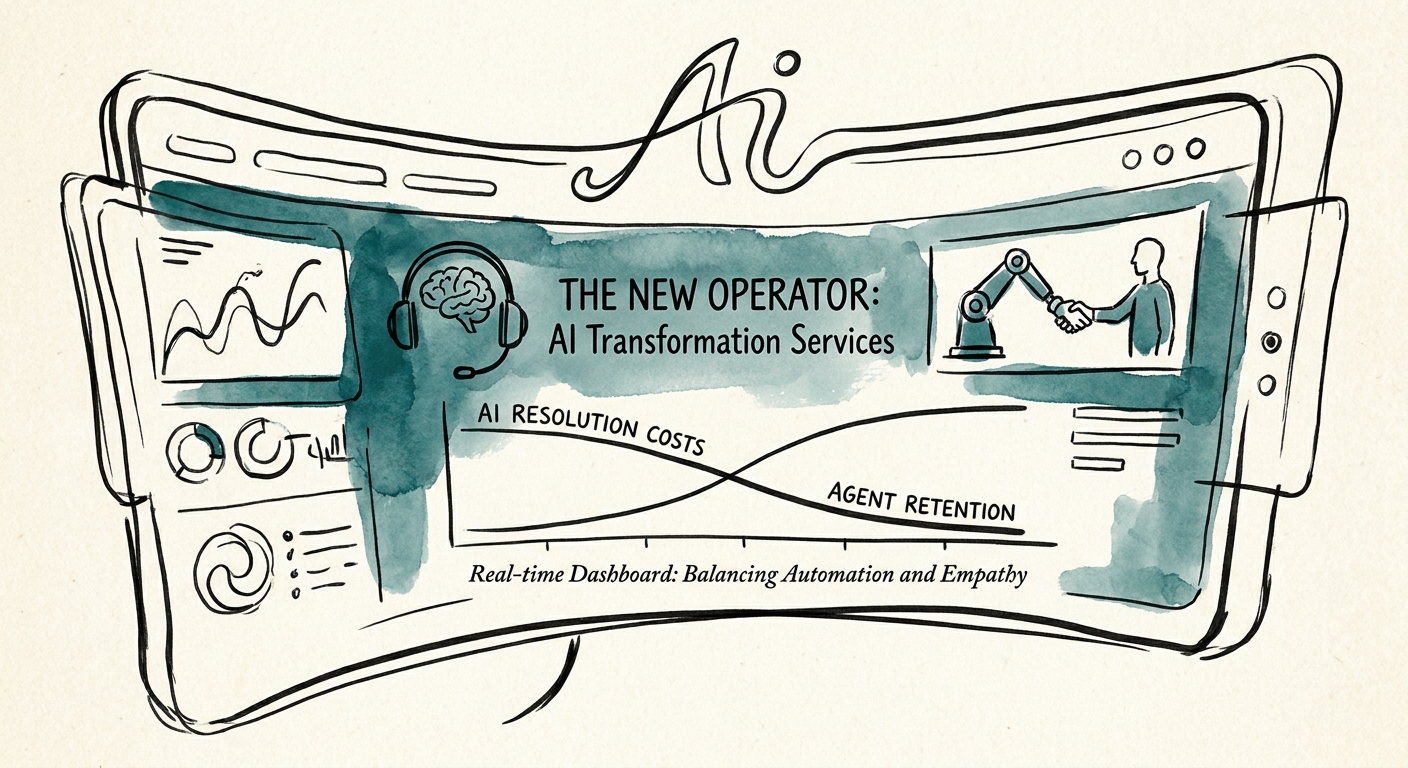
Wrap-up time is the budget nobody puts on the dashboard
Walk a contact center floor and watch what happens the second a call ends. The agent doesn't pick up the next one. They sit there for thirty, forty, sometimes ninety seconds typing a disposition note, copying an account number, summarizing what happened. Multiply that after-call work by every agent and every call and you're looking at one of the largest unmanaged costs in the operation — and it's the part of the job agents hate most.
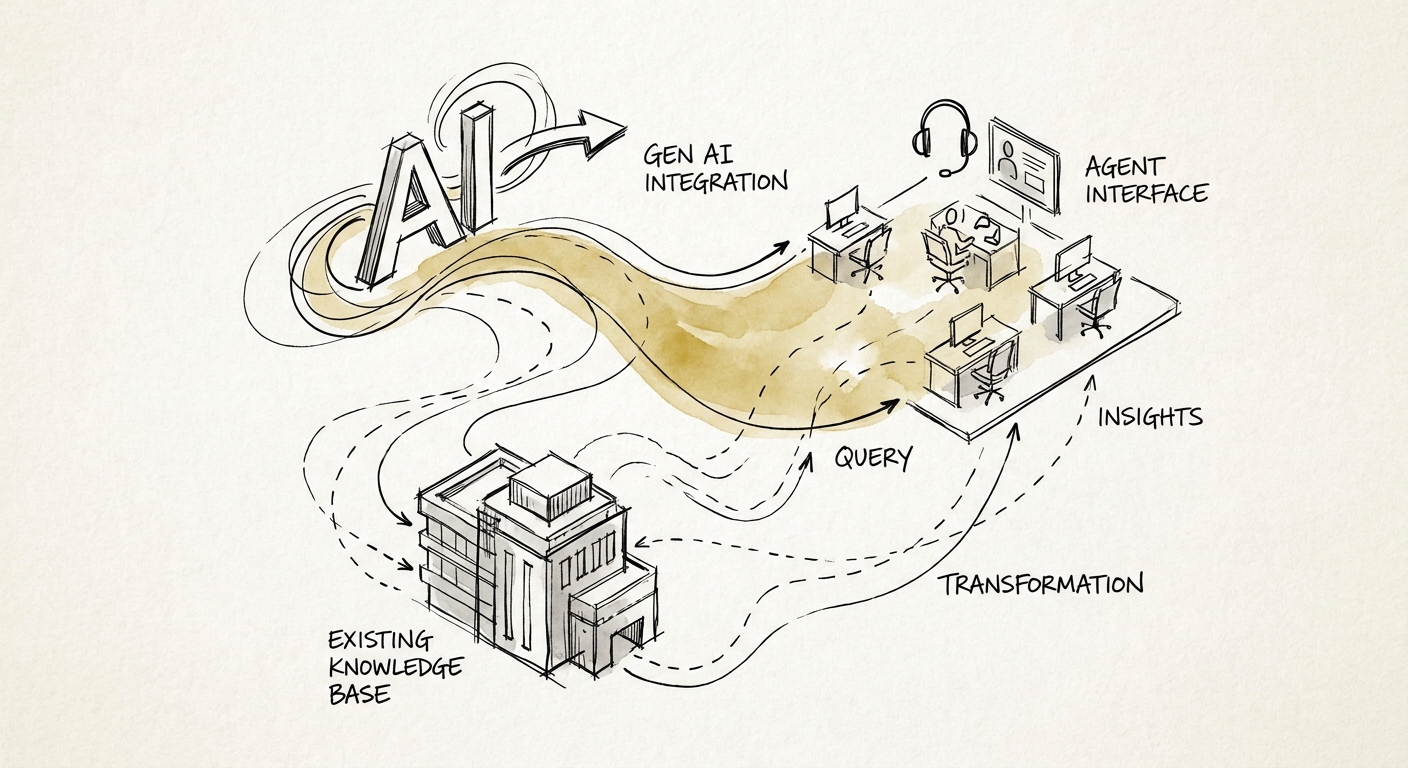
That's the unglamorous place AI earns its keep first. Not a customer-facing voice bot. A model that drafts the wrap-up note from the transcript the moment the call ends, so the agent edits two sentences instead of writing five. Pair it with agent-assist knowledge search — the agent types "international return window for refurbished units" and gets the current policy in three seconds instead of opening four browser tabs while the caller waits. These run behind the agent, where a wrong answer gets caught by a human before it ever reaches the customer.
This pattern isn't speculative. The RSM middle-market AI survey shows adoption moving into operating teams rather than staying in pilots, and the San Francisco Fed analysis of AI and small businesses documents the same pull below the enterprise tier. The contact center is one of the cleanest places to capture it, because the before-and-after metrics already exist on your scorecards.
Your knowledge base is the failure point, not the model
Here's what kills contact center AI projects, and it has nothing to do with the model: the knowledge base is wrong. The refund threshold changed in March, three articles still cite the old number, and nobody owns reconciling them. Feed that to an assistant and you've built a fast, confident machine for giving agents stale policy. The OECD report on AI adoption by small and medium-sized enterprises makes the point bluntly — smaller operators need process ownership and skills as much as model access. In practice that means one named person owns the knowledge base, every policy change has a publish path to the assistant, and the system tells you which article it pulled an answer from.
The second thing teams skip is treating all calls as equal risk. They are not. Map your interaction types onto the NIST AI Risk Management Framework and the differences are obvious: an order-status lookup is low-stakes and high-volume — perfect for aggressive automation. A regulated disclosure, a cancellation-threat retention call, or a billing dispute needs a human in the loop and a logged escalation. One confidence threshold across all of them is how you end up apologizing to a regulator.
And because every transcript carries account details and support history, the CISA AI Data Security Best Practices aren't optional polish. Restrict what the model can retrieve, log which source shaped each answer, and route low-confidence or policy-dependent outputs to a supervisor queue. Say a 60-seat outsourced support team handling three brands — the boring version, where the assistant can only see the brand the agent is logged into, is the version that survives a security review.
Hand it to your QA team, and let them tell you if it works
Most QA teams sample two or three percent of calls and extrapolate. AI lets you score every call against the same rubric — which means your QA analysts stop hunting for examples and start doing the work that needs judgment: coaching the agents the data flags, and overturning the scores the model got wrong. That second part is the whole point. Your QA leads become the people who validate the system, and their disagreements are the signal that tells you whether it's ready to expand.
The Deloitte State of AI report ties value to changed workflows, not demos. So measure the workflow: average handle time, after-call work seconds, escalation accuracy, repeat-contact rate, and the QA defect rate the model surfaced versus what your humans confirmed. The Gartner agentic AI project forecast warns that a large share of agentic projects get canceled — almost always the ones that skipped the controls and went straight to autonomous customer-facing answers. Your first production checklist is short and unsexy: approved knowledge sources only, supervisor review for sensitive categories, exception queues, scripted fallback language, and a standing weekly review of every wrong or incomplete answer.
Do that, and a customer-facing automation layer becomes a decision you make from evidence instead of a leap of faith. When you're ready to scope which agent-assist, QA, and escalation workflows go first, start with AI for Customer Service and build the controlled path before anything talks to a customer on its own.