The kickoff was great. Then the creative team started.
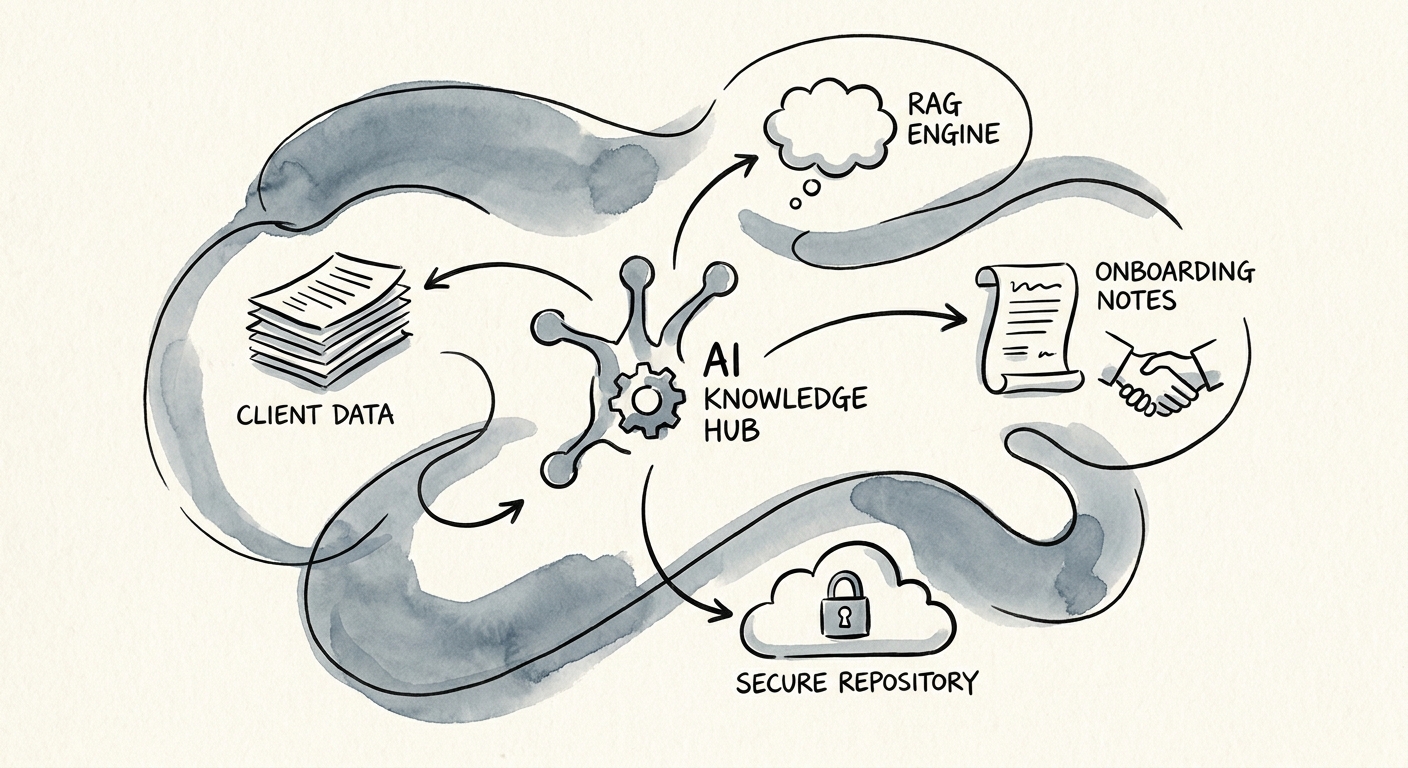
A 35-person agency wins a retainer. Kickoff call is electric, everyone's aligned, the account lead fills six pages of notes. Three weeks later the first creative concepts go out and the client replies in twelve minutes: wrong brand color, a competitor named as a "comparable," and a deliverable in the deck that was explicitly cut for budget on the call. The designer never saw any of that. It lived in the account lead's notebook, a Slack thread, two CRM fields, and a Zoom transcript nobody reopened.
This is the agency-specific version of a knowledge problem, and it has a particular shape. Onboarding context isn't one document — it's the moment a relationship splits into strategy, creative, media, and delivery, each pulling from a different fragment of what the client actually said. The handoff is where the promise made by the person who closed the deal gets translated for the people who fulfill it. When that translation is lossy, the client doesn't experience "a miscommunication." They experience an agency that wasn't listening.
An AI knowledge system earns its keep here not by being clever, but by making the approved version of "what we agreed to" retrievable before anyone opens Figma or builds a media plan. Onboarding is the right first target precisely because the cost of getting it wrong is visible, immediate, and billed at your own expense — research from groups like McKinsey consistently points teams toward use cases where the workflow is close to revenue and the failure is easy to see. Onboarding is both.
Standardize the record before you point AI at it
Most agencies skip the unglamorous step: there's no agreed structure for what an onboarding record even contains, so the AI ends up summarizing chaos faithfully. Fix that first. A usable agency onboarding record needs roughly five things locked down — the brand non-negotiables (exact colors, logo lockups, voice, words the client bans), the approved scope and what got cut and why, the asset inventory with who owes what by when, named risks and political landmines (the stakeholder who hates video, the founder who reviews every headline), and the next two milestones. That's it. Resist the urge to capture everything; a bloated record is one nobody trusts.
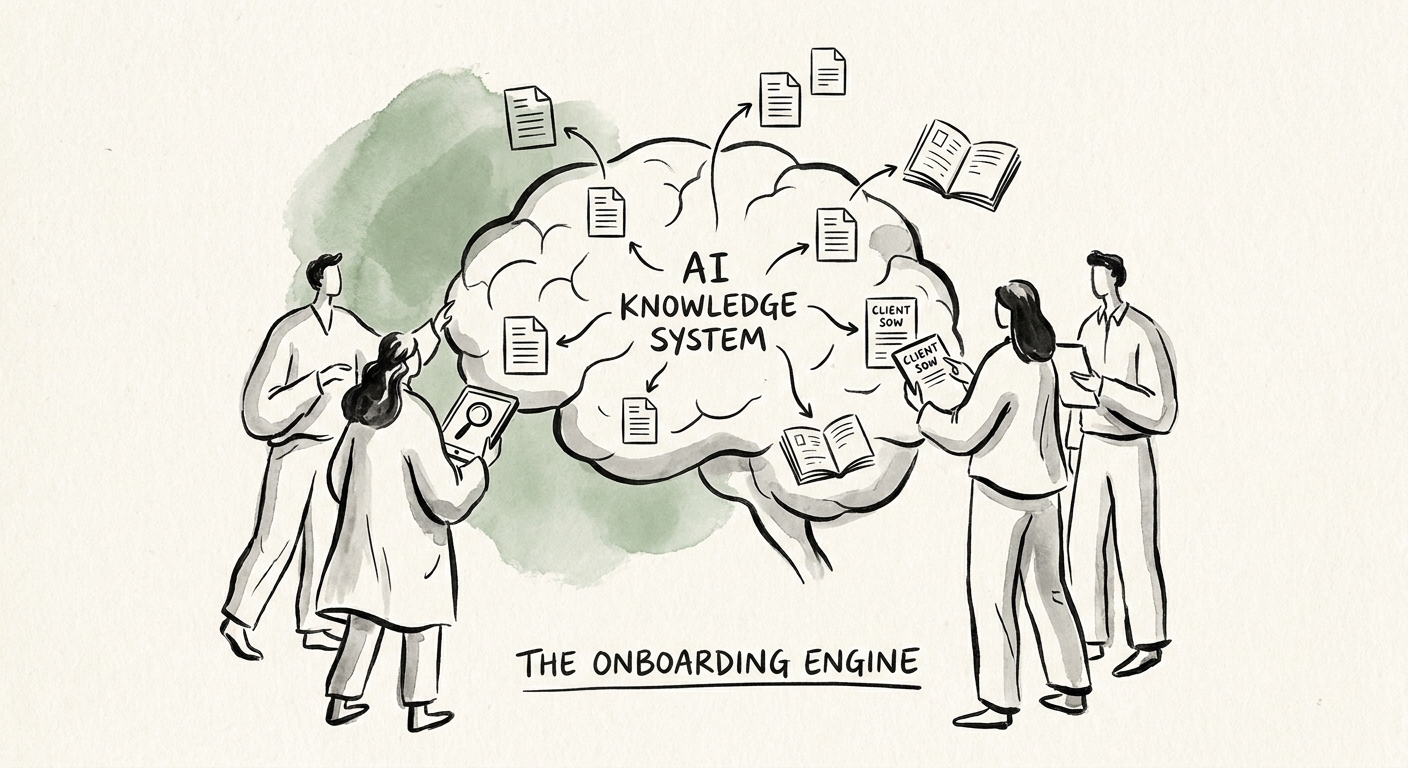
The AI can do the heavy lifting that account leads hate: transcribe the kickoff, draft the record, flag where the call contradicts the SOW. But the account owner approves it before it becomes source-of-truth — because in an agency, "the client said" is a load-bearing phrase, and an unreviewed AI summary that hallucinates a deliverable is worse than no record at all. Once it's approved, the same record feeds the creative brief, the media kickoff, the weekly status, and the QBR. A junior designer should be able to ask "what are the brand rules and what's out of scope" and get an answer with the source line attached, instead of pinging the account lead who's in three other kickoffs.
This is where governed retrieval matters more than a generic chatbot: the system has to cite which approved record it's pulling from, and refuse to invent. Use AI Knowledge Systems and RAG when you need retrieval that's grounded in your approved client context rather than guessing. The pattern that works — keeping a human owner over an authoritative source — echoes what PwC's responsible AI work stresses about accountability, and what IBM's Institute for Business Value finds separates AI that ships from AI that stalls.
Run one onboarding package as the pilot, and measure the right misses
Don't roll this across every client. Pick one onboarding package — say, your standard paid-social retainer — and instrument the handoff. The metrics that matter to an agency aren't "AI usage." They're: how many times delivery teams re-asked something the kickoff already answered, how often the first creative round came back for a brand-rules violation, how many assets were missing on day one, and how much of the account lead's week vanished into being a human search engine for their own notes. If those drop, the system is working. If they don't, your record structure is wrong, not your model.
The failure mode to watch for is the one every agency has lived: the knowledge base that becomes another graveyard of stale docs. The defense is ownership — every onboarding record has a named approver, and "approved" has a date on it. When the scope changes mid-engagement (it always does), the record changes too, or it stops being trusted within a month. As MIT Sloan and Bain both keep finding, the organizational discipline around AI tends to decide the outcome more than the tooling does.
Monday-morning version: take your last three client kickoffs, pull the notes, and try to answer "what are the brand non-negotiables and what's out of scope" for each in under two minutes. Wherever you can't, that's a handoff your delivery team is also failing — and the rework is already on your books. If that exercise stings, run the AI Opportunity Score to gauge whether your onboarding notes are structured enough to automate, then move into the knowledge-system service path once the source workflow is clear.