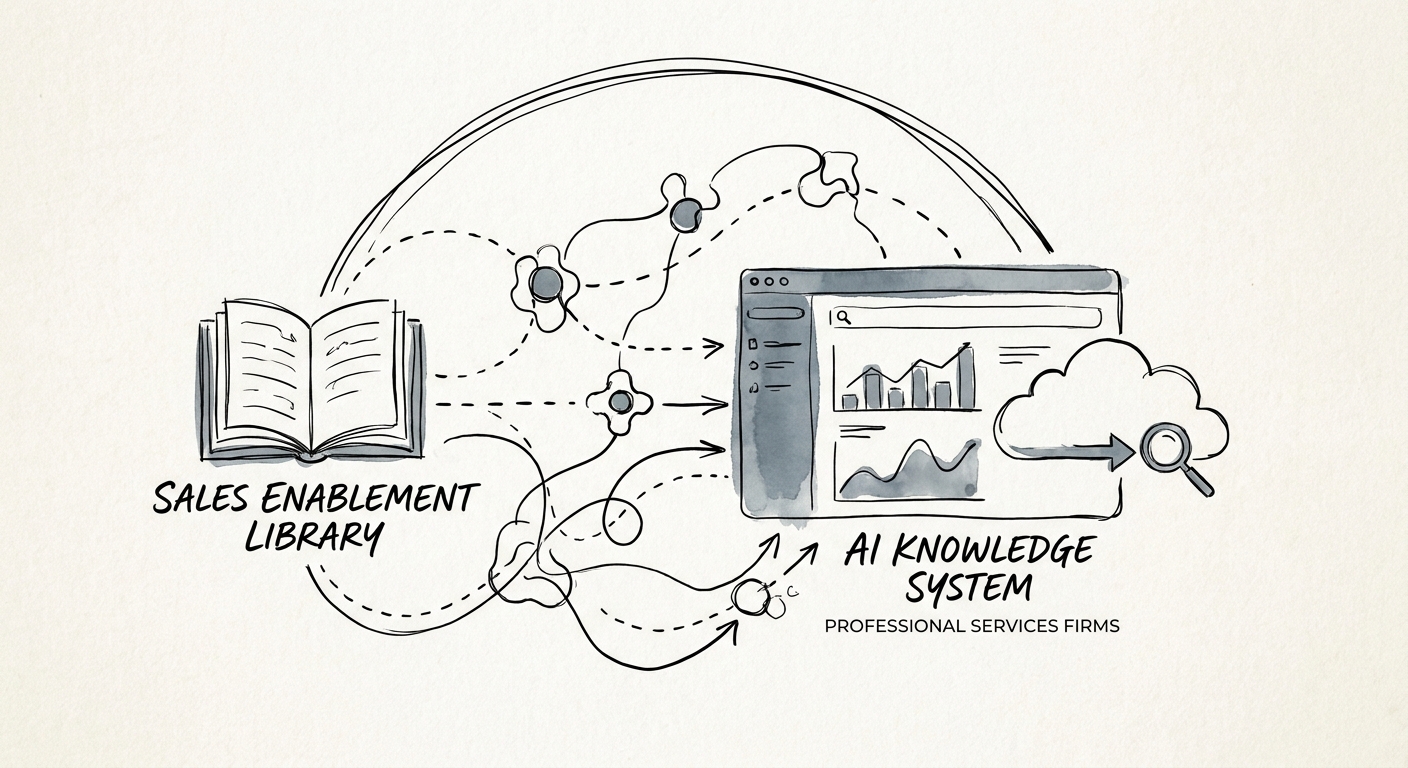
The cost of a confident wrong answer
A rep is on a call with a 200-seat buyer. The prospect asks how your platform handles SSO and SCIM. The rep types the question into the new AI enablement tool, gets a clean three-bullet answer in two seconds, and reads it out loud. The problem: the answer was pulled from a battle card written eighteen months ago, before you deprecated the old SCIM connector. The buyer's security lead — who already knows the current state because a competitor briefed them — clocks the inaccuracy. The deal doesn't die on that sentence, but the rep's credibility does, and credibility is the only thing they were selling on that call.
This is the specific danger of a sales enablement library that most AI rollouts ignore. Unlike a support knowledge base, where a stale answer mostly costs a customer some frustration, an enablement library feeds live, high-stakes conversations where a rep cannot pause to verify. Salesforce's State of Sales research is blunt about the squeeze: reps are under pressure to adopt AI fast while still being judged on whether they sound accurate to a buyer. Speed and trust pull in opposite directions, and a naive deployment optimizes for the wrong one.
The trap is treating your shared drive of decks, one-pagers, and old proposals as a single corpus to point a model at. That drive contains three things that should never reach a rep mid-call: superseded pricing, draft messaging that legal never cleared, and customer references that have since churned or asked to be removed. Microsoft 365 Copilot's data protection architecture shows why permissions alone don't fix this — a rep is allowed to see the old deck; the issue is that the system presents it as current field-ready guidance. Access control answers "can they see it." Enablement needs a layer that answers "should they say it."
Every claim needs a named owner — or it doesn't ship
The fix is not a better model. It's deciding, content type by content type, who is allowed to bless an answer as something a rep can repeat to a buyer. McKinsey's State of AI keeps landing on the same finding: the teams that get value from AI redesign the process around it instead of bolting it on. For an enablement library, that redesign is an ownership map. Walk your content into five buckets and assign a human to each:
Product claims and feature support → product marketing. Pricing and discount language → revenue operations or deal desk. Customer references and logos → whoever holds reference consent (often customer marketing). Competitive positioning → the competitive lead, not a year-old win/loss deck. Implementation and proof stories → the team that actually delivered them. The rule that makes this work: if a piece of content has no living owner, the assistant retrieves it for internal context but is forbidden from surfacing it as approved field language. Orphaned content is the single biggest source of the stale-pricing failure above.
Then add the layer reps actually feel: a thin approved-answer set that sits in front of the raw library. When a rep asks the high-frequency questions — what's our SOC 2 status, what's the current list price for the mid tier, which named customer can I cite in healthcare — they get the one blessed answer, dated and owned, not the model's synthesis of nine conflicting decks. NIST's AI Risk Management Framework gives the operating loop for the rest: map the content types, measure answer quality, manage the review queue, and govern updates as products and prices change. AI drafts and retrieves; enablement leaders decide what becomes repeatable.
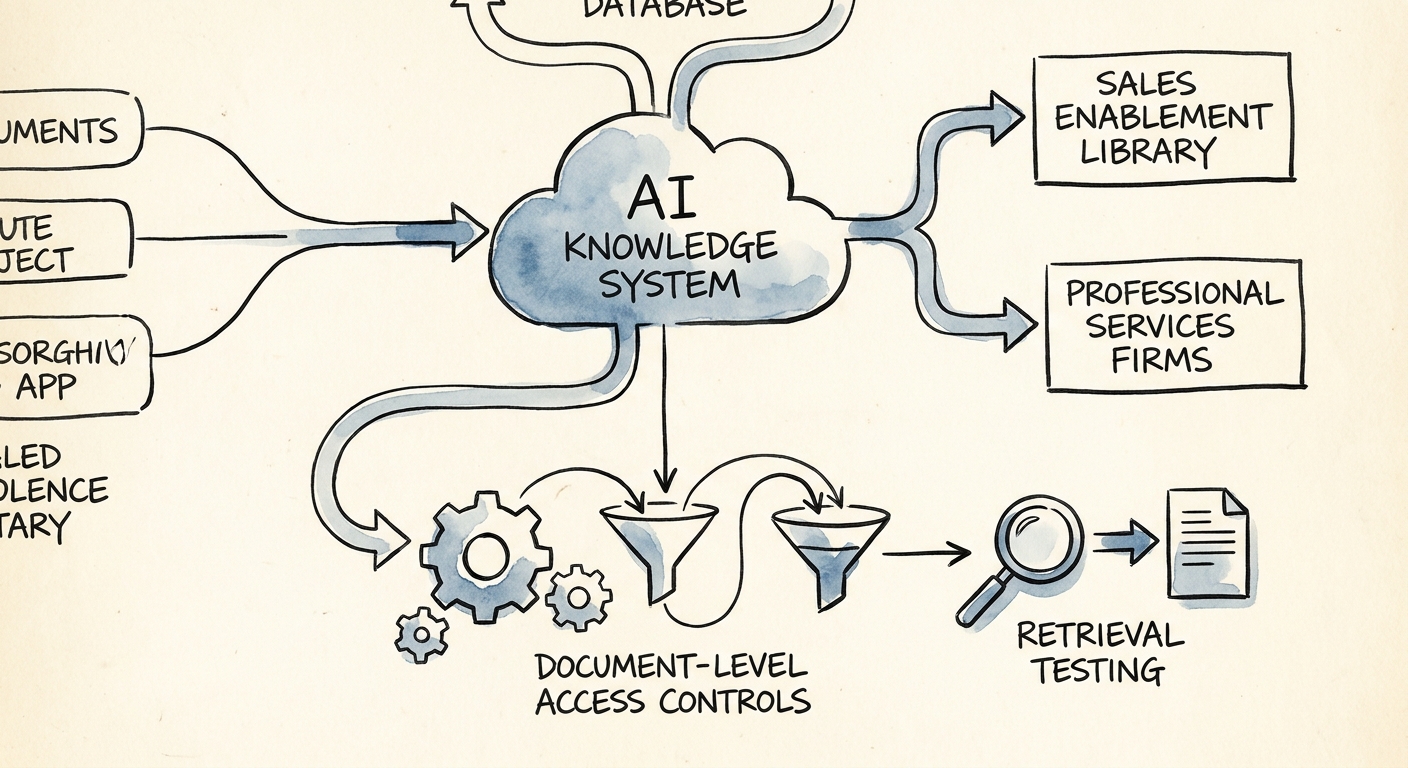
Instrument trust before you widen the door
Don't measure this rollout by queries per week. Measure whether reps believe the answers enough to say them out loud. Watch five things: citation coverage (what share of answers point to a dated, owned source), rep acceptance rate, outdated-source flags, manager corrections after the fact, and time saved on the repeatable motions — the discovery prep, the RFP security section, the "which reference fits this vertical" lookup. If acceptance is high but corrections are also high, your reps are trusting wrong answers, which is worse than not trusting any.
Make flagging a one-click action inside the workflow, and route every flag to the content owner from your map, not to a generic inbox. The week a rep flags last quarter's pricing and watches deal desk fix it by Friday is the week the tool earns standing on the team. That feedback loop, wired to real owners, will outperform any model upgrade you're tempted to chase.
If you're scoping this, start by tightening source governance — see the knowledge-systems AI path — and use the AI Opportunity Score to weigh enablement search against the other sales workflows competing for your first AI dollar.